Yala Peak Climbing
Trip at a Glance
-

Country: Nepal
-

Trip grade: Strenuous
-

Destination: Langtang region
-

Activities: Trekking/Peak Climbing
-

Accommodation: Hotels/Lodges
-

Meals: Full-board on trek
-
.png)
Transportation: Private vehicle
-

Maximum altitude: Yala Peak (5732m)
-
Trip Start / End: Kathmandu - Kathmandu
-
.png)
Best Season: Mar-May, Sep-Nov
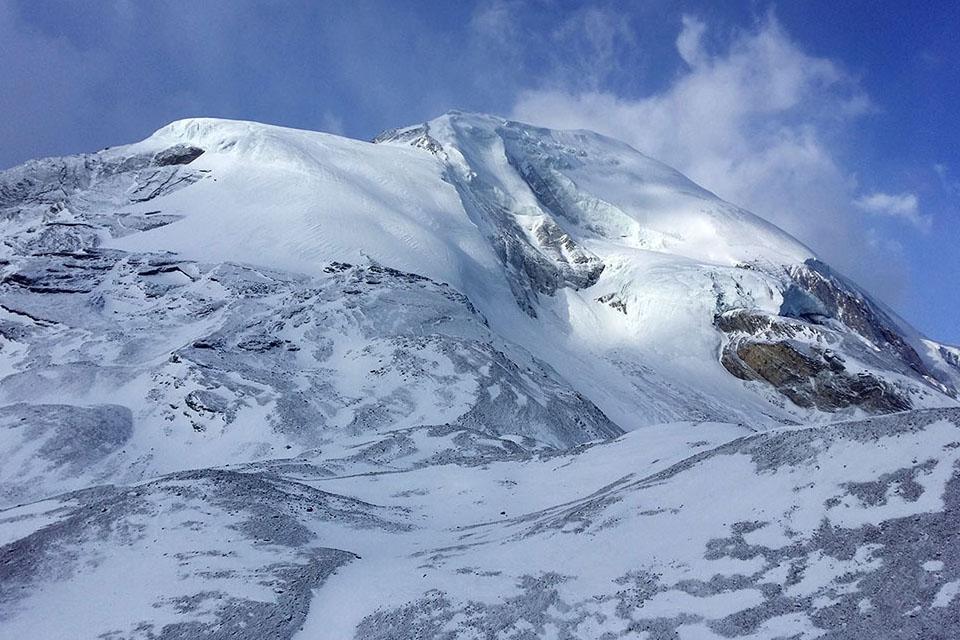
Yala Peak is one of the popular trekking peaks of Nepal located in the Langtang region. Yala Peak at 5,732 meters is a relatively easier peak to climb that offers stunning views of the Langtang Lirung (7234m), Dorje Lakpa (6966m), and Shishapangma (8027m) mountains. Yala Peak is one of the shortest periods of climbing in Nepal.
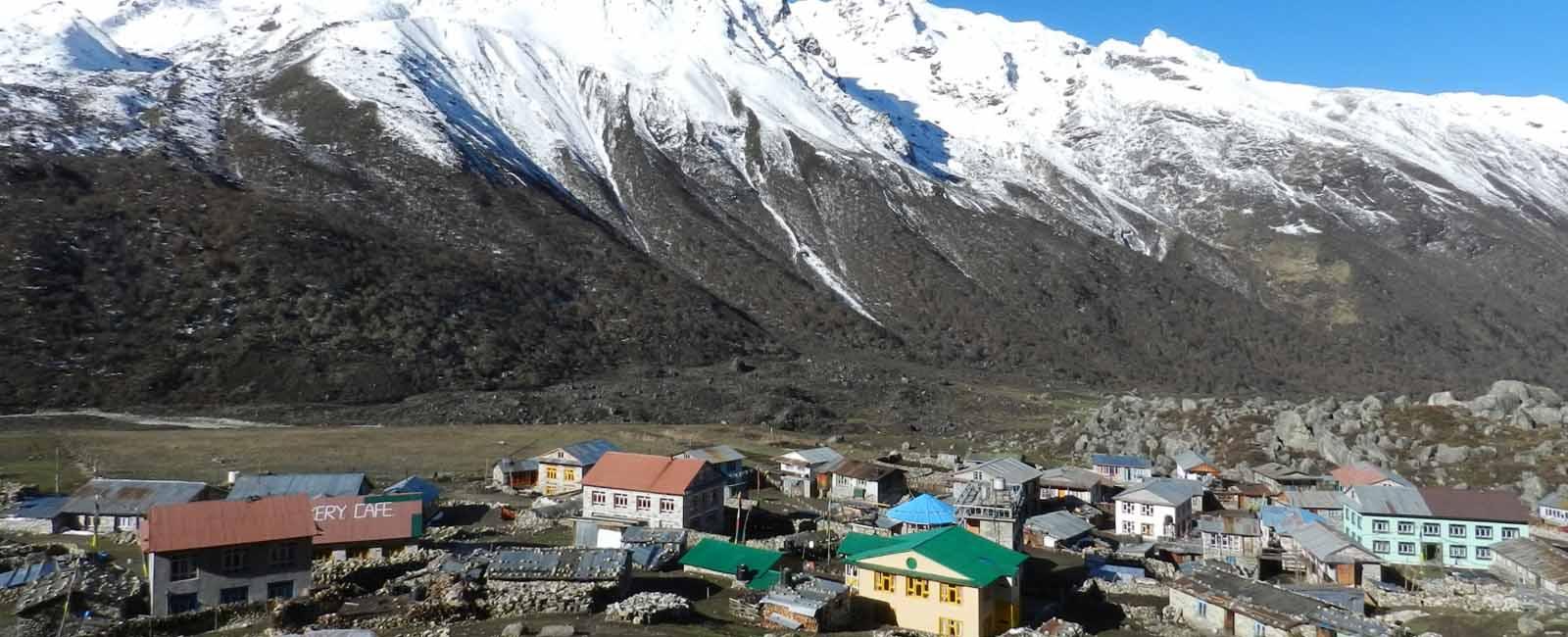
Yala Peak climbing follows the Langtang Valley trek route with a 7-8 hours drive from Kathmandu to Syabrubesi. In the beginning, we trek through the sub-tropical jungle and then the dense forest with oak trees, birch and pine before the valley opens out into the alpine meadows and yak pasture. These high meadows are carpeted by a rich variety of alpine flowers such as genitals, violets, edelweiss and primulas in the spring.
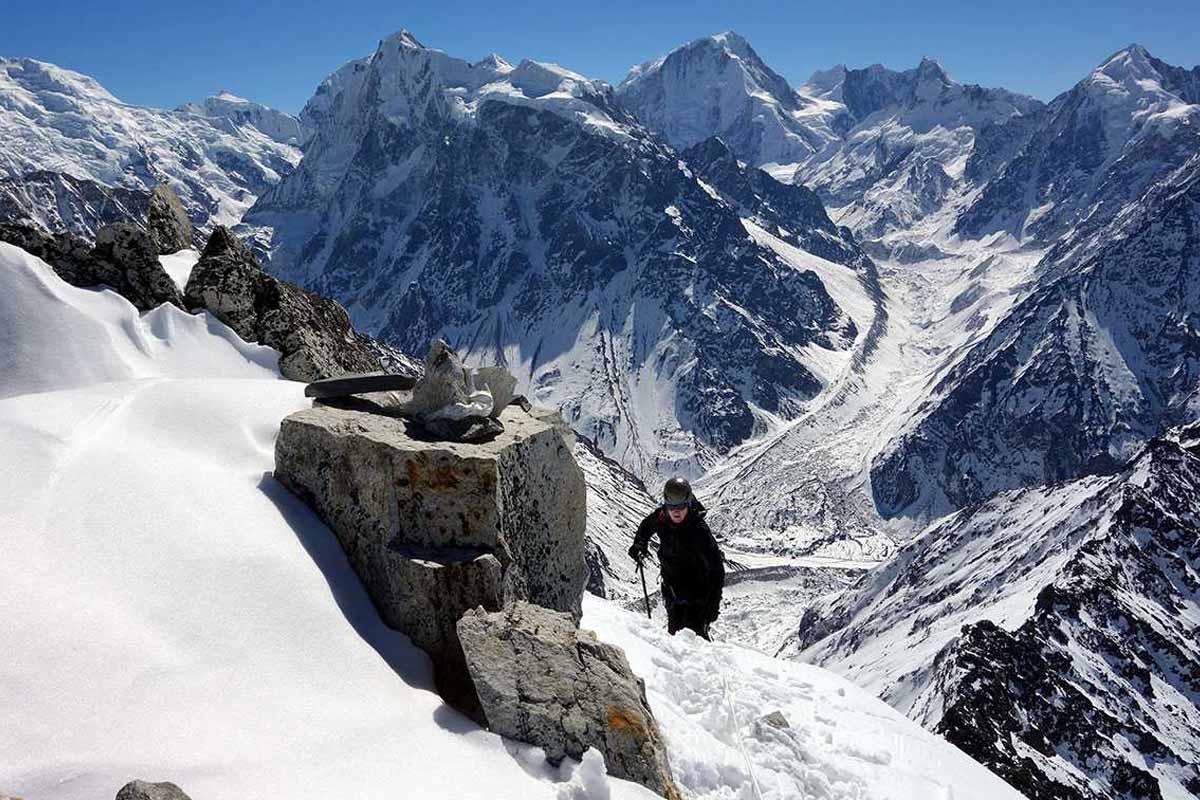
The Lantang forest is also known for its wildlife such as red pandas, Himalayan black bears, wild boar and langur monkeys. We trek up to the valley of Kyangjin Gompa. From Kyangjin, we move further up the valley to Yala at Yala Peak Base Camp (4500m) where we set up our camp in a superb setting. The next day is attempting Yala Peak which isn't a difficult or technical climb. From the summit, one can witness a majestic panoramic view of the snow-capped like Langtang Lirung (7234m), Pemthang Ri (6836m), Langshisha Ri (6412m), Dorje Lakpa (6966m), and Kangchenpo (6378m) peaks. Then back to Kyanjin Gompa and trace your way back to Syabrubesi to drive back to Kathmandu.
Yala Peak Climbing Highlights
- One of the easier peaks requires no technical climbing skills.
- Amazing views of snow-capped Langtang Lirung (7234m), Pemthang Ri (6836m), Langshisha Ri (6412m), Dorje Lakpa (6966m) & Kangchenpo (6378m) peaks.
- Views of Shishapangma peak (8027m) with extra massive Himalayan range of Tibetan side.
- Experience the alpine meadows and Yak pastures.
- Visit Kyanjin Gompa (3870m), the most beautiful village in Langtang surrounded by mountains
Yala Peak Climbing Difficulty
Yala mountain is a popular option for climbers wishing to try Himalayan climbing because it is frequently regarded as an approachable "trekking peak," situated in Nepal's Langtang region. It's important to realize, though, that even "non-technical" climbs at high elevations are really challenging.
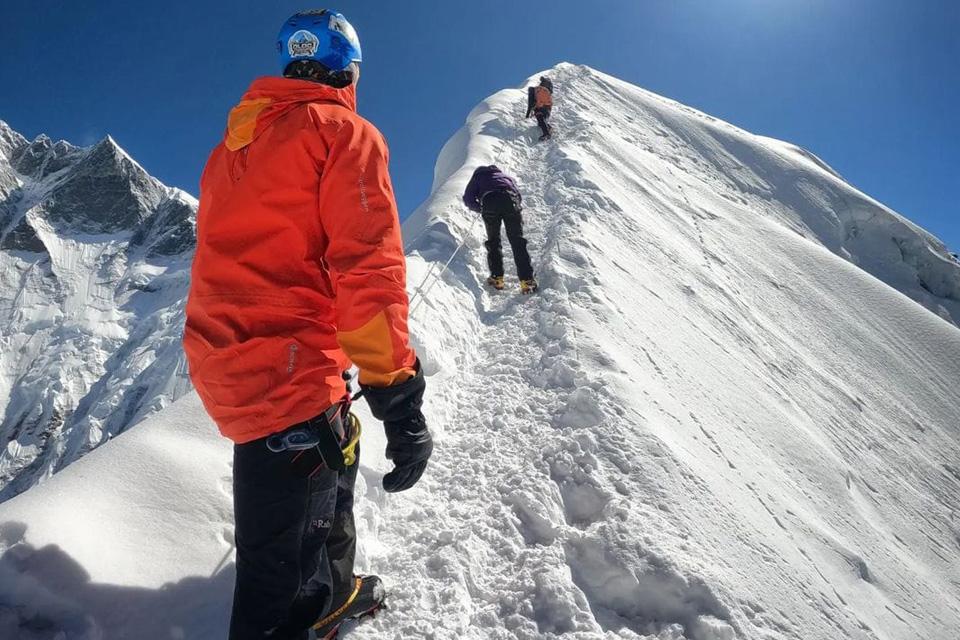
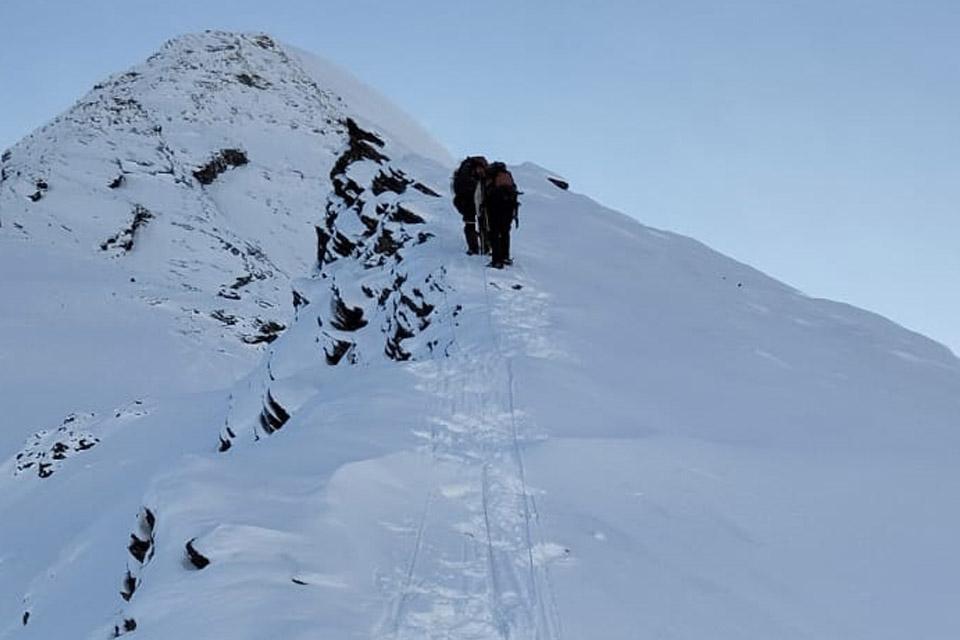
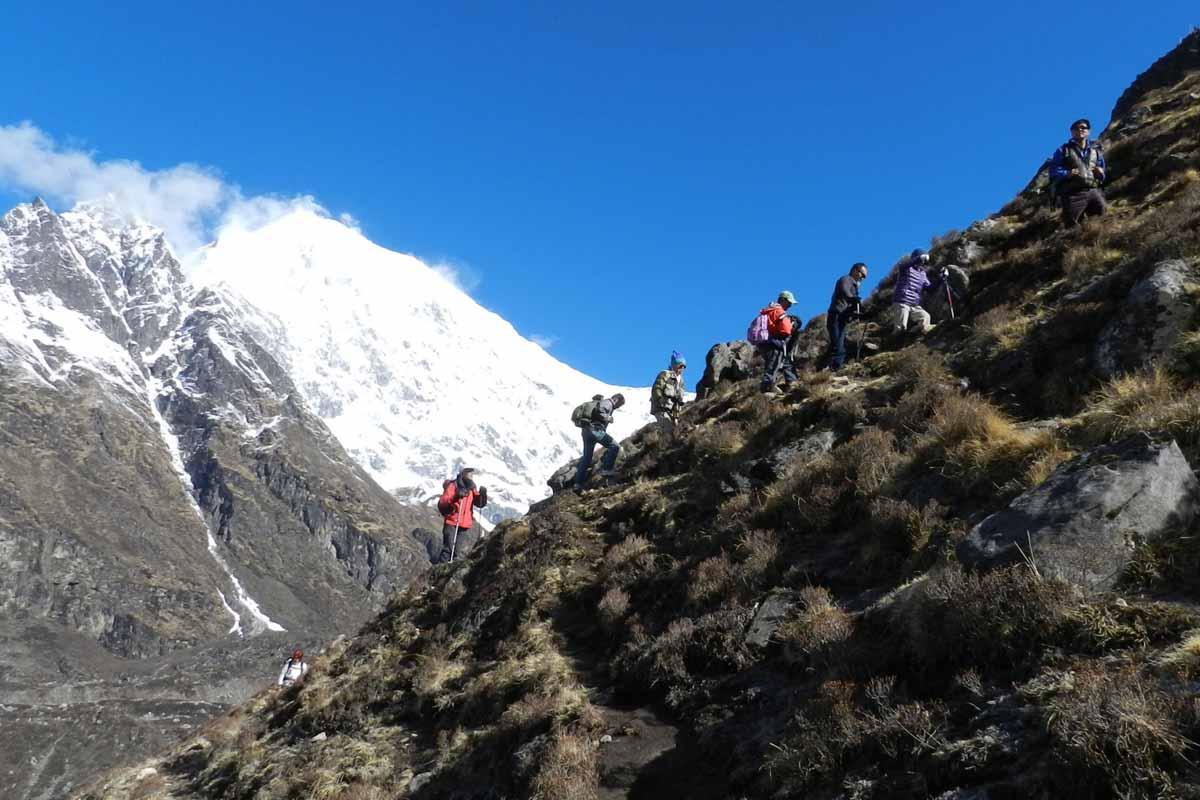
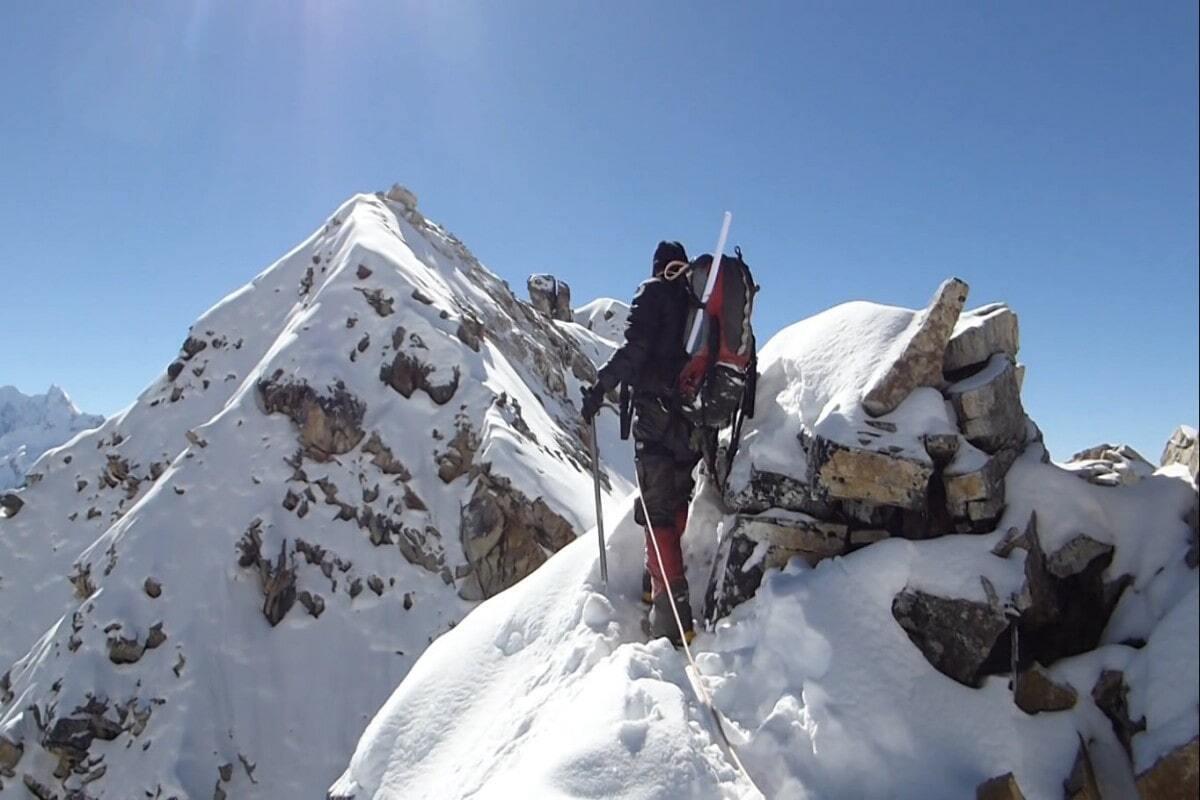
Depending on the season, there can be icy or snowy paths along with rocky trails and moraines. Careful footwork is necessary for the last ascent, which can include steep slopes and loose rock. Although not very technical, your climbing guide will set up fixed ropes for safety, and crampons and ice axes may be required for the ascent depending on the season.
Yala Peak's elevation of 5,732 meters (18,805feet) makes altitude sickness a serious concern. Your itinerary must include enough acclimatization days. Physical exertion is more demanding at this altitude due to the lower oxygen levels.
Trekking through the Langtang Valley for several days is a physically demanding part of the climb. The actual summit day requires a strenuous climb across a variety of terrain. Despite being seen as non-technical, it requires a good physical stamina.
Best Time to Climb Yala Peak
Timing is a pivotal factor when organizing a climb of Yala Peak in Nepal. Yala Peak is best climbed during certain seasons with ideal weather, like many other Himalayan climbs.
Spring (March to May)
In Nepal, this is a popular time of year for climbing. Clearer skies, warmer temperatures, and more consistent weather are all features of spring. The Langtang region's flowering flora enhances the natural splendor.
Autumn (September to November)
Another good time of year for climbing is the fall. Post-monsoon, the air is clean and visibility is excellent, providing stunning mountain views. Climbing is comfortable because of the normally dry and stable weather.
For high-altitude mountaineering, spring and autumn seasons provide the most favorable weather patterns. The views and entire experience are improved by clear sky. Trekking and climbing are made more comfortable by the moderate temperatures.
Seasons to avoid for Yala Peak climbing are the monsoon and winter.
Monsoon (June to August)
During the monsoon, trails become dangerous and muddy after heavy rains. Views of mountains are frequently obscured by clouds and there will be a higher chance of landslides.
Winter (December to February)
In winter, climbing is very challenging due to the extremely cold weather and heavy precipitation. There may be a lot of teahouses and facilities closed.
Planning your climb for the spring or fall for the best chance of an enjoyable and successful climb is recommended.
Best trekking route for Yala Peak climbing
The Langtang Valley is the starting point for the typical trekking route to ascend Yala Peak, providing a picturesque and culturally diverse approach.
Kathmandu to Syabrubesi (1460m)
To begin the trek, you need to drive to Syabrubesi from Kathmandu. Depending on the state of the roads, this drive takes roughly seven to eight hours. The trek begins at Syabrubesi, which serves as the entryway to the Langtang Valley.
Syabrubesi to Lama Hotel (2420m)
Beginning in Syabrubesi, the trek follows the Langtang Khola (river). The path winds through traditional Tamang villages, bamboo groves, and lush woodlands. The Lama Hotel, which provides simple teahouse lodging, is a popular overnight destination.
Lama Hotel to Langtang Village (3430m)
The Langtang Valley is further up the trail. You'll ascend higher and trek through lovely rhododendron trees. Despite the 2015 earthquake's damage, Langtang Village has been restored and provides a glimpse into the native way of life.
Langtang Village to Kyanjin Gompa (3870m)
Beautiful views of Langtang Lirung and other nearby peaks can be seen throughout this portion of the hike. One significant Buddhist monastery and a crucial acclimatization destination is Kyanjin Gompa. It's a great location for exploration and taking in panoramic mountain views.
Kyanjin Gompa to Yala Peak Base Camp (4500m)
The trail leads to the Yala Peak base camp from Kyanjin Gompa. Trekking over rugged terrain and moraines is part of this section. Usually, a base camp is established in an appropriate area with shelter and water.
Yala Summit Attempt (5732m)
Early in the morning is often when the summit attempt begins. Trekking on snow and ice is part of the ascent, and crampons and ice axes may be used depending upon the season. The route demands careful navigation and may include some steep sections. You will return to base camp after ascending to the summit.
Return Trek
The trek back down the Langtang Valley takes the same route. After returning to base camp, you will visit Kyanjin Gompa, Langtang Village, Lama Hotel, and then Syabrubesi.
Syabrubesi to Kathmandu (1400m)
You will drive back to Kathmandu from Syabrubesi.
Yala Peak Climbing Permits
It's important to figure out the permits required to climb Yala Peak and other related entrance fees to trek in the Langtang region.
Langtang National Park Entry Permit
Yala Peak is located in Langtang National Park, which mandatorily requires a Langtang National Park Entry permit to enter and trek in the region. Langtang National Park Entry Permit fee for foreigners: NPR 3,000 (Approx. USD22)
TIMS (Trekkers' Information Management System) Card
Trekkers are tracked and their safety is ensured by the TIMS card. If required, it supports search and rescue operations. Trekking Information Management System (TIMS) card permit: NPR 2000 (Approx. USD15)
Climbing Permit
Due to Yala Peak's altitude (5732 meters), as per NMA (Nepal Mountaineering Association), a specific climbing permit is not required.
Itinerary
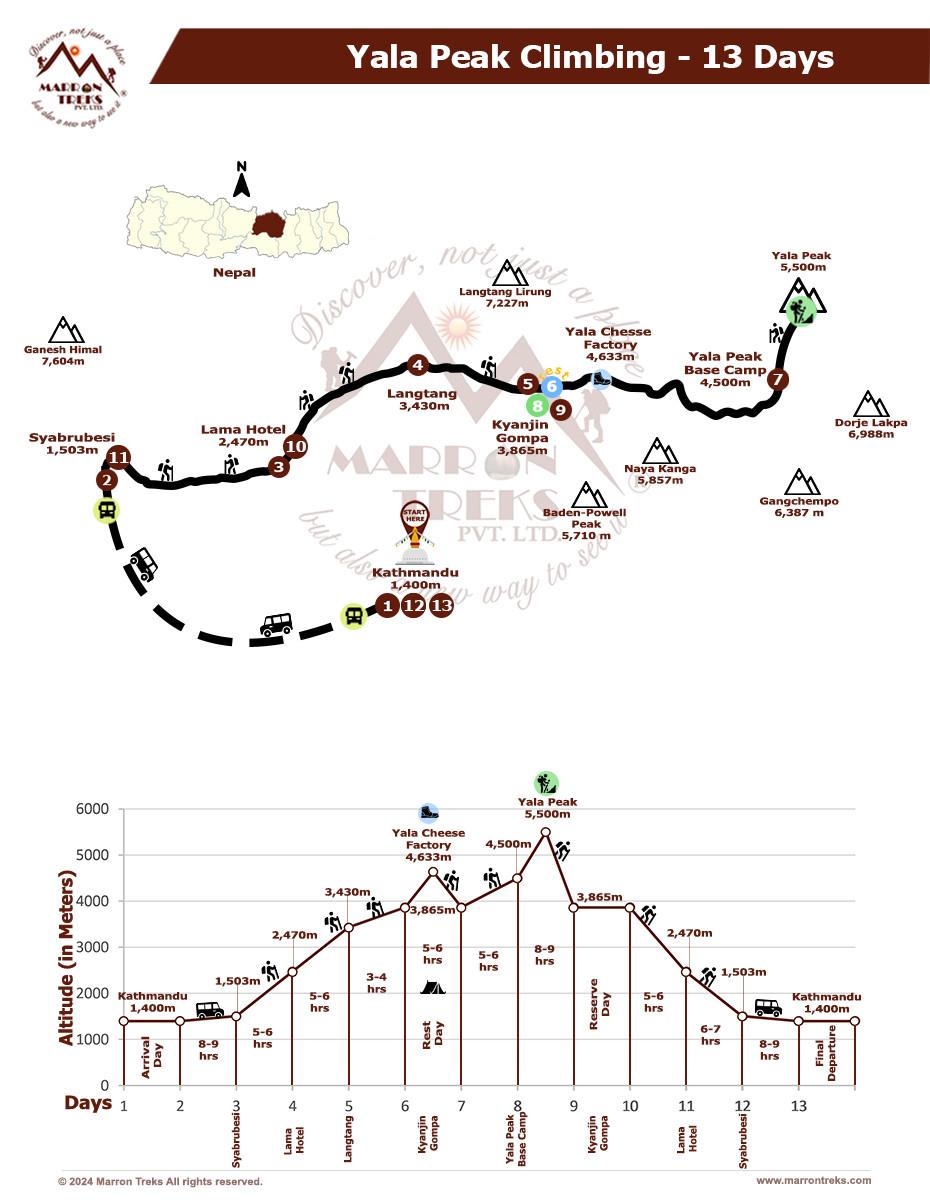
Day 01: Arrival in Kathmandu
Day 02: In Kathmandu - Climb preparation
Day 03: Drive from Kathmandu to Syabrubesi (1460m/7-8 hrs)
Day 04: Trek from Syabrubesi to Lama Hotel (2420m/5 – 6 hours)
Day 05: Trek from Lama Hotel to Langtang Village (3430m / 5 – 6 hrs)
Day 06: Trek from Langtang to Kyangjin Gompa (3870m / 3 – 4 hrs)
Day 07: Excursion day in Kyangjin Gompa; Hike to Yala Cheese Factory (4633m/5 – 6 hrs)
Day 08: Trek from Kyangjin Gompa to Yala Peak Base Camp (4500m/5-6 hrs)
Day 09: Summit Yala Peak (5732m) & back to Kyangjin Gompa (3870m/8-9 hrs)
Day 10: Trek from Kyangjin Gompa to Lama Hotel (2420m/5 – 6 hrs)
Day 11: Trek Lama Hotel to Syabrubesi (1460m/6 –7 hrs)
Day 12: Drive back to Kathmandu from Syabrubesi (7-8 hrs)
Day 13: Final departure
Once you land at the Tribhuwan International Airport in Kathmandu and accomplish your entry/visa formalities, you will be received by a representative from Marron Treks and transferred to the hotel. Welcome drinks will be served at the hotel after which we will have a quick pre-trip meeting and discuss the itineraries. You can then take your time to relax, unpack and spend the time as you wish. In the evening, stroll around the nearby places and get the feel of this energetic city.
Today is trek preparation day for equipment/gear check, shopping or renting your personal equipment. You can spend the rest of the time as you wish or probably prepare for the next day’s drive to Syabrubesi.
After breakfast, we drive to Syabrubesi, first along the crowded streets of Kathmandu and then later through the bumpy and dusty, single-lane road tucked at the base of northwestern hills. As we move ahead, the terraced farms and orthodox villages whip past us. We’ll halt for lunch at Trishuli Bazaar. We then resume our drive to Dhunche, the headquarter of the Rasuwa district, from where we take a descent to finally arrive at Syabrubesi. Well, to be honest, you might not enjoy the road conditions and could shake off at times, but yes, the views of mountains, the lush green terraced farms and stone house clusters alongside, could easily cheer you up, diverting your attention away from the rustic roads.
The real trek begins today. All jacked up, we commence our trek along a flat route, passing through the Langtang National Park. On the way, we come across a police checkpoint. We show our permit there and then continue along a downhill route for about 10 minutes crossing a suspension bridge. We advance further following the Langtang River and pass through a jungle. On the way, we might catch quick glimpses of different species of monkeys. We now cross one more suspension bridge and arrive at a place called Dobang (1672 m), where we can relish the view of a waterfall. Trailing ahead along the steep route to a rocky ridge for about 2o minutes, we pursue a flat track to Pahare Hotel and then to Bamboo Hotel, where we halt for lunch. We continue our move making an ascent to the route alongside the north bank of Langtang Khola (river) and further make a steep climb to the landslide, which gets us to a place called Rimche. A 20 minutes ascent from here, brings us to Changtang, popularly known as Lama Hotel.
Let’s begin our trek with a gentle climb which becomes steeper and steeper through the wild forests of hemlocks, oaks, maples and rhododendrons, high above the Langtang River. You can’t help glaring at the majestic Langtang Lirung (7,234 m) through the trees. We now cross a stream and further ascend to a pass marked with prayer flags. Crossing the Bailey bridge over another stream, we arrive at our lunch spot, the Ghora Tabela (2972 m), which is currently a Nepal Army and a National Park check post. By now, will have walked for almost 3 hrs. After lunch, we ascend further across the helipad, yak pastures and rhododendron bushes, which gets us to Thangshyap (3140 m). Continuing our climb ahead, we trail up the hillside above the potato, barley and buckwheat fields. We pass by a few restaurants and guesthouses through the Ghumba village. We are now just about 15 minutes away from Langtang village. Briskly, we cross a stream and climb past several water-driven mills and prayer wheels, finally arriving at the settlement of Langtang.
Enjoy the sip of your morning tea and then gear up for a scenic trek! We trail through the village and climb a ridge top to a large chorten. Continuing our ascent past the splendid Mani walls (the largest in Nepal), we cross a stream and arrive at the village of Mundu (3442 m). We now trail alongside the river beside the pasture of Yamphu (3640 m). Crossing a concrete bridge, we climb a moraine and get our first glimpse of the Kyangjin Gompa and the magnificent icefall of Langtang Lirung.
Rest does not mean being static. We have anchored ourselves at one of the most scenic locations of the trek, so let’s make the most of it. We can go for a short hike to Ngegang, a yak pasture at an altitude of 4000m. Ngegang is sometimes referred to as Base Camp, about Naya Kang’s (5744 m) trekking peak nearby. Exploring the Kyangjin Gompa is also not a bad idea. If you still have the appetite for more, we can go for another hike to the Yala Cheese Factory (4633 m). Walking up a moraine, we will be able the relish the icefalls and tumbling glaciers of Langtang Lirung.
To reach Yala Base Camp, we will embark on a challenging journey along the rugged glacier trail. Along the way, we will be mesmerized by the breathtaking sights of Ganchenpo, Naya Kang, Tserko Ri, Yala Peak, and many more. As for tonight’s lodging, we will be accommodated in a cosy tented camp, where our skilled camp cook will prepare delicious meals for you.
Today is the day we embark on our thrilling adventure. We’ll get up early in the morning and if the weather permits, we will conquer the towering Pisang peak. Once we reach the summit of Yala Peak, prepare to be mesmerized by the breathtaking panoramic vistas of Shishapangma, Dorje Lakpa, Ganchenpo, Naya Kang, Tserko Ri, Langtang Lirung, and numerous other magnificent Tibetan mountains.
Most of our way back to the Lama Hotel is downhill, so shouldn’t be that exhausting! We reverse our journey on days 5 and 4 trailing alongside the Langtang River, passing through the village of Mundu, Langtang and then arriving at the Ghora Tabela. Lunching and resting here for a while, we take another steep descent to the Lama Hotel. The walk is pleasant as it is downhill and more importantly embellished with Mani walls, chortens, pastures and rhododendron clusters. And of course, you can’t help wooing at the beauty of Langtang Lirung, every time you see it through the trees.
As we bid farewell to the mountains, we embark on our descent towards Syabrubesi, the place where our trekking journey began a week ago.
We will return to Kathmandu from Syabru Besi after breakfast, with the journey taking approximately 7-8 hours by either bus or Land Cruiser, depending on the size of the group.
A representative from Marron Treks will escort you to the Tribhuwan International Airport, three hours before your flight schedule. As you wave goodbye and enter the terminal block, you would perhaps recall your arrival at this place. No wonder everything seems so familiar now because, you had come here as a tourist, but you are going back as a friend!
Have a safe flight back home and we look forward to being your travel companion in Nepal again! Trips can always be extended. You can try out some of our other exciting packages like Bungy Jumping, Mountain Biking, Jungle Safari, White Water Rafting, Golfing & Paragliding etc. Please let us know about your desire for a trip extension so that we can make the necessary arrangements.
What is included?
- Airport pick-up and drop service.
- Hotel accommodations in Kathmandu on Twin-Share Basis with breakfast.
- Kathmandu/Syabrubesi/Kathmandu transfers by a local bus. (Option: Private Vehicle)
- Experienced government-licensed climbing guide & porters (1 porter for two people) including their food, accommodation, & salary.
- All trekking accommodations with Breakfast/Lunch/Dinner at local lodges or tents on twin sharing basis.
- All camping equipment required during the climb (sleeping tents/mattresses, kitchen tent, kitchen equipment).
- Group climbing gear like climbing rope, ice screws, and snow bars.
- Personal insurance for climbing/trek crew.
- Four seasonal sleeping bags and duffel bags (to be returned after trip completion)
- Permits for Langtang National Park & TIMS (Trekkers' Information Management System).
- Farewell dinner with Nepalese cultural program.
- All government and local taxes.
What is not included?
- International Airfare.
- Nepal entry visa fee – Visa can be obtained upon your arrival at the Tribhuwan International Airport in Kathmandu. (USD30 for 15 days)
- Lunch & dinner in Kathmandu.
- Personal Insurance for travel to Nepal.
- Emergency rescue evacuation (to be covered by the client's travel insurance).
- Expenses of a personal nature (phone calls, laundry, battery recharge, bottle or boiled water, hot shower etc.)
- Bar bills, alcoholic drinks & beverages.
- Personal climbing gear.
- Tips to guide & porters (Tipping is expected).
Route Map
FAQ's
What is the Yala Peak Climbing?
A brief Himalayan climbing experience in Nepal's Langtang Region is Yala Peak climbing. Trekking through picturesque villages and valleys is combined with a summit climb of Yala Peak (5,732 m).
What is the location of Yala Peak?
Yala Peak is located near the Tibetan border in northern Nepal's Langtang National Park. The trip follows the picturesque Langtang Valley path from Syabrubesi.
How challenging is climbing Yala Peak?
Yala Peak is regarded as a reasonably challenging trekking mountain. It still entails long summit days and high altitude walking, but it doesn't demand highly developed technical climbing abilities. It is advised to have some basic hiking experience and be in good physical shape.
Does Yala Peak require prior climbing experience?
It is not necessary to have prior mountaineering experience. However, prior trekking experience is beneficial.
When is the ideal time to climb Yala Peak?
Yala Peak is best climbed in the spring (March–May), when the weather is clear, and rhododendrons bloom, or in the fall (September–November), when the sky is stable and there are great views of the mountains.
What is Yala Peak's height?
Yala Peak's summit is 5,732 meters (18,805 feet) above sea level. To prevent altitude sickness at this level, adequate acclimatization is crucial.
Is altitude sickness a risk when hiking Yala Peak?
Indeed, Yala Peak's 5,732-meter peak raises the possibility of altitude sickness. Some climbers may experience symptoms including headache, fatigue, lightheadedness, or difficulty at this altitude. The plan includes time for acclimatization in Kyanjin Gompa prior to the summit attempt in order to lower the danger. You may safely acclimate your body to the altitude by walking gently, drinking lots of water, and listening to your guide.
Which mountains are visible from the top?
Climbers can take in stunning views of numerous Himalayan peaks from the summit of Yala Peak, including:
Langtang Lirung (7,234 m)
Dorje Lakpa (6,966 m)
Pemthang Ri (6,836 m)
Langshisha Ri (6,412 m)
Kangchenpo (6,378 m)
Shishapangma (8,027 m)
What is the total duration of the trip?
Including the arrival and return, the total days of this trip are 12 nights and 13 days.
What kinds of permits are required for the Yala Peak Climbing?
Langtang National Park entry permit and a TIMS card will be required, which will be managed by us.
What kind of lodging is offered for the trek?
In Kathmandu, you will stay at comfortable tourist-standard hotels. And, during the trek and climbing, you will stay at local teahouses and lodges with basic facilities. You will also stay in a tent camp for a night.
What meal is offered when hiking?
Dal bhat, noodles, rice, soups, spaghetti, potatoes, eggs, and vegetables are just a few of the many dishes available at tea houses. It's perfect for trekking because the cuisine is straightforward but tasty and substantial.
Are all meals included?
Only breakfast is included in Kathmandu. During the trek, breakfast, lunch, and dinner are included.
Does the climb raise the risk of altitude sickness?
Yes. There is a chance of altitude sickness because the summit is higher than 5,700 meters. To assist your body in adjusting before the summit attempt, the schedule includes acclimatization days at Kyanjin Gompa.
Can I use ATMs while trekking?
ATMs are only accessible in Kathmandu or Syabrubesi. Since there are no ATMs in the higher villages, make sure you have enough money for the trekking days.
Does the Yala Peak trip offer Wi-Fi?
Wi-Fi is offered at some teahouses for a modest cost; however, at higher altitudes, it may be unreliable or slow. While signals may be weak on steep trails or in remote regions, mobile networks are often more dependable in villages like Syabrubesi, Lama Hotel, Langtang, and Kyanjin Gompa.
Will the journey be accompanied by porters and guides?
Yes. The major luggage is carried by porters, and the adventure is led by a certified trekking and climbing guide.
What necessities should I bring?
It's crucial to pack things that will keep you warm, comfortable, and safe for the Yala Peak trip. To protect yourself from the sun and cold, pack warm clothing appropriate for high altitudes, comfortable hiking shoes with socks, a hat, sunglasses, and sunscreen. Bring personal hygiene products, prescription drugs, a water bottle, and purification tablets to help you keep hydrated. For carrying necessities on regular hikes, a day backpack comes in handy. As stated in our trek equipment and medications checklist, it's also advised to pack basic first-aid supplies, medication for altitude sickness, and trekking-specific equipment.
Can I alter the route for climbing Yala Peak?
Indeed. Depending on your preferences, level of fitness, or additional days for acclimatization, the itinerary can be modified. You can prolong your stay in Kyanjin Gompa, add more rest days, or do more sightseeing in Langtang Valley. Together with the tour operator and your trekking guide, custom tours are planned.
Trip Info
Accommodation
While you are in Kathmandu, we opt to accommodate you in 4- or 5-star hotels like Hotel Royal Singhi (4-star), Hotel Manaslu (4-star), Radisson (5-star), Yak & Yeti (5-star), or similar. During the trek, you will be accommodated in a local mountain lodge, better known as Tea House. These lodges and teahouses provide good services and are equipped with basic amenities. We will endeavor to provide you with the best accommodation available along the route so that you get a good night’s rest in a hygienic milieu.
Meals
We never compromise the quality of food or the health of the trekkers as well as the crew members. Generally, we opt for the fresh and nutritional local community food available. You could make your delicious pick from an array of traditional foods like Sweet potatoes, buckwheat barley, etc. This way, you could not only get a real sense of the local culture and life patterns but also contribute to promoting the locally available resources of organic food and beverages. Besides, a wide range of Continental, Chinese, Italian and Indian cuisines like Pizza, Spaghetti, French Fries, Soups, Breads, Masala curry, etc. are also available in the restaurants for your retreat.
Acclimatization
Altitude sickness is a serious risk while trekking in the Himalayas. It's important to acclimatize properly by spending a few days at lower altitudes before heading higher. By spending time at lower altitudes before pushing higher, your body has time to adjust. Our trekking packages have enough acclimatization days planned where you'll be spending a day or two at lower altitudes, allowing your body to adjust to the increasing altitude.
Electricity & drinking water
For an additional cost, you can use the electricity in all tea houses and lodges to recharge your batteries. The lodges have packaged mineral water for sale, or you can fill your bottle with boiling water. To make water drinkable, you can use water purification tablets too. But, due to hygienic issues, you should avoid drinking water from taps, rivers, or wells in trekking areas.
Communication
At lodges, restaurants, and hotels, Wi-Fi is available for an additional fee in the most popular trek regions, like Everest, and Annapurna. However, at high elevations, phone calls are the only means of connection. Our office in Kathmandu is in constant communication with your trek guide. In Kathmandu, you can purchase a local sim card for communication purposes. At high elevations, the mobile signal might not be as strong, though.
Luggage
Our porters are paired with one trekker for every two hikers, and one porter can safely carry 30 kg maximum weight. Therefore, we advise you to fill your duffle bag not more than 15 kg with your belongings. You may carry a small backpack with your valuables and informational documents. The things you are not taking along on the trek can be stored in a hotel in Kathmandu free of cost.
Typical Trek Day
Mostly your trek day starts with breakfast at 7-8 am, followed by a 3-4 hour morning trek. Lunch break is around an hour, then you continue trekking to your destination for the day. After reaching the teahouse lodge, you can relax, explore nearby areas, and enjoy dinner at 6-7 pm. Evenings involve socializing, a trek briefing, and leisure activities before bed.
Travel Insurance
It is advised that you arrange your travel insurance before leaving your homeland. The main thing is to make sure that your insurance covers you for both- medical and evacuation costs. Having travel insurance with you makes your trip secure and hassle-free.
Our Guides
Guides play a significant role during the trek. They are the ones who literally decipher the trekking codes for you so that you can actually connect with nature, culture and people along the way. We have helpful and dedicated trekking guides who are very well-versed in the culture, life patterns and every single detail pertaining to the trek region you are traveling in. Thus, in the company of our professional Sherpa guides, your trek becomes not only entertaining but also equally informative.
Porter and Staff Care
When it comes to high-altitude trekking, porters and staff members make up a pivot. Marron Treks ensures that all the porters and staff members going to high altitudes are provided with adequate clothing and equipment. All our field staff are covered by insurance.