Upper Mustang Trek
Upper Mustang Trek: A Journey to the Forbidden Kingdom
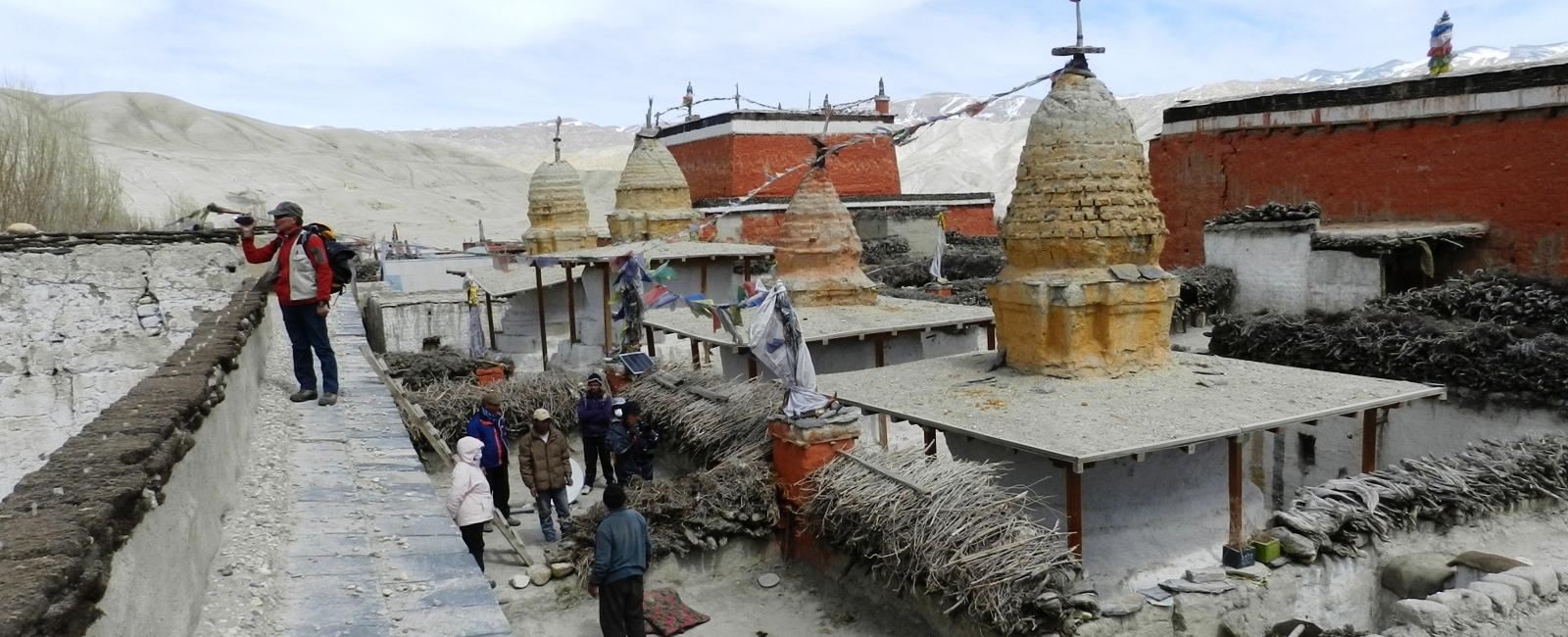
The Upper Mustang Trek is a 15-day moderate trek in the rain shadow of the Annapurna region, offering a unique journey into the ancient Lo Kingdom. The trail passes through dramatic desert landscapes, deep canyons, sky caves, and traditional Tibetan Buddhist villages. With a maximum altitude of 3,840 m at Lo Manthang, it is also one of the best treks during the monsoon season (Jun–Aug) because the region stays mostly dry.
Essential Update
- Restricted Area Permit: USD 50 per person per day with a licensed guide is required.
- Road Access: A road connects Jomsom to Lo Manthang, but many itineraries use traditional trails to avoid traffic.
- Internet: Starlink internet is available in many teahouses in Lo Manthang and Charang.
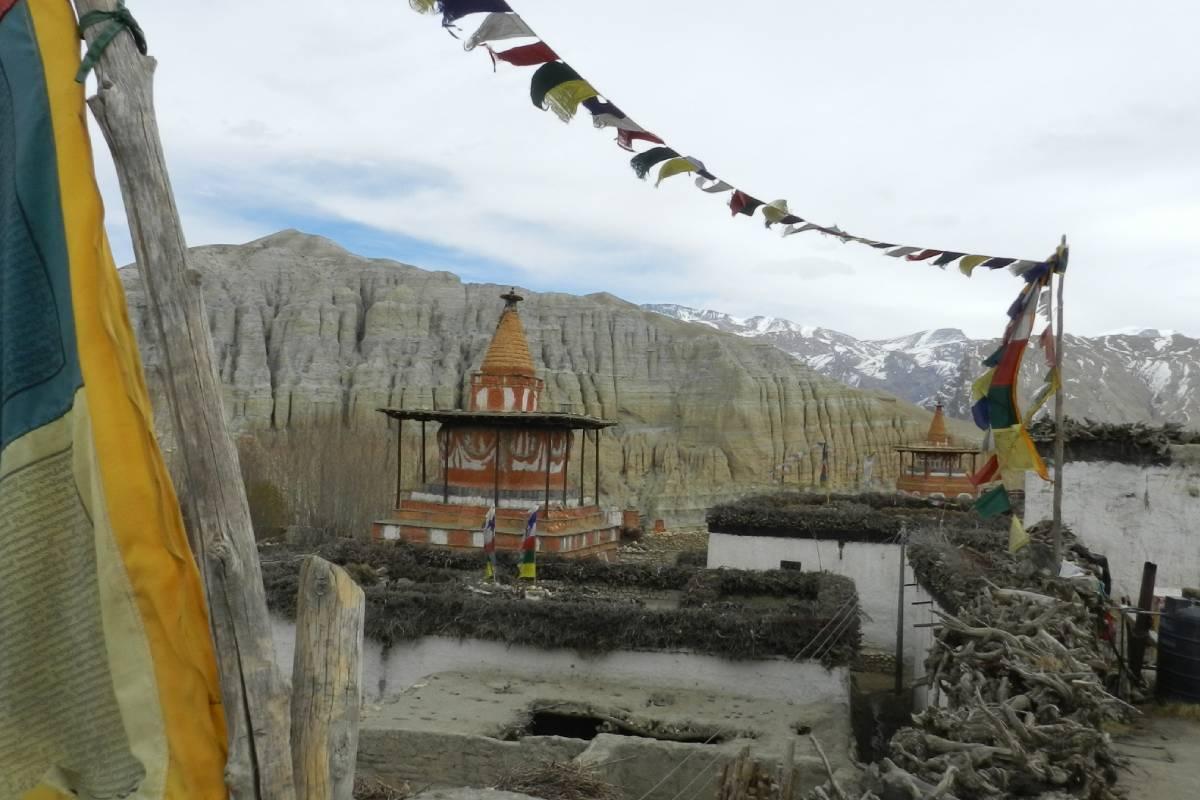
- Monastery Restoration: Thubchen and Jampa Gompas now showcase restored 15th-century murals.
- Sustainable Travel: Many trekking companies now promote no single-use plastic and provide filtered drinking water stations.
Trip at a Glance
-

Country: Nepal
-

Trip grade: Moderate
-

Destination: Mustang region
-

Activities: Trekking
-

Accommodation: Hotels/Lodges
-

Meals: Full-board on trek
-
.png)
Transportation: Private vehicle/Plane
-

Maximum altitude: Lo-Manthang (3840m)
-

Group size: 2 pax min
-
.png)
Best Season: Feb-Jun, Sep-Nov
Upper Mustang Trek Overview
This comprehensive 15-day Upper Mustang often also called ‘the forbidden Kingdom’ is a remote and isolated region in the Himalayas of Nepal, located near the Tibetan border. The Upper Mustang trek is a popular trek to the remote and restricted region of Nepal, offering a unique cultural experience and stunning scenery. Trekking to the Upper Mustang was allowed and open to foreign trekkers only in 1992 under a special restricted area permit.
Our curated 15-day itinerary for the Upper Mustang trek will take you to the ancient kingdom of Mustang at Lo Manthang situated at 3,840 meters. Lo Manthang is the ancient capital of Mustang and is a beautifully preserved walled city where people still live even to this day. The Tibet Autonomous Region of China is located towards the northern border of the city, whereas the Dalome Rural Municipality of Mustang is in the south.
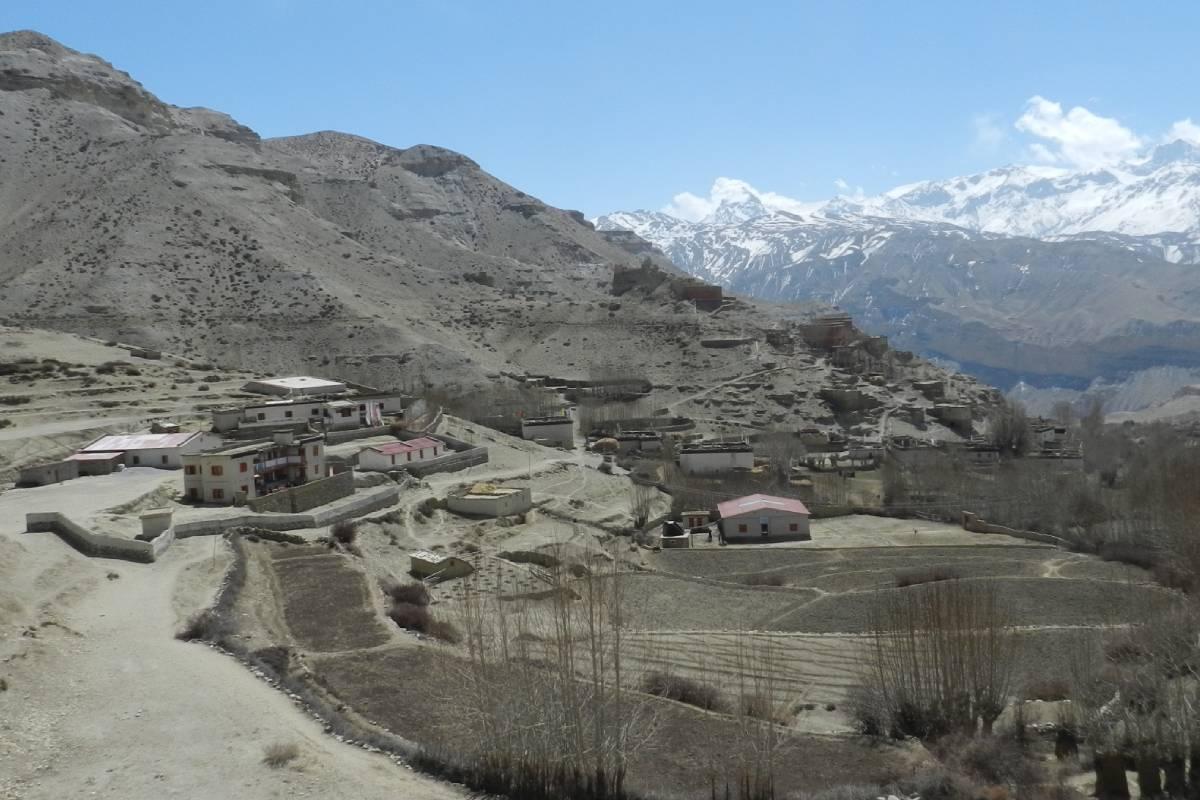
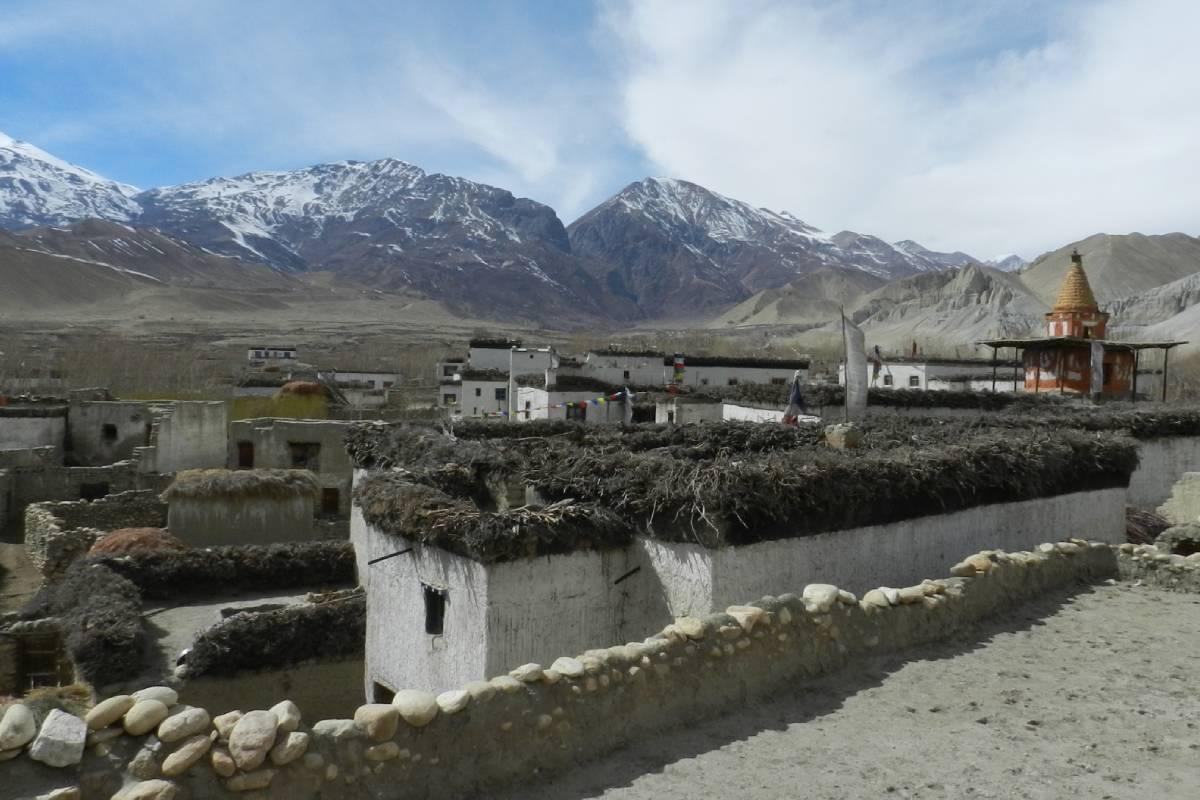
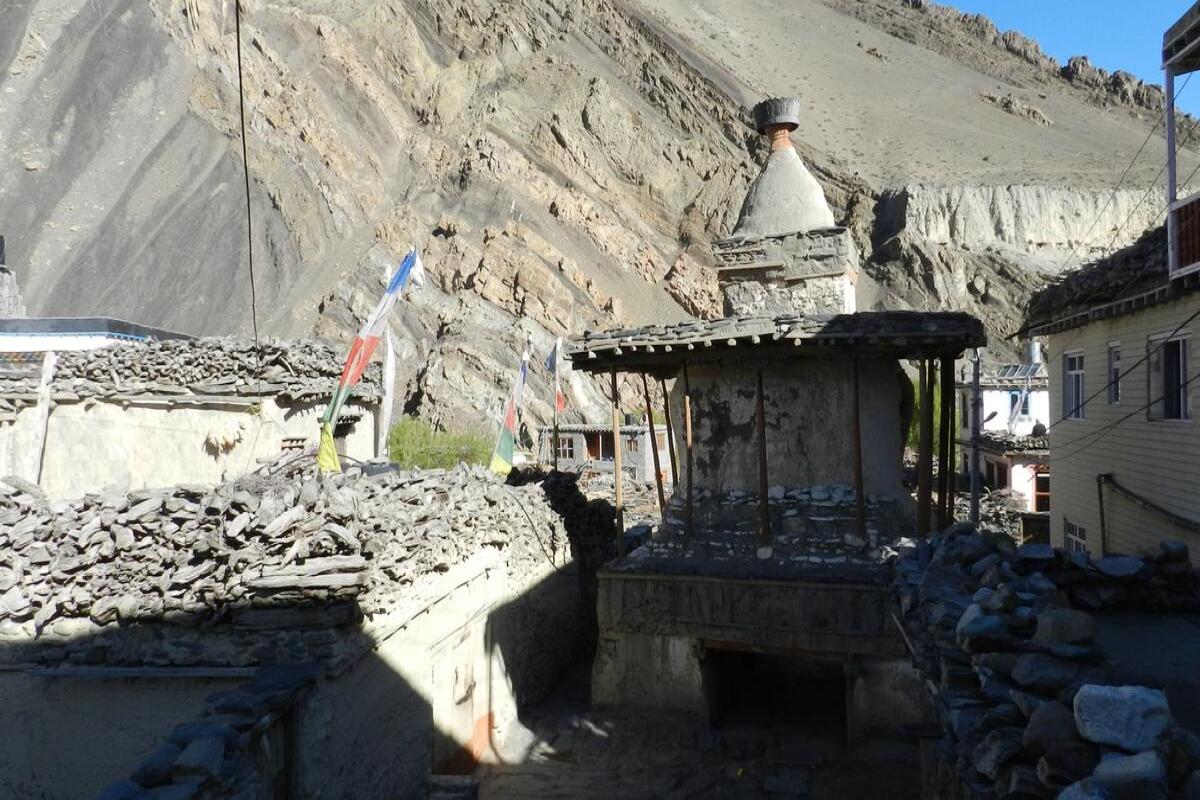
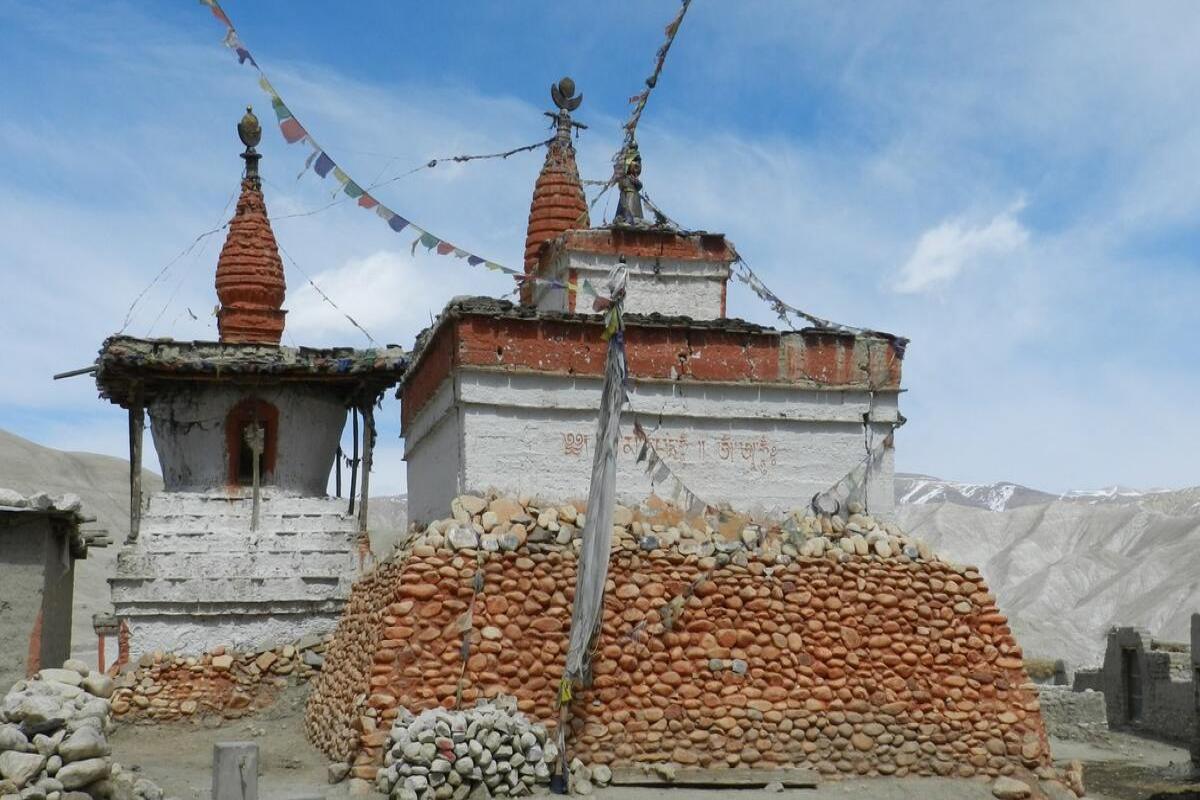
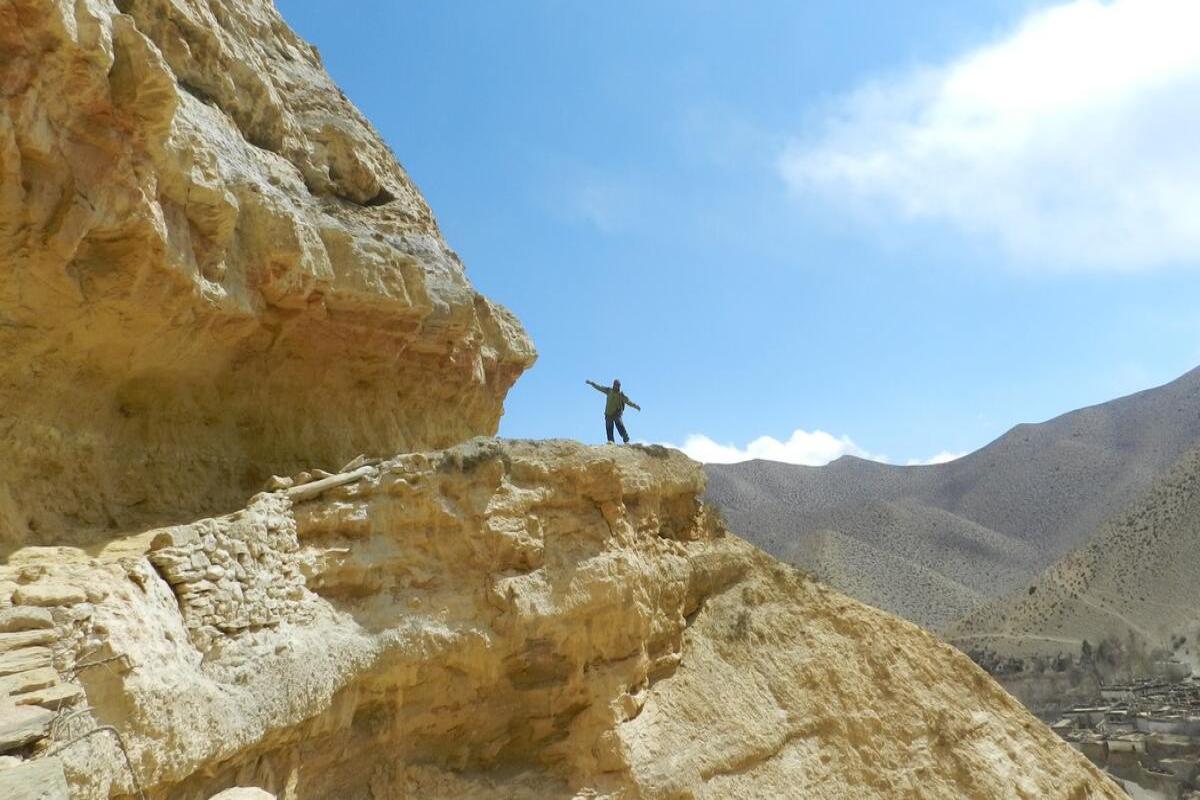
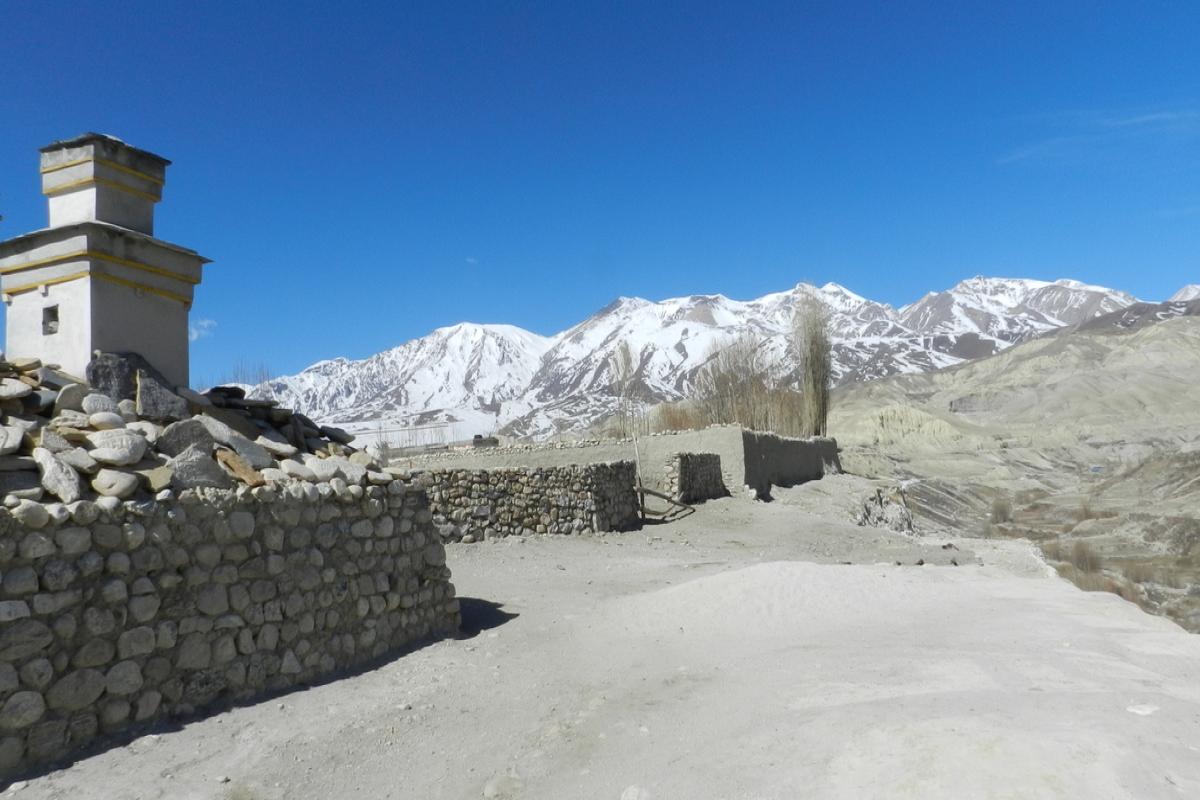
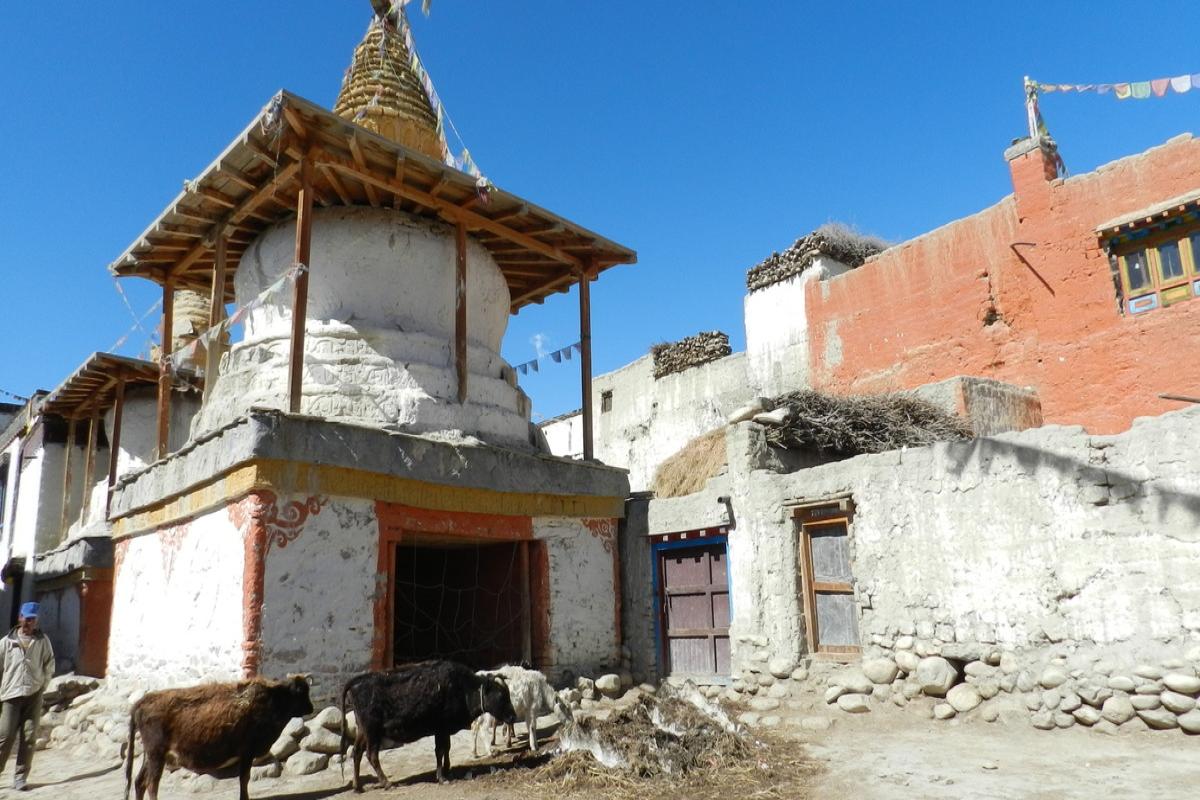
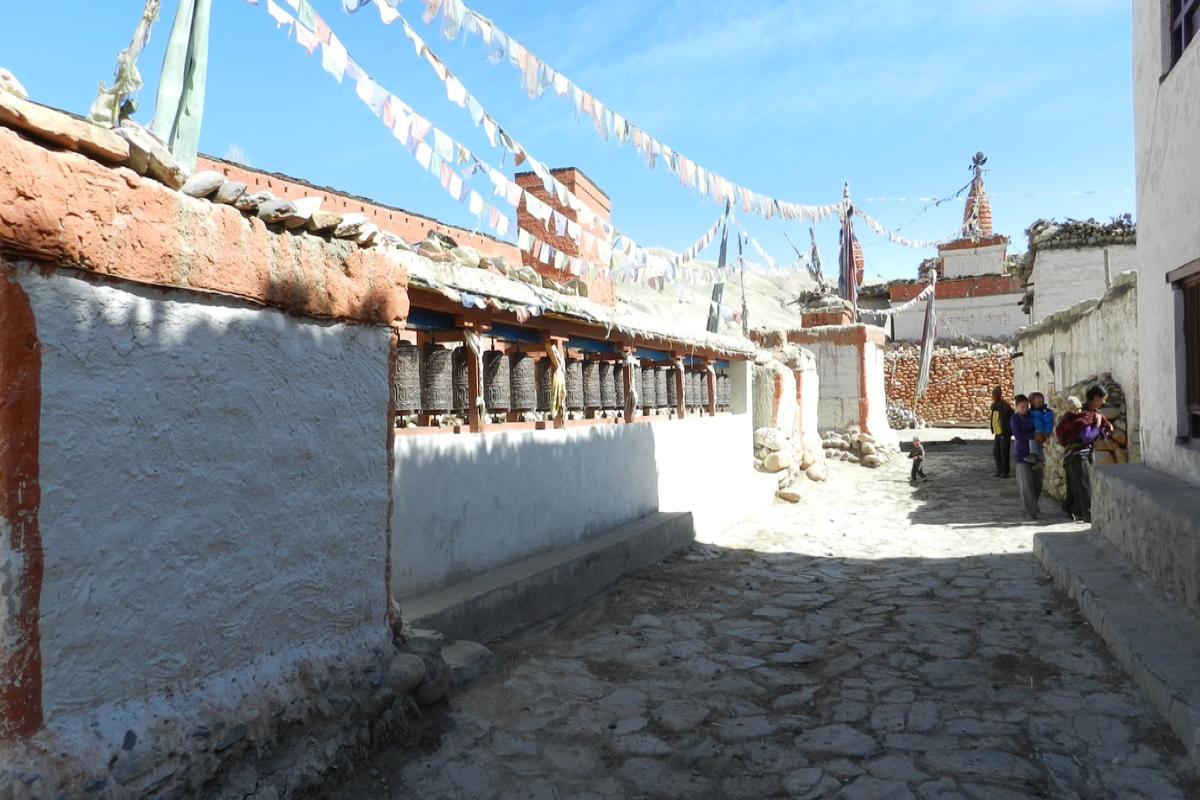
The trekking trail of Upper Mustang passes along traditional villages, age-old Buddhist monasteries and ancient caves, all set against the backdrop of the spectacular Himalayan mountains. Witness the traditional way of life of the local people who are of Tibetan descent, as you hike along to the ancient walled city of Lo Manthang during the best trekking months of March to November.
This Upper Mustang trek starts after a scenic short flight to Jomsom from Pokhara then you need to trek to Kagbeni following the Kali Gandaki River Valley. Thereon the trail passes through beautiful traditional mountain villages, barren cliffs, and windy valleys, offering panoramic views of the surrounding snow-capped mountains like Nilgiri, Annapurna, and Dhaulagiri.
Eventually, you will reach the ancient and popular walled city of Lo Manthang. Explore around the city where time has stood still for ages, visiting it’s age-old Buddhist monasteries like the Namgyal Gompa, King’s palaces and the narrow streets and alleyways. To make is even more interesting, you can take a hike to the mysterious Jhong cave in Chhoser, about a 2-hour walk from Lo-Manthang.
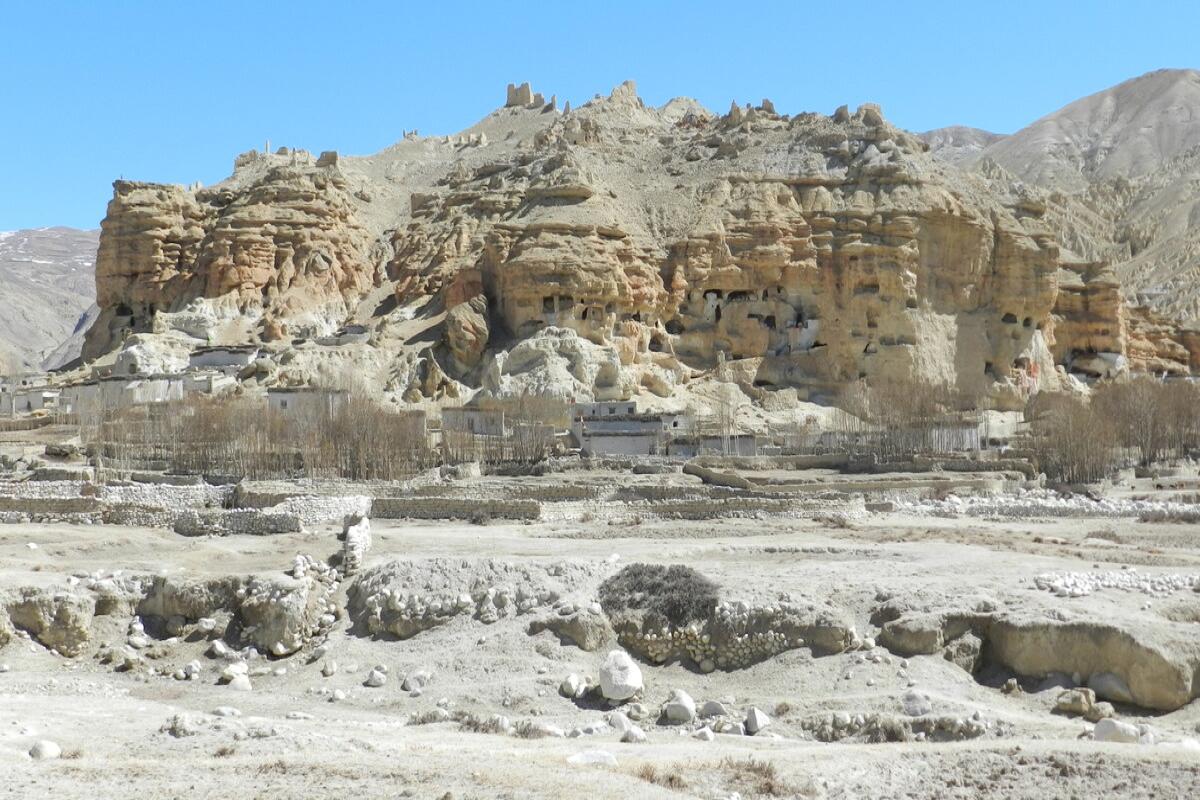
They are often called sky caves, located on hillsides, which are multi-story man-made caves attracting archaeologists from around the world. Upper Mustang Trek is an exclusive 15-day journey and culturally rich travel experience in the Himalayas, offering a glimpse into a hidden region of Nepal with remarkable scenery, ancient culture, and an astonishing Himalayan panorama.
Upper Mustang Trek Highlights
- A scenic flight to Jomsom with the splendid views of Dhaulagiri and Annapurna mountains simultaneously.
- Discover the picturesque northern Himalayan region of Nepal, its multifarious landscapes & its diverse range of floras and faunas.
- Visit Kagbeni, a gateway to the restricted zone of Mustang and a major trading route between India & Tibet.
- Explore Lo Manthang with it’s age-old Buddhist monasteries & ancient caves.
- Plentiful cultural encounters with the ethnic people of Tibetan descent.
Best Time to Visit
Upper Mustang is the most unique trekking destination in Nepal, where trekking is possible almost year-round besides winter (December to February). The region of Upper Mustang lies in the rain shadow of the Annapurna and Dhaulagiri ranges, which means it receives less rainfall and is accessible even in the monsoon season (June to August).
Here’s Upper Mustang weather by month to plan your trekking in Upper Mustang.
Spring (March–May)
Travelling to Upper Mustang during spring (March till May) is considered the best time to travel in Upper Mustang. The weather will be mild and comfortable, so good for walking with clear skies and beautiful landscapes.
| Daytime temperatures: |
Nighttime temperatures: |
|
12°C to 22°C (54°F to 72°F) |
-5°C to 5°C (23°F to 41°F) |
Why travel in spring
- Tiji Festival: The Tiji Festival is a popular 3-day Buddhist festival attended by the locals and tourists alike. It is held in the capital city of Mustang, Lo Manthang, and is usually celebrated during May each year. The festival highlights are vibrant masked dances, rituals, and colorful celebrations. You can join Upper Mustang Tiji Festival Jeep Tour
- Pleasant trekking: Days will have moderate temperatures, making walking pleasant.
- Clear mountain panoramas: Mountains reveal themselves during spring with excellent visibility. Peaks like the Annapurna, Dhaulagiri, and Nilgiri ranges are clearly visible.
Autumn (September–November)
Autumn will have the most stable weather and the clearest mountain views of the year. It is also the most popular trekking season for travel to Upper Mustang.
| Daytime temperatures: |
Nighttime temperatures: |
|
10°C to 20°C (50°F to 68°F) |
-5°C to 6°C (23°F to 43°F) |
Why Visit in Autumn
- Majestic mountain views: Autumn being a post-monsoon gives clarity and the best for great photography of the mountains and beautiful landscapes of upper Mustang.
- Stable weather: Weather will be reliable, and there’s also minimal chance of flight delays as weather will be clear with blue skies.
- Appropriate temperatures: Days will be warm, so it’s perfect for trekking, and nights will be cool and great for sleeping.
Winter (December–February)
Upper Mustang during winter is harsh and challenging. Traveling to Upper Mustang during winter is recommended only for experienced trekkers seeking solitude and a willingness to brave intense weather conditions. It will be very cold and windy, and some lodges may be closed in winter.
| Daytime temperatures |
Nighttime temperatures |
|
-5°C to 5°C (23°F to 41°F) |
-10°C to -20°C (14°F to -4°F) |
Who Should Visit in Winter
- Professional trekkers have high-altitude trekking experience during winter.
- Those seeking absolute solitude.
- Wildlife photographers want to cover snow-covered landscapes.
Seasonal Pros and Cons
Seasonal |
Pros |
Cons |
|
Spring (March–May) |
|
|
| Autumn (Sep–Nov) |
|
|
| Summer/Monsoon (June–Aug) |
|
|
| Winter (Dec–Feb) |
Very quiet, almost no crowds Snow-covered landscapes look beautiful and unique Peaceful trekking experience |
|
Is the Upper Mustang Trek difficult
Is the Upper Mustang Trek difficult? You can rate the trek as moderately graded trekking since it’s not that hard but not super easy either. Though not demanding like the Everest Base Camp trek, you are still trekking in high-altitude and remote locations with an arid climate, which demands some challenges.
Trekking Overview
| Factor | Details |
|
Trekking grade |
Moderate |
|
Daily walking hours |
5–6 hours (up to 8 hours) |
|
Maximum altitude |
3,840 meters (Lo Manthang) |
Daily walking hours and altitude gain
The daily walking hour is 5-6 hours, and the longer days will have around 8 hours. The maximum altitude attained is at Lo-Manthang at 3840 meters/12,598 feet above sea level.
Physical preparation tips
- Walk regularly: Go for a walk daily for about 1-2 hours at a time. If applicable, climb on a hill or stairs. It prepares your body for long trekking days.
- Basic stamina building: Light cardio like jogging, cycling or hiking builds basic stamina for the trek. About 30-45 minutes per session is enough, and you can slowly increase your time and distance. This will help you walk for about 5-7 hours per day without tiredness.
What permits are required for the Upper Mustang Trek
Upper Mustang is a restricted area and requires special permits.
- Upper Mustang Restricted Area Permit (RAP)
- Annapurna Conservation Area Permit (ACAP)
Permit costs and where to obtain them: Permits can be obtained through a registered trekking agency.
Guidelines and regulations: A licensed guide is mandatory, and solo trekking is not allowed.
Tips for Travelers
- Acclimatisation and health precautions: Walk slowly and allow your body to adjust to altitude.
- Packing essentials: Carry warm clothes, water, snacks, and basic medicines.
- Cultural etiquette and photography tips: Respect local culture and ask before taking photos.
- Staying hydrated and food recommendations: Drink enough water and eat properly during the trek.
Why choose Marron Treks for the Upper Mustang Trek
- Experienced local team with deep knowledge of the Upper Mustang region
- Flexible itineraries designed for all types of trekkers
- Your safety is our top priority in remote high-altitude areas
- High success rate in completing the Upper Mustang Trek smoothly
- Trusted by trekkers from around the world
- Strong local expertise with international service standards
- 24/7 support before, during, and after your Upper Mustang journey
- Licensed guides with real experience in Upper Mustang trails
- Transparent pricing with no hidden costs
- Responsible and eco-friendly trekking that supports local communities
Itinerary
Here’s a carefully designed 15-day itinerary for the Upper Mustang Trek, taking you through remote Himalayan landscapes and the ancient walled city of Lo Manthang.
Upon arrival at the Tribhuwan International Airport in Kathmandu, you need to accomplish your entry/visa formalities. You will then be received by a representative from Marron Treks and transferred to your hotel in Kathmandu. Welcome drinks will be served at the hotel and then we will have a quick pre-trip meeting. You can then spend the remaining time resting or as you please. In the evening you can stroll around the vicinity of your hotel just to get the feel of this wonderful city.
Flying is the quickest option, taking around 25 minutes compared to several hours by road. The flight offers stunning views of the Himalayas, including the Annapurna and Langtang ranges. The road journey is longer (6-7 hrs) but allows you to experience the scenic beauty of the countryside. The Prithvi Highway offers picturesque views.
We will take an early morning flight from Pokhara to Jomsom. The breathtaking 35 minutes on board tosses us above the Kali Gandaki gorge, the world’s deepest. The towering snowcapped peaks of Dhaulagiri and Annapurna stand formidably adjacent to us as we peek through the small glass windows of our aircraft. Not just that, looking underneath, the views of waterfalls, canyons, and terraced fields are simply magnificent. This is truly one of the world’s most spectacular scenic flights! Upon arrival at Jomsom, we’ll meet the rest of our trekking staff for lunch. Today, we commence our trek on a fairly easy section of the trail, following the Kali Gandaki River to Kagbeni, which happens to be the gateway to the restricted zone of Mustang and one of the major trading routes between Tibet and India . The traders brought salt from Tibet and barley, spices and clothes from India . After the Chinese invasion of Tibet , trade came to a halt and many of the rich villages lost their revenue, subsequently causing the number of inhabitants to dwindle. Nowadays, though some trade has resumed, majority of the village income comes from tourism. According to a legend, while entering this dusty settlement, we should only think about the good things, quitting all bad thoughts outside the town gate.
From Kagbeni to Tangbe (3020m), the trail winds along the east riverbank and occasionally ventures out into the rocky river bed. Initially, the trail climbs steeply to the top of the hill but we’ll be rewarded with a spectacular view of prayer flags, stupas, and villages. After crossing several windblown plains and passing through a canyon, we arrive at the Mustang village of Tanbe . This small village is filled with whitewashed adobe houses nestled against each other and is surrounded by beautifully terraced fields of wheat, barley, and buckwheat, as well as small apple orchards. On the lower side of Tangbe, we’ll see three elegant chortens and the remnants of an old abandoned fort. As we continue our walk, be on the lookout for black ammonites, small fossils of coiled sea molluscs that inhabited the Tethys Sea and covered the Tibetan plateau millions of years before the Himalayas were formed. They are considered to be holy by many local people. Continue on to Chaile.
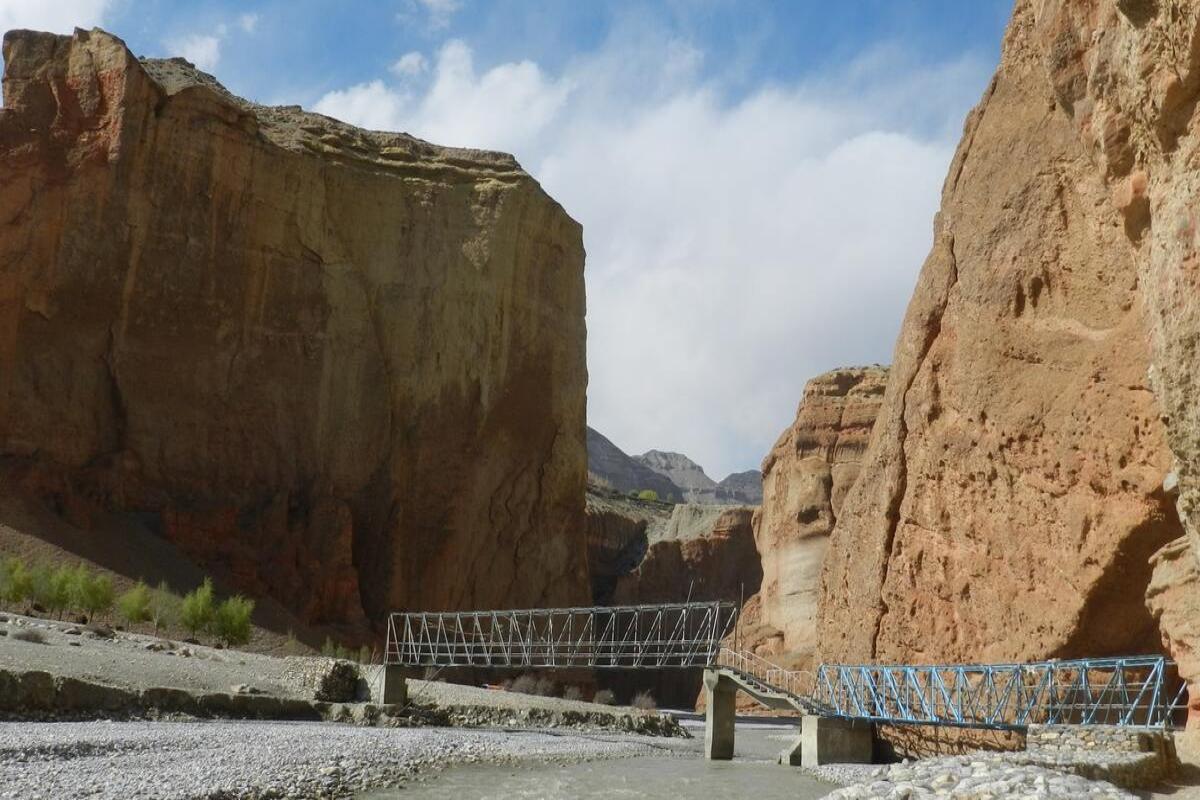
From Chele we make a fairly steep climb to a cairn at about 3150m, which offers a great view of “Gyagar village” across the canyon. The trail, which is literally carved into the side of this spectacular canyon, continually renders scenic retreats. We cross a mountain pass, and then make a long gradual descent along a pleasant trail to Samar. Finally, after passing through several small canyons that are home to cool streams and shady juniper trees, we arrive at Geling (3510m). This largest village before entering Upper Mustang is a rarely visited gem, set among numerous poplar groves and a central stream, housing one of the oldest Gompas of the region. Spend the evening relaxing in front of the central field, where you can observe the grain being threshed, animals grazing, and children playing.
From Geling, the trail climbs gently through fields of barley and groves of poplar trees up the center of the valley, passing below the settlement of Tama Gaun and an imposing chorten. After rejoining the direct trail, it becomes a steep slow climb across the head of the valley to the Nyi La pass at 4020m, the highest point reached on the trek. Charang is a maze of fields, willow trees and houses separated by stone walls at the top of the large Charang Cho Canyon . The huge five story white dzong and red gompa are perched on the edge of the Kali Gandagi gorge on the east end of the valley.
Today we’ll move slowly but steadly up a rocky trail to a cairn on a ridge opposite the village at 11,841 feet. The trail turns north and climbs gently to a large isolated chorten that marks the boundary between Charang and Lo. After a rest break we’ll travel across a desert-like landscape painted in every hue of grey and yellow.. Finally, we reach our destination- the whitewashed walls of the city of Lo , which sits among fields filled with horses and yaks.
This is a well earned rest cum an excursion day at one of the most mystique regions. We explore the surrounding areas visiting the Namgyal Gompa and Tingkhar. Namgyal Gompa, situated on a hilltop, serves as an important monastery of the local community and also as a local court. After visiting Namgyal Gompa, we proceed towards Tingkhar, the last major settlement to the northwest of Lo-Manthang. Fully content with these enticing explorations, we hike back to our teahouse.
The other viable options for excursions at Lo Manthang could be visiting some of the attractive landmarks like- the astoundingly tall Champa Lhakhang (God house), the red Thugchen Gompa, Chyodi Gompa, and the four- storey building of the King’s palace.
We have the opportunity to vary our return route and visit two villages that we did not see on the trek northwards. At Ghemi we’ll visit Gar Gompa, the oldest archive gompa in Nepal . Ghemi is also known for its many hectares of beautiful fields and for its white- washed houses. The trail to Lo Gekar is not a main trading route and is crisscrossed with herder’s trails, so our local guide is particularly useful here. Today’s trek will cross several valleys, some lush and others barren. Near the end of the hike the trail then makes a long rocky descent down a ravine to a grassy valley, where Lo Gekar is situated within a group of large trees by a stream. Lo Gekar, which means “Pure Virtue of Lo,” is also known as Ghar Gompa, or”House Temple”.
The moment we kiss goodbye to Ghemi, we embark on a constricted path and continue thereon until we reach Geling. We then cross a small stream and finally arrive at Samar, a village that literally emanates the Tibetan way of life.
Trek from Samar to Kagbeni is frequented by descents. We trail along a downhill route and arrive at Chhuksang (2920m). Crossing the suspension bridge over the roaring Kali Gandaki River, we continue walking along the bank of the river relishing the view of apple orchards and natural vegetation alongside, until we finally get to Kagbeni, a typical, stone built Mustang village. Its history dates back to the 14th century when it was formed as a check post for traders of Nepal and Tibet. This checkpoint still exists and is in operation, controlling the groups departing towards Muktinath and Mustang. It is also the main entry/exit point to the restricted area of Upper Mustang. The village has a monastery, a Police check post and ACAP (Annapurna conservation area project) office.
Trek from Kagbeni to Jomsom is fairly flat and along the riverbed. We trail along the banks of Kali Gandaki and pass through the settlement of Eklebhatti before we finally arrive at Jomsom. The last trek and the shortest one of course!
We take a scenic 20 minutes’ morning flight from Jomsom to Pokhara. The flight from Jomsom to Pokhara is relatively short but offers breathtaking views of the Himalayan mountains, including the Annapurna and Dhaulagiri ranges. Make sure to have your camera ready! Once in Pokhara, take advantage of the various attractions it has to offer. You can visit Phewa Lake, Devi's Fall, Gupteshwor Cave, and enjoy the beautiful surroundings.
After beakfast, either take a flight to Kathmandu or go for an overland drive back to Kathmandu.
Final departure: Today is your final day in Nepal. It is advisable to reach the airport three hours prior to your flight. A representative of Marron Treks will escort you to the airport for your final departure. If you wish to extend your trip, we have other adventurous tour packages like Bungy Jumping, Mountain Biking, Jungle Safari, White Water Rafting, Golfing & Paragliding etc. Please let us know about your desire for trip extension so that we can make the necessary arrangements.
What is included?
- Airport pick-up and drop services.
- Hotel accommodations in Kathmandu & Pokhara on Twin-Share Basis with breakfast.
- Kathmandu/Pokhara/Kathmandu transfers by private vehicle or tourist bus.
- Pokhara/Jomsom/Pokhara round airfares.
- All trekking accommodations with Breakfast/Lunch/Dinner at local lodges.
- Four seasonal sleeping bags (to be returned after trip completion) & Marron Treks duffel bags.
- A comprehensive medical kit (will be carried by the trekking guide).
- Experienced Government licensed English Speaking Guide & Porter (1 porter for two people) including their food, accommodation, salary & insurance.
- Permits for Annapurna Conservation Area, TIMS (Trekkers' Information Management System) & Special Upper Mustang Permit.
- Farewell dinner with a live Nepalese cultural program.
- All government and local taxes.
What is not included?
- International airfare
- Nepal entry visa fee – Visa can be obtained upon your arrival at the Tribhuwan International Airport in Kathmandu. (USD30 for 15 days)
- Lunch & dinner in Kathmandu or Pokhara
- Personal travel insurance.
- Emergency rescue evacuation (to be covered by the client's travel insurance).
- Excess baggage charges (luggage allowance for domestic airlines in Nepal is 15 kgs.)
- Other expenses of a personal nature (phone calls, laundry, battery recharge, bottle or boiled water, hot shower etc.)
- Cost incurred due to the addition of extra days or change in the itinerary due to bad weather, political turmoil or any other unforeseen contingencies.
- Bar bills, alcoholic drinks & beverages.
- Tips for Guide & porters
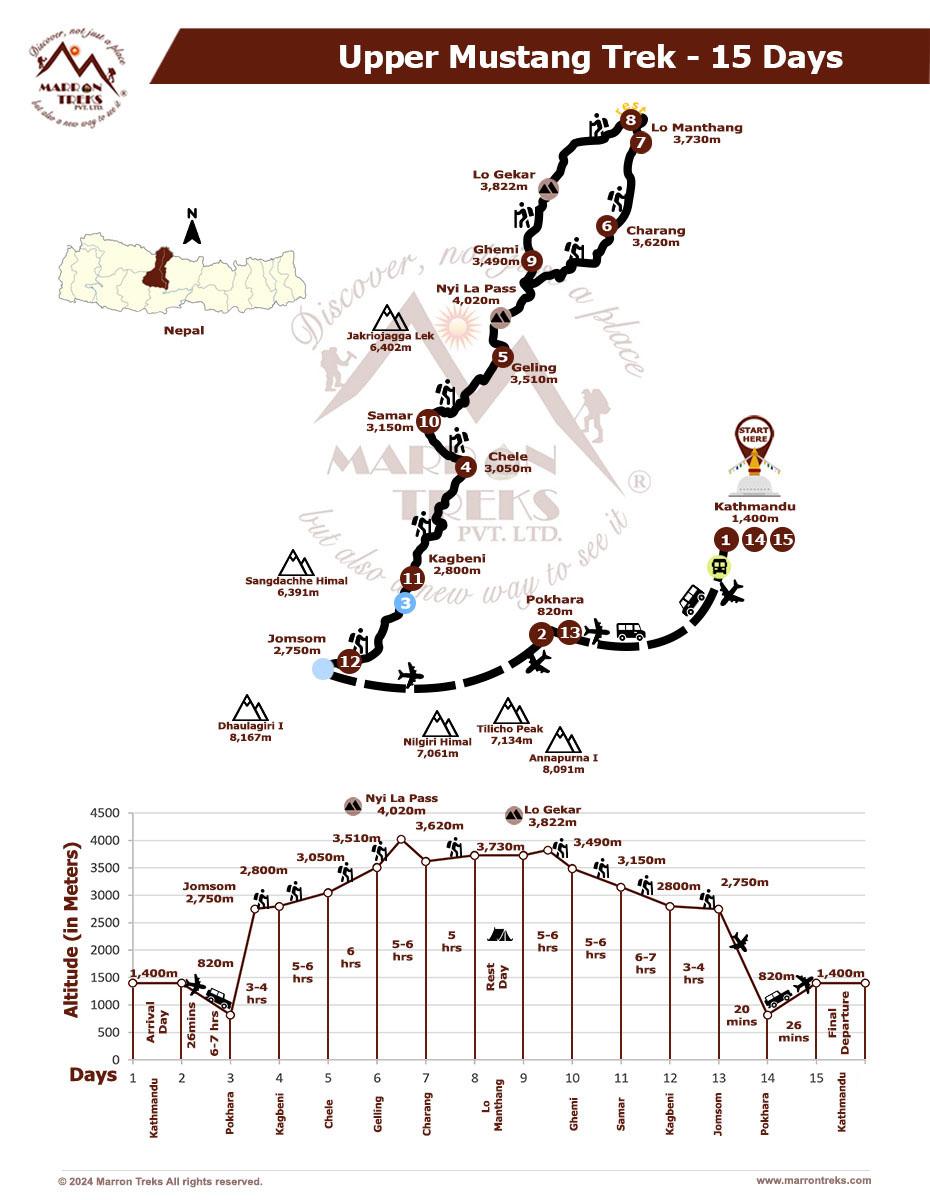
Route Map
FAQ's
What is the location of the Upper Mustang Trek?
The Upper Mustang Trek is in the Mustang area of Nepal, which is close to the border with Tibet. People often call it ‘the Forbidden Kingdom.” It’s an isolated location with a lot of culture, historic, walled cities, Buddhist monasteries, sky caves, and Beautiful Himalayan scenery.
What is the total duration of the trek?
The trek’s total duration is 15 days in total according to our itinerary.
What is the highest point?
Lo Manthang, at 3,840 meters, is the highest point.
How hard is the Upper Mustang Trek?
The walk is not too hard. There are lengthy days of walking on rocky pathways, some of which go up hills, and some of which are quite far away. It helps to have done some hiking before, but it's not compulsory.
What time of year is optimal for trekking in Upper Mustang?
February to June (spring) and September to November (fall) are the best months. The weather is clear, dry, and great for seeing the whole mountain range during these periods.
Is there an age limit for this trek?
There are no formal age limits; however, trekkers should be in good shape.
Is it possible to have altitude sickness?
Yes, there is a risk of altitude sickness in this trek.
Do I need to get permits for Upper Mustang?
Permit for the Upper Mustang Restricted Area, TIMS Card (Trekkers' Information Management System), Annapurna Conservation Area Permit are needed. Our team helps you get all the permits.
Has Upper Mustang fee changed?
Yes, the Upper Mustang Restricted Area Permit fee has been revised as of late 2025/early 2026. The earlier flat fee of USD 500 for the first 10 days has been replaced with a new rate of USD 50 per person, per day.
Do you need guides and porters?
Yes. You must have a licensed hiking guide in the restricted area, and porters are suggested for comfort. For every two trekkers, our package includes one porter. A professional guide is also included.
What kinds of places to stay are there?
4–5 star hotels in Kathmandu and Pokhara, and tea houses and local lodges with modest amenities are used during trekking trail.
Are meals included?
Yes, the trek includes all meals (breakfast, lunch, and supper) in the lodges. Only breakfast is included in Kathmandu and Pokhara. There is a farewell meal with a live Nepalese cultural show.
What kinds of food do they serve on the trek?
You will be served with local Nepali meals along with some western foods also.
Can I take hot showers?
Some lodges charge a nominal price for hot showers or bucket showers that are heated solar heated.
Is there a mobile network or Wi-Fi?
Some resorts charge extra for Wi-Fi. Don't count on being able to connect in remote areas because mobile signals are weak.
How's the weather?
During the day, the temperature is between 15 and 20 degrees Celsius. At night, temperatures drop to 0–5°C at higher altitudes and get colder in the winter. Bring warm clothes and layers for the mornings and evenings when it's cold.
What kinds of animals will I see?
You might see foxes from the Himalayas, pigeons in the snow, Bharal, or mountain goats, as well as different kinds of birds.
What kinds of cultural activities will I see on the Upper Mustang Trek?
Typically in around every May each year you can witness the Tiji Festival held at Chhoede Monastery in Lo-Manthang with traditional ceremonies.
What should I bring?
Please go through our trek equipment list and medicines list to make sure that you don’t forget anything.
Do you need travel insurance?
Yes. Insurance should cover medical situations, hiking at high altitudes, and being flown to safety by helicopter.
Trip Info
Accommodation
While you are in Kathmandu, we opt to accommodate you in 4- or 5-star hotels like Hotel Royal Singhi (4-star), Hotel Manaslu (4-star), Radisson (5-star), Yak & Yeti (5-star), or similar. During the trek, you will be accommodated in a local mountain lodge, better known as Tea House. These lodges and teahouses provide good services and are equipped with basic amenities.
We will endeavor to provide you with the best accommodation available along the route so that you get a good night’s rest in a hygienic milieu.
Meals
We never compromise the quality of food or the health of the trekkers as well as the crew members. Generally, we opt for the fresh and nutritional local community food available. You could make your delicious pick from an array of traditional foods like Sweet potatoes, buckwheat barley, etc.
This way, you could not only get a real sense of the local culture and life patterns but also contribute to promoting the locally available resources of organic food and beverages. Besides, a wide range of Continental, Chinese, Italian and Indian cuisines like Pizza, Spaghetti, French Fries, Soups, Breads, Masala curry, etc. are also available in the restaurants for your retreat.
Acclimatization
Altitude sickness is a serious risk while trekking in the Himalayas. It's important to acclimatize properly by spending a few days at lower altitudes before heading higher. By spending time at lower altitudes before pushing higher, your body has time to adjust.
Our trekking packages have enough acclimatization days planned where you'll be spending a day or two at lower altitudes, allowing your body to adjust to the increasing altitude.
Electricity & drinking water
For an additional cost, you can use the electricity in all tea houses and lodges to recharge your batteries. The lodges have packaged mineral water for sale, or you can fill your bottle with boiling water.
To make water drinkable, you can use water purification tablets too. But, due to hygienic issues, you should avoid drinking water from taps, rivers, or wells in trekking areas.
Communication
At lodges, restaurants, and hotels, Wi-Fi is available for an additional fee in the most popular trek regions, like Everest, and Annapurna. However, at high elevations, phone calls are the only means of connection.
Our office in Kathmandu is in constant communication with your trek guide. In Kathmandu, you can purchase a local SIM card for communication purposes. At high elevations, the mobile signal might not be as strong, though.
Luggage
Our porters are paired with one trekker for every two hikers, and one porter can safely carry 30 kg maximum weight. Therefore, we advise you to fill your duffle bag not more than 15 kg with your belongings.
You may carry a small backpack with your valuables and informational documents. The things you are not taking along on the trek can be stored in a hotel in Kathmandu free of cost.
Typical Trek Day
Mostly your trek day starts with breakfast at 7-8 am, followed by a 3-4 hour morning trek. Lunch break is around an hour, then you continue trekking to your destination for the day. After reaching the teahouse lodge, you can relax, explore nearby areas, and enjoy dinner at 6-7 pm.
Evenings involve socializing, a trek briefing, and leisure activities before bed.
Travel Insurance
It is advised that you arrange your travel insurance before leaving your homeland. The main thing is to make sure that your insurance covers you for both medical and evacuation costs. Having travel insurance with you makes your trip secure and hassle-free.
Our Guides
Guides play a significant role during the trek. They are the ones who literally decipher the trekking codes for you so that you can actually connect with nature, culture, and people along the way.
We have helpful and dedicated trekking guides who are very well-versed in the culture, life patterns, and every single detail pertaining to the trek region you are traveling in. Thus, in the company of our professional Sherpa guides, your trek becomes not only entertaining but also equally informative.
Porter and Staff Care
When it comes to high-altitude trekking, porters and staff members make up a pivot. Marron Treks ensures that all the porters and staff members going to high altitudes are provided with adequate clothing and equipment. All our field staff are covered by insurance.