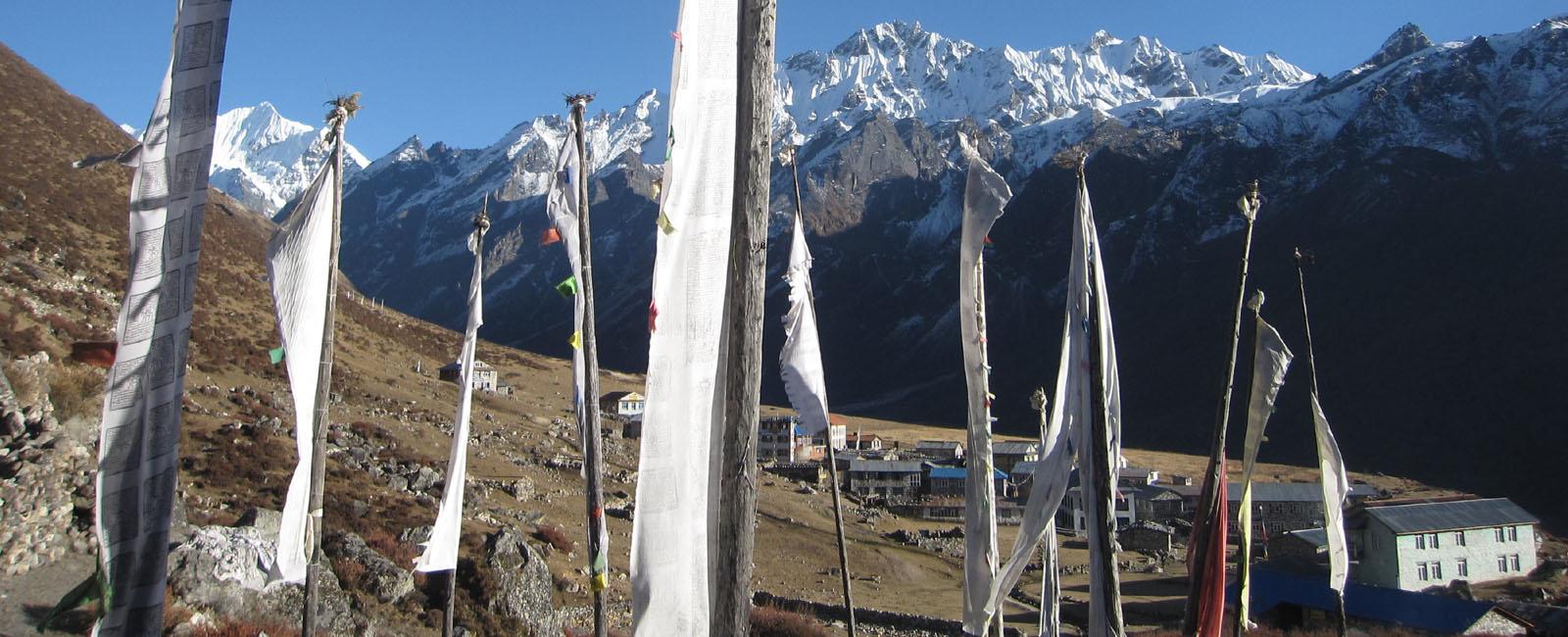
Langtang Valley Trek
The Langtang Valley Trek is a beautiful Himalayan journey in the “Valley of Glaciers,” starting with a scenic drive from Kathmandu to Syabrubesi. The trail passes through green forests in Langtang National Park, then opens to alpine landscapes as you reach Kyanjin Gompa (3,870m) with views of Langtang Lirung.
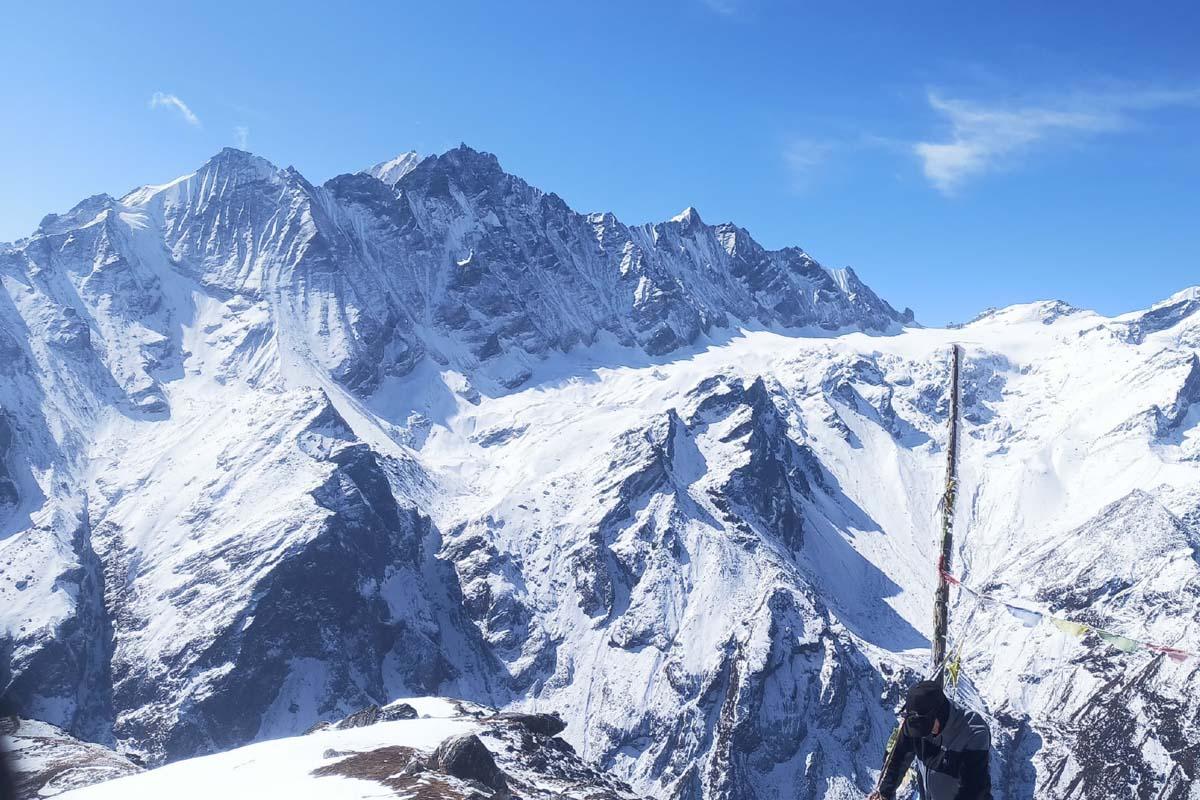
The trek offers rich Tamang culture, monasteries, and a yak cheese factory, with the highlight being sunrise from Tserko Ri (5,030m) for stunning mountain views.
Essential update:
- Mandatory Guide Rule (2026): Solo trekking is allowed in Langtang National Park, but you must be accompanied by a licensed guide hired through a registered agency.
- Permit Update: The TIMS card is no longer required, and you only need a Langtang National Park Permit, with checks at Dhunche and Syabrubesi.
- Trail & Facilities: Trails are well-maintained, and lodges in Langtang Village and Kyanjin Gompa are fully open with basic services like Wi-Fi and charging.
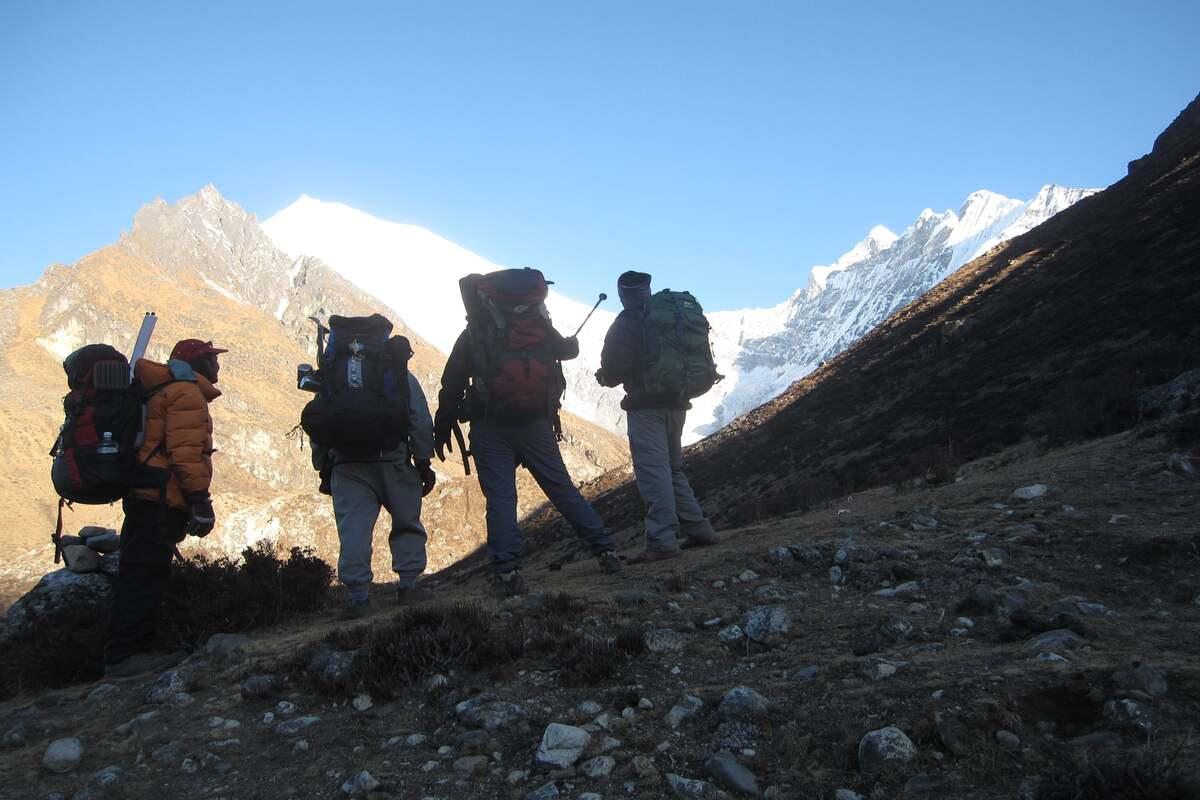
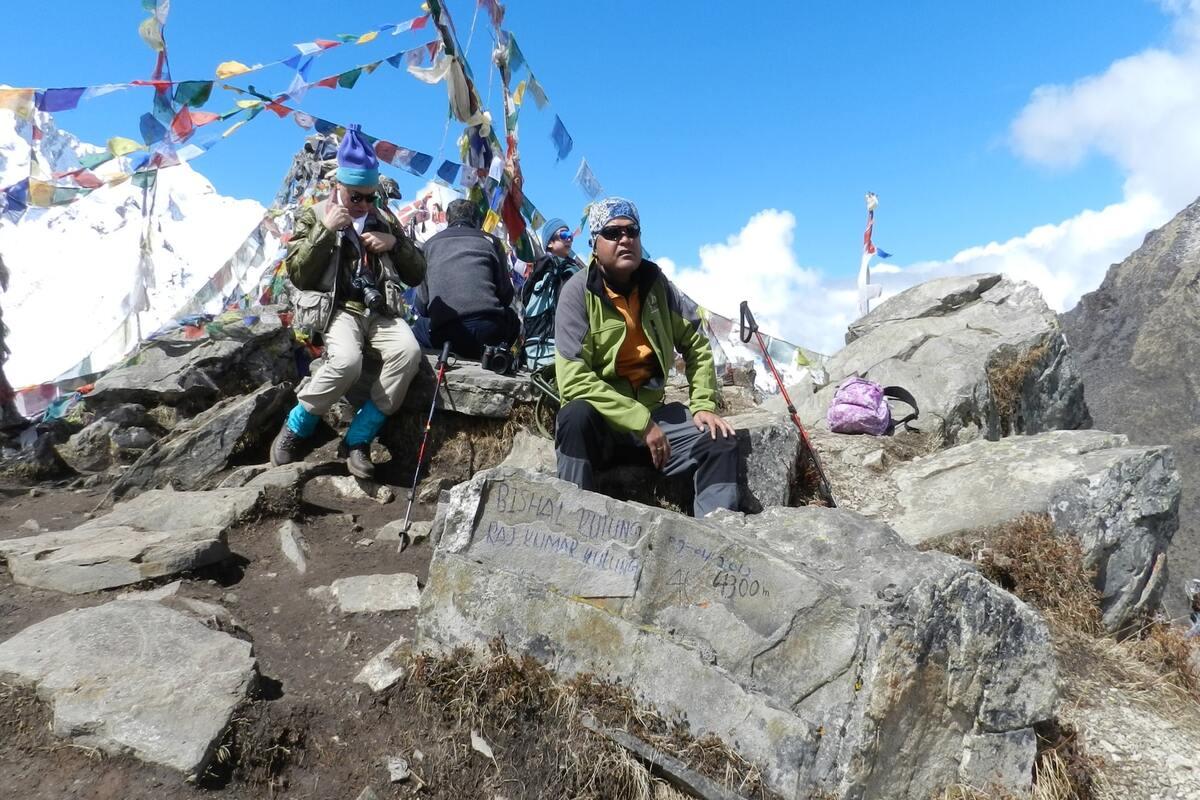
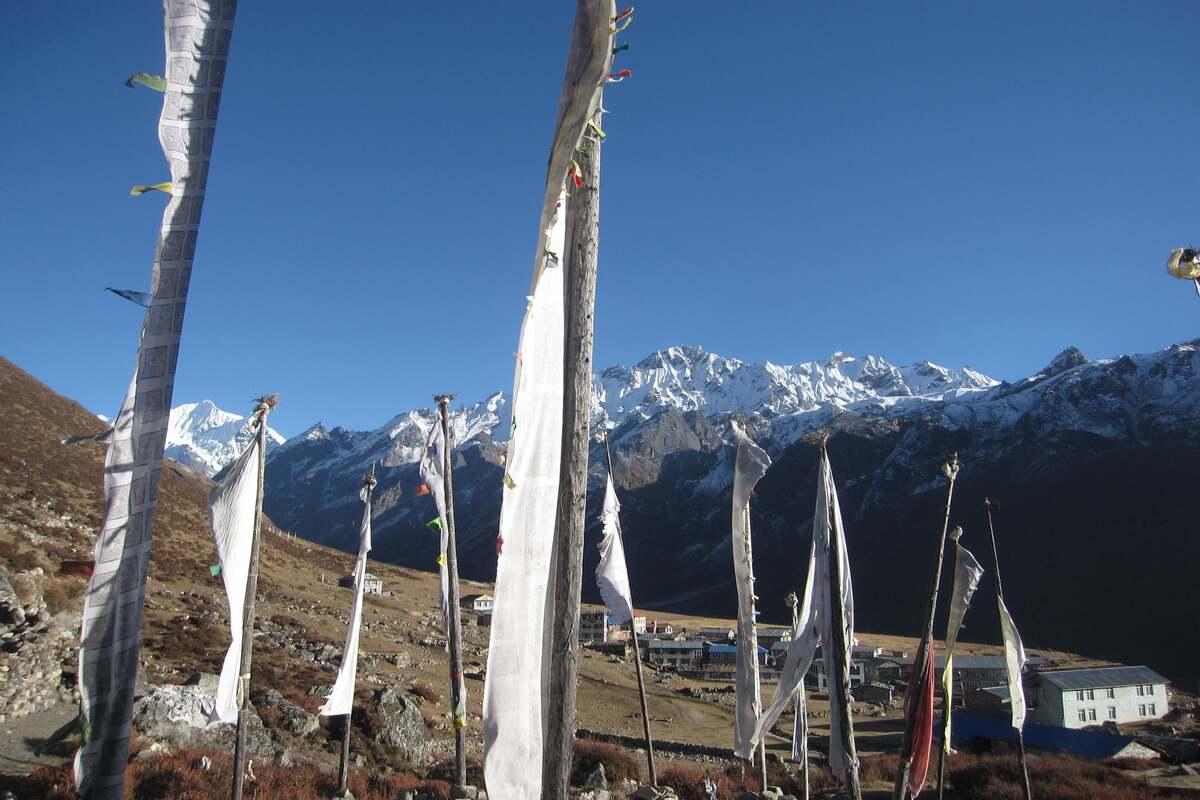
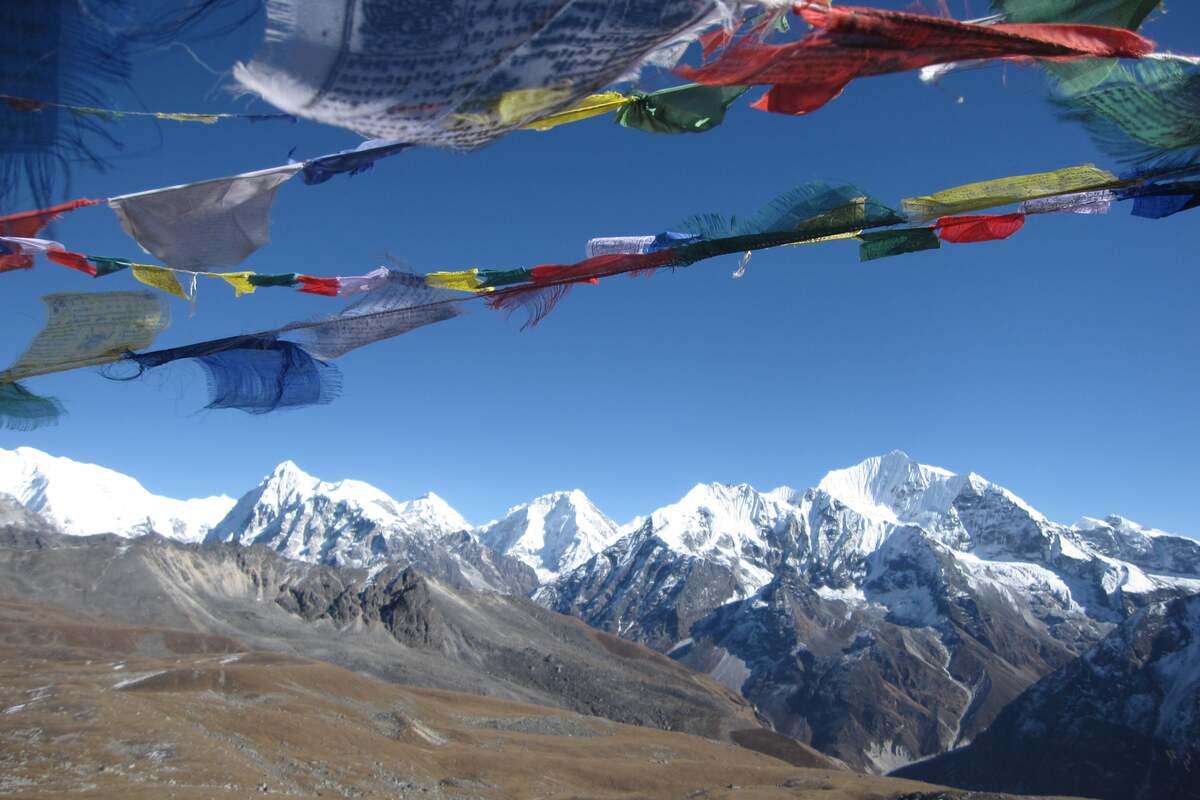
Trip at a Glance
-

Country: Nepal
-

Trip grade: Moderate
-

Destination: Langtang region
-

Activities: Trekking
-

Accommodation: Hotels/Lodges
-

Meals: Full-board on trek
-
.png)
Transportation: Private vehicle
-

Maximum altitude: Tsergo Ri (4,984m)
-
Trip Start / End: Kathmandu - Kathmandu
-
.png)
Best Season: Mar-May, Sep-Nov
Introduction to Langtang Valley Trek
The Langtang Valley Trek, located north of Kathmandu closer to the Tibetan border, is one of the beautiful treks in Nepal. Due to its closer proximity to the capital, Kathmandu, your adventure begins with fewer days of travel to reach the trailhead.
Trek to Langtang Valley is a great choice if you are looking for a quiet trek near Kathmandu. Unlike the popular trek routes like Everest or Annapurna, the Langtang trail is less crowded with spectacular Himalayan views and beautiful alpine landscapes. If you are looking for a more authentic experience, the trek is the best option for trekking in Nepal.
Langtang is the ideal choice for anyone from first-time trekkers to nature lovers, photographers, and those who enjoy less busy trails. Those with a limited time can choose this trek since the trek is completed in about a week.
Langtang Valley Trek Overview
The trek is one of the best short treks in Nepal. 10 days from Kathmandu is enough to complete the trek, allowing trekkers who have a short time to witness the spectacular Himalayas.
The trek starts from the small village of Syabrubesi located north of Kathmandu. You will then trek across forests, rivers, and traditional villages to reach the highest point of the trek, Kyanjin-Ri(4773 m). The viewpoint of Kyanjin-Ri offers majestic mountain panoramic views of the surrounding peaks. The trail follows the same route back to Syabrubesi after exploring Kyanjin Gompa and Kyanjin-Ri.
Trekkers with a reasonable level of fitness, including the experienced ones, will have no trouble completing the trek, as the trek is graded as moderate teahouse trekking. To trek in the Langtang region, you will require a Langtang National Park Entry Permit and e-TIMS card (Trekkers Information Management System).
For safety reasons, checking your SpO₂ (blood oxygen) level as you gain altitude during the trek is recommended. Under the latest 2026 trekking regulations, a licensed guide is mandatory while trekking in the Langtang region.
Permits Required for the Langtang Valley Trek
You need to obtain a few permits to trek in the Langtang Valley. The permit helps protect the fragile ecosystem of the region, supporting its conservation. It is important to carry the permits as they are checked during entering the Langtang region and at several checkpoints on the trail.
- Langtang National Park Entry Permit
This permit is for the Langtang National Park, which is required to enter and trek in this region. Langtang National Park is the first national park in Nepal.
Cost: NPR 3,000 per person (USD 25 approx.)
- TIMS Card (Trekkers' Information Management System)
A TIMS (Trekkers' Information Management System) Card is used to keep the records of the trekkers visiting the Langtang region and for safety purposes.
Cost: NPR 2,000 per person (USD 15 approx.)
Mandatory Guide Rule
All trekkers should acquire a licensed trekking guide when trekking in the Langtang region as per the latest rule by the Nepal government. Solo trekking in the Langtang region is prohibited. Going with a guide helps with navigation and safety, and they provide cultural knowledge of the area.
Children's Discount
Children under 10 years of age do not require a Langtang entry fee or the TIMS permit. You need to carry the passport of the children to verify their age.
Checkpoints
Your permits can be checked at several points of the trek. The main checkpoints are:
· Dhunche
· Syabrubesi
· Langtang National Park entry checkpoints
Best Time to Trek Langtang Valley
Trekking in this region can be done round the year but spring and autumn are the most popular. During these seasons, the weather is pleasant with clear mountain views. The trek can be done in winter or monsoon, but trekkers need to be ready for snow and heavy rainfall.
|
Season |
Months |
Visibility & Scenery |
Trail Conditions |
|
Spring (Best) |
March – May |
High: Green hills, colorful rhododendron forests in full bloom, and beautiful mountain views. |
Stable: Dry trails with pleasant temperatures during the day. |
|
Autumn (Best) |
September – November |
Excellent: Clear skies and stunning post-monsoon views of the Himalayas. |
Perfect: Dry, firm trails with clean air and comfortable weather. |
|
Winter |
December – February |
Very High: Clear mountain views, but heavy snowfall may block higher trails. |
Challenging: Very cold nights with snow and ice on some sections. |
|
Monsoon |
June – August |
Low: Clouds often cover the mountains, and frequent rain reduces visibility. |
Difficult: Wet and slippery trails with leeches in the lower forest areas. |
How Difficult is the Langtang Valley Trek?
The trek to Langtang is a moderate graded trekking suitable for beginners who have a good level of fitness. No previous trekking experience is required, and there is no technical climbing, but you should be prepared to walk several hours each day. This includes walking steep trails at high altitude. Coming closer to Kyanjin Gompa, the trail is a bit challenging as you are also gaining altitude, and it’s also the highest point on the trek.
- The Physical Reality
The daily walking hour is 5 to 7 hours on average. The trail is mixed with forest paths, stone steps, and rocky trails. It's not extremely difficult, but walking uphill and downhill constantly is tiring, especially on your knees.
- Altitude Factor
With the trek starting at 1500 meters at Syabrubesi, it reaches as high as 4772 meters at Kynjin Gompa. The air becomes thinner as you gain elevation, resulting in walking difficulty. Proper acclimatization is needed, and you need to walk slowly and stay hydrated.
- Is Langtang Valley Trek for Beginners?
Yes, the trek is a good choice for first-time trekkers. No mountaineering skills are required, but you need to have good physical fitness and walk for several hours a day.
- Preparation Tips
To prepare for the trek, you can go for walking, cycling, swimming, hiking, or practice climbing stairs to build stamina. To start with, you can go for a daily walk with a small backpack.
- Fitness Requirements
You should prepare at least a month before your trek. Try to improve your leg strength and endurance so as not to get exhausted while on real trekking. Get comfortable trekking shoes and the right gear, which also makes a big difference.
With a positive attitude and proper preparation, a trek to Langtang can be achieved as a rewarding Himalayan adventure. For first-timers, the trek is also a good option.
For other easy trekking packages in Nepal, please refer to our easy treks in Nepal.
Why Choose This Trek
The Langtang Valley Trek is a rewarding Himalayan adventure that combines rich culture, peaceful trails, and spectacular mountain panorama. From the beautiful landscapes to walking past traditional villages and connecting with friendly locals, the trek is a unique travel journey.
- Avoid the Crowds
The Langtang region is less crowded compared to more popular regions like Everest or Annapurna. The trails are less crowded and peaceful, and so are the villages, giving an authentic trekking experience closer to nature.
- Proximity to Kathmandu
The best advantage of the trek is that it is located closer to Kathmandu, which is just a 7-8-hour drive to its trailhead at Syabrubesi. Trekkers with limited time can choose this trek as a good option.
- No Domestic Flights
Trek to Langtang requires no domestic flights like the Everest Base Camp trek, where you need to fly to Lukla first. The trek start point is reached by drive, avoiding possible flight delays or cancellations.
- Budget-Friendly
It’s an affordable Himalayan trek since no expensive domestic flights are required and the trek duration is also shorter. Overall, the trek cost becomes low compared to other trekking destinations in Nepal.
- Fast Acclimatization
Most trekkers adapt easily to the altitude gain on the Langtang trek. The itinerary allows a gradual increase in altitude, allowing your body to adjust naturally while trekking.
- Resilience & Connection
2015 earthquake heavily affected the Langtang region, but the local community quickly rebuild their homes and continue the tourism. In this way, you are supporting these communities by trekking in the Langtang and connecting with the people living in the Himalayas.
Who is this Langtang Valley Trek for
The trek is not as challenging as other mountain treks, so it’s a good option for many travelers. If you enjoy the spectacular Himalayan panoramas, local culture, and beautiful landscapes without a strenuous journey, the Langtang trek is a perfect choice.
This trek is best for:
· Beginner trekkers who are looking for their first Himalayan trek.
· Moderately fit travelers ready to walk 5–7 hours a day.
· Nature lovers and photographers who enjoy forests, rivers, waterfalls, and snow-capped peaks.
· Trekkers with limited time planning for a rewarding trek closer to Kathmandu.
· Budget-conscious travelers who want to stay at local lodges and keep the trek cost down.
· People looking for a peaceful trail compared to busy Everest and Annapurna.
Itinerary
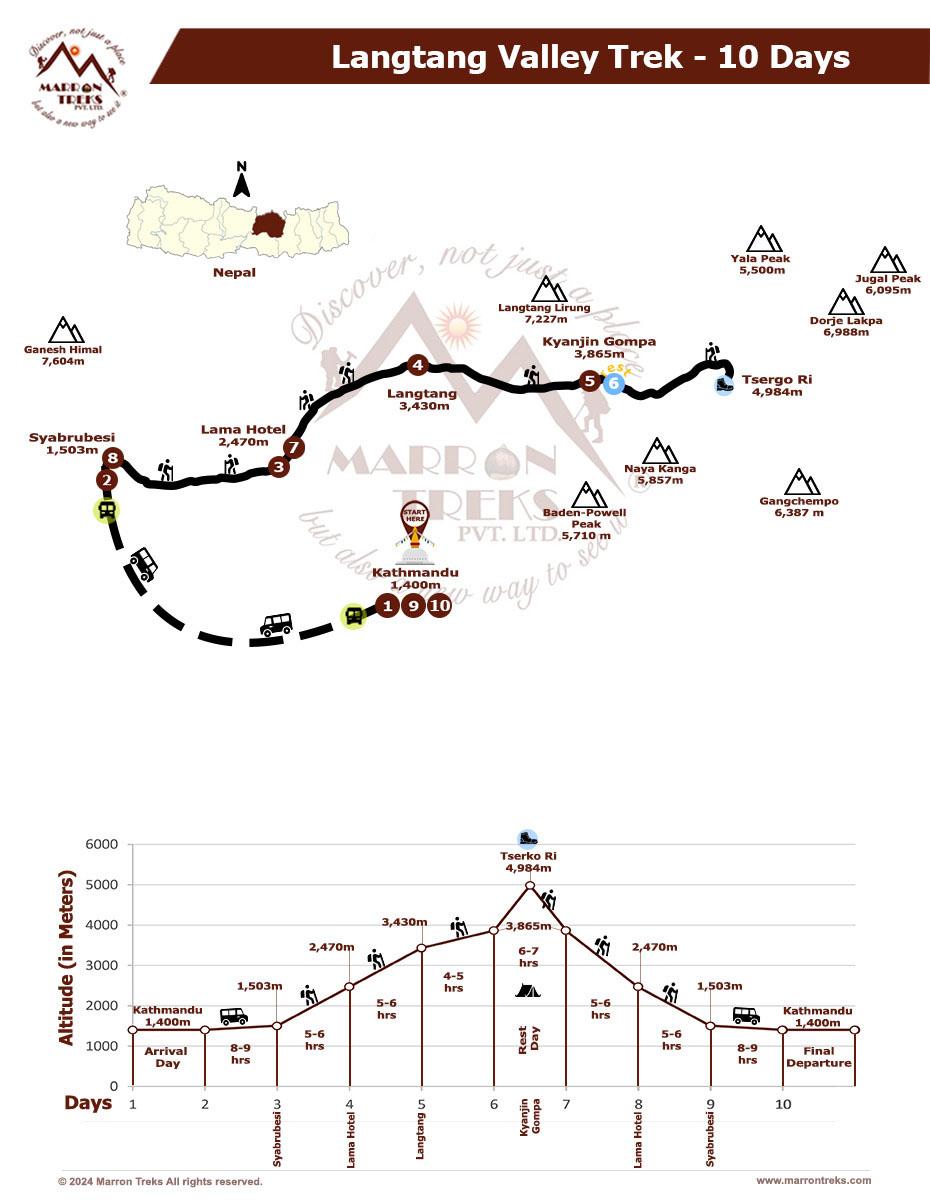
This 10-day Langtang Valley itinerary takes you from Kathmandu to scenic mountain villages, forests, and high Himalayan views. It is a simple and well-planned route that helps you enjoy the trek safely while exploring places like Kyanjin Gompa and Tsergo Ri.
Once you land at the Tribhuwan International Airport in Kathmandu and accomplish your entry/visa formalities, you will be received by a representative from Marron Treks and transferred to the hotel. Welcome drinks will be served at the hotel after which we will have a quick pre-trip meeting and discuss the itineraries. You can then take your time to relax, unpack and spend the time as you wish. In the evening, stroll around the nearby places and get the feel of this energetic city.
After breakfast, we drive to Syabrubesi, first along the crowded streets of Kathmandu and then later through the bumpy and dusty, single lane road tucked at the base of north western hills. As we move ahead, the terraced farms and orthodox villages whip past us. We’ll halt for lunch at Trishuli Bazaar. We then resume our drive to Dhunche, a headquarter of Rasuwa district, from where we take a descent to finally arrive at Syabrubesi. Well, to be honest, you might not enjoy the road conditions and could shake off at times, but yes, the views of mountains, the lush green terraced farms and stone house clusters alongside, could easily cheer you up, diverting your attention away from the rustic roads.
The real trek begins today. All jacked up, we commence our trek along a flat route, passing through the Langtang National Park. On the way, we come across a police check point. We show our permit there and then continue along a downhill route for about 10 minutes crossing a suspension bridge. We advance further following the Langtang river and pass through a jungle. On the way we might catch quick glimpses of different species of monkeys. We now cross one more suspension bridge and arrive at a place called Dobang (1672 m), where we can relish the view of a waterfall. Trailing ahead along the steep route to a rocky ridge for about 2o minutes, we pursue a flat track to Pahare Hotel and then to Bamboo Hotel, where we halt for lunch. We continue our move making an ascent to the route alongside the north bank of Langtang Khola (river) and further make a steep climb to the landslide, which gets us to a place called Rimche. A 20 minutes ascent from here, brings us to Changtang, popularly known as Lama Hotel.
We are on the fourth day. Let’s begin our trek with a gentle climb which becomes steeper and steeper through the wild forests of hemlocks, oaks, maples and rhododendrons, high above the Langtang River. You can’t help glaring at the majestic Langtang Lirung (7,234 m) through the trees. We now cross a stream and further ascend to a pass marked with prayer flags. Crossing the Bailey bridge over another stream, we arrive at our lunch spot, the Ghora Tabela (2972 m), which is currently a Nepal Army and a National Park check post. By now, will have walked for almost 3 hrs. After lunch, we ascend further across the helipad, yak pastures and rhododendron bushes, which gets us to Thangshyap (3140 m). Continuing our climb ahead, we trail up the hillside above the potato, barley and buckwheat fields. We pass by few restaurants and guesthouses through the Ghumba village. We are now just about 15 minutes away from Langtang village. Briskly, we cross a stream and climb past several water-driven mills and prayer wheels, finally arriving at the settlement of Langtang.
Enjoy the sip of your morning tea and then gear up for a scenic trek! We trail through the village and climb a ridge top to a large chorten. Continuing our ascent past the splendid Mani walls (the largest in Nepal), we cross a stream and arrive at a village of Mundu (3442 m). We now trail alongside the river beside the pasture of Yamphu (3640 m). Crossing a concrete bridge, we climb a moraine and get our first glimpse of the Kyangjin Gompa and a magnificent icefall of Langtang Lirung.
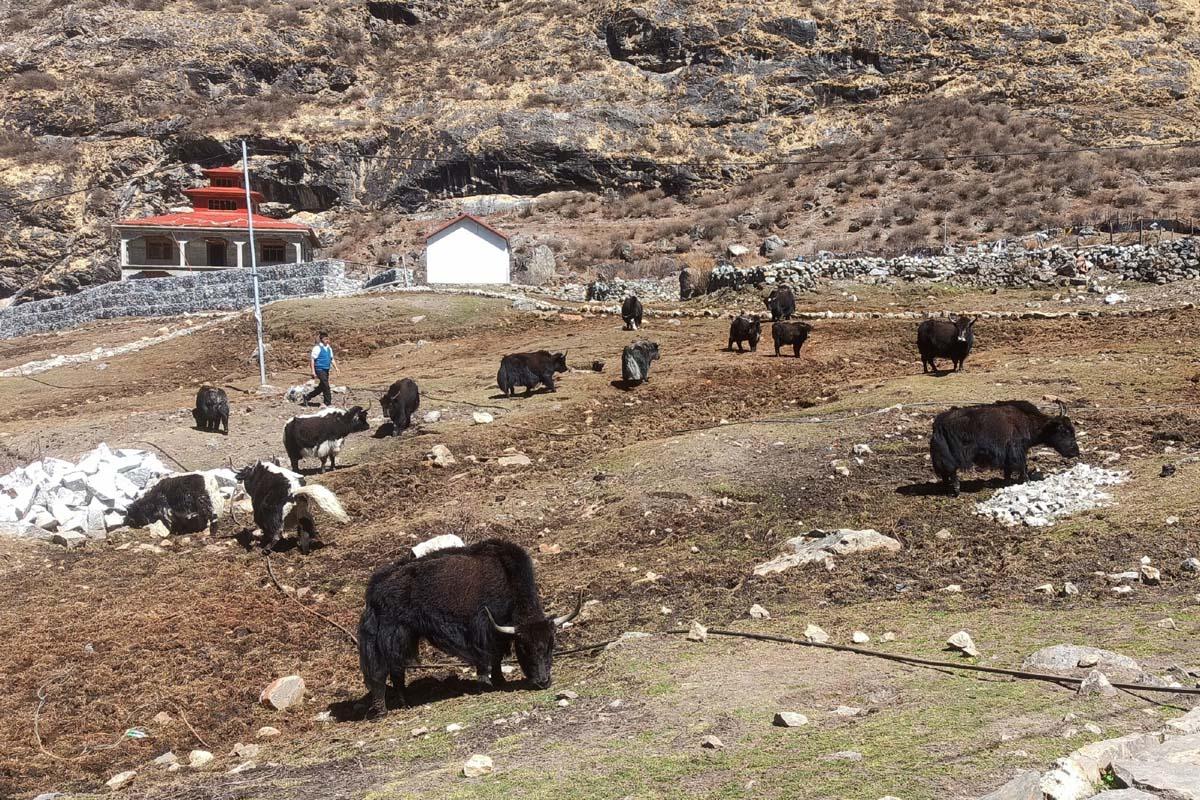
We spend the entire day exploring Tsergo Ri, which will aid in our upward adjustment. We start off early in the day. Yak fields are crossed on the trail as it climbs to Tsergko Ri. From the summit of Tserko Ri, the sunrise vista is breathtaking. By late afternoon, we return to Kyangjin Gompa and take in the stunning monastery's vistas of the Himalayas, glaciers, yaks, and birds.
Most of our way back to the Lama Hotel is downhill, so shouldn’t be that exhausting! We reverse our journey of day 5 and 4 trailing alongside the Langtang River, passing through the village of Mundu, Langtang and then arriving at the Ghora Tabela. Lunching and resting here for a while, we take another steep descent to the Lama Hotel. The walk is pleasant as it downhill and more importantly embellished with Mani walls, chortens, pastures and rhododendron clusters. And of course, you can’t help wooing at the beauty of Langtang Lirung, everytime you see it through the trees.
We essentially make a full circle to return to Syabrubesi. Since the hike would primarily involve descending, it will be simpler. Get some sleep in Syabrubesi.
We take a drive back to Kathmandu after breakfast tracing the same route which we took before the trek start. The remainder of the day is devoted to packing and possibly completing any last-minute memento purchases.
A representative from Marron Treks will escort you to the Tribhuwan International Airport, three hours prior to your flight schedule. As you wave us good bye and enter the terminal block, you would perhaps recall your arrival at this place. No wonder everything seems so familiar now because, you had come here as tourist, but you are going back as a friend! Have a safe flight back home and we look forward to being your travel companion in Nepal again!
What is included?
- Airport pick-up and drop services.
- Hotel accommodations in Kathmandu on Twin-Share Basis with breakfast.
- Kathmandu/Syabrubesi//Kathmandu transfers by a local bus. (Option: Private Vehicle)
- All trekking accommodations with Breakfast/Lunch/Dinner at local lodges.
- Four seasonal sleeping bags (to be returned after trip completion) & Marron Treks duffel bag
- A comprehensive medical kit (will be carried by the trekking guide).
- Experienced Government licensed English Speaking Guide & Porter (1 porter for two people) including their food, accommodation, salary & insurance.
- Permits for Langtang National Park, & TIMS (Trekkers' Information Management System).
- Farewell dinner with a live Nepalese cultural program.
- All government and local taxes.
What is not included?
- International airfare
- Nepal entry visa fee – Visa can be obtained upon your arrival at the Tribhuwan International Airport in Kathmandu. (USD30 for 15 days)
- Lunch & dinner in Kathmandu.
- Personal travel insurance.
- Emergency rescue evacuation (to be covered by the client's travel insurance).
- Other expenses of a personal nature (phone calls, laundry, battery recharge, bottle or boiled water, hot shower etc.)
- Bar bills, alcoholic drinks & beverages.
- Tips to guide & porters (Tipping is expected).
Route Map
FAQ's
What is the location of the Langtang Valley Trek?
The Langtang Valley is located inside Langtang National Park, north of Kathmandu, at the boundary between Nepal and Tibet.
What is the duration of the Langtang Valley Trek?
The duration of the Langtang Valley trek is usually from seven to ten days.
What is the hike’s highest altitude?
Kyanjin Gompa (3870 m) is the highest point where you can spend the night. You can also reach Kyanjin Ri (4773 m) or Tserko Ri (4984 m) if you climb to the viewpoints.
How hard is the Langtang Valley trek?
It is regarded as a moderate trek with regular walking abilities and physical fitness required.
Which is the best time for the Langtang Valley trek?
The best time for the Langtang Valley trek is the spring (March-May), when you can see clear views and rhododendron flowers, and also the autumn (September-November), when you can see clear views of the mountains.
Is a guide required for the Langtang Valley Trek?
Yes. According to the Nepal trekking regulations, a guide with a license is compulsory for this trek.
What permits do I need for the Langtang Valley trek?
Trekkers’ Information Management System card (TIMS card) and Langtang National Park Entry Permit are needed for the Langtang Valley trek.
Can I get altitude sickness during this trek?
Yes, you can get altitude sickness during this trek, so hydration, slow ascent, and proper acclimatization are necessary.
What are the accommodations that will be provided during the Langtang Valley Trek?
You will stay in local teahouses with simple yet cozy rooms.
Can a beginner complete the Langtang Valley trek?
Yes, a beginner with a reasonable fitness level can complete the Langtang Valley trek.
How is the Langtang Valley trek special?
With a short trekking path, Langtang offers a unique combination of glaciers, alpine meadows, rich Tamang culture, yak pastures, and breathtaking mountain views, so it is considered special.
Why should I choose Marron Treks for the journey?
Joining Marron Treks for your trip involves travelling with a dependable and knowledgeable local trekking company that generally cares for your fun, safety, and comfort. Because every adventure should be enjoyed the proper way, Marron Treks guarantees a seamless, genuine, careful planning, and a customized approach.
Trip Info
Accommodation
While you are in Kathmandu, we opt to accommodate you in 4- or 5-star hotels like Hotel Royal Singhi (4-star), Hotel Manaslu (4-star), Radisson (5-star), Yak & Yeti (5-star), or similar. During the trek, you will be accommodated in a local mountain lodge, better known as Tea House. These lodges and teahouses provide good services and are equipped with basic amenities. We will endeavor to provide you with the best accommodation available along the route so that you get a good night’s rest in a hygienic milieu.
Meals
We never compromise the quality of food or the health of the trekkers as well as the crew members. Generally, we opt for the fresh and nutritional local community food available. You could make your delicious pick from an array of traditional foods like Sweet potatoes, buckwheat barley, etc. This way, you could not only get a real sense of the local culture and life patterns but also contribute to promoting the locally available resources of organic food and beverages.
Besides, a wide range of Continental, Chinese, Italian and Indian cuisines like Pizza, Spaghetti, French Fries, Soups, Breads, Masala curry, etc. are also available in the restaurants for your retreat.
Acclimatization
Altitude sickness is a serious risk while trekking in the Himalayas. It's important to acclimatize properly by spending a few days at lower altitudes before heading higher. By spending time at lower altitudes before pushing higher, your body has time to adjust. Our trekking packages have enough acclimatization days planned where you'll be spending a day or two at lower altitudes, allowing your body to adjust to the increasing altitude.
Electricity & drinking water
For an additional cost, you can use the electricity in all tea houses and lodges to recharge your batteries. The lodges have packaged mineral water for sale, or you can fill your bottle with boiling water. To make water drinkable, you can use water purification tablets too. But, due to hygienic issues, you should avoid drinking water from taps, rivers, or wells in trekking areas.
Communication
At lodges, restaurants, and hotels, Wi-Fi is available for an additional fee in the most popular trek regions, like Everest, and Annapurna. However, at high elevations, phone calls are the only means of connection. Our office in Kathmandu is in constant communication with your trek guide. In Kathmandu, you can purchase a local sim card for communication purposes. At high elevations, the mobile signal might not be as strong, though.
Luggage
Our porters are paired with one trekker for every two hikers, and one porter can safely carry 30 kg maximum weight. Therefore, we advise you to fill your duffle bag not more than 15 kg with your belongings. You may carry a small backpack with your valuables and informational documents. The things you are not taking along on the trek can be stored in a hotel in Kathmandu free of cost.
Typical Trek Day
Mostly your trek day starts with breakfast at 7-8 am, followed by a 3-4 hour morning trek. Lunch break is around an hour, then you continue trekking to your destination for the day. After reaching the teahouse lodge, you can relax, explore nearby areas, and enjoy dinner at 6-7 pm. Evenings involve socializing, a trek briefing, and leisure activities before bed.
Travel Insurance
It is advised that you arrange your travel insurance before leaving your homeland. The main thing is to make sure that your insurance covers you for both- medical and evacuation costs. Having travel insurance with you makes your trip secure and hassle-free.
Our Guides
Guides play a significant role during the trek. They are the ones who literally decipher the trekking codes for you so that you can actually connect with nature, culture and people along the way. We have helpful and dedicated trekking guides who are very well-versed in the culture, life patterns and every single detail pertaining to the trek region you are traveling in. Thus, in the company of our professional Sherpa guides, your trek becomes not only entertaining but also equally informative.
Porter and Staff Care
When it comes to high-altitude trekking, porters and staff members make up a pivot. Marron Treks ensures that all the porters and staff members going to high altitudes are provided with adequate clothing and equipment. All our field staff are covered by insurance.
Reviews
Nepal has a reputation of wooing the visitors with its uncommon cultural diversity and beautiful landscapes. Of course, when we came here for trekking, we did expect some great fun and adventure. But Langtang Valley Trek offered us a lot more! It was like a subtle challenge that we overcame with abundant zeal, fun and yes, the cordial and supportive company of our guide and a representative from Marron Treks. Strolling at an altitude of almost 4000 metres, literally plunged us in cloud nine. Opposite to what we had expected, the villages along the way were admirably clean. Although we did not have a good sleep every time, we appreciate the warm hospitality we received in the teahouses and hotels and the staffs’ effort to put us in comfort touched our hearts. Thanks to our crew for teaching us couple of good Nepali folk songs…we can’t help humming them every now and then. The farewell dinner was awesome. It catered us the combo of Nepali cuisines and diverse Nepali culture at the same time. We had unprecedented fun. Thanks to Marron Treks for making this trip so special and memorable. We would love to come to Nepal again and would always want Marron Treks to be our travel companion!!
Yoneyama SACHIKO & Banki SACHIKO
test