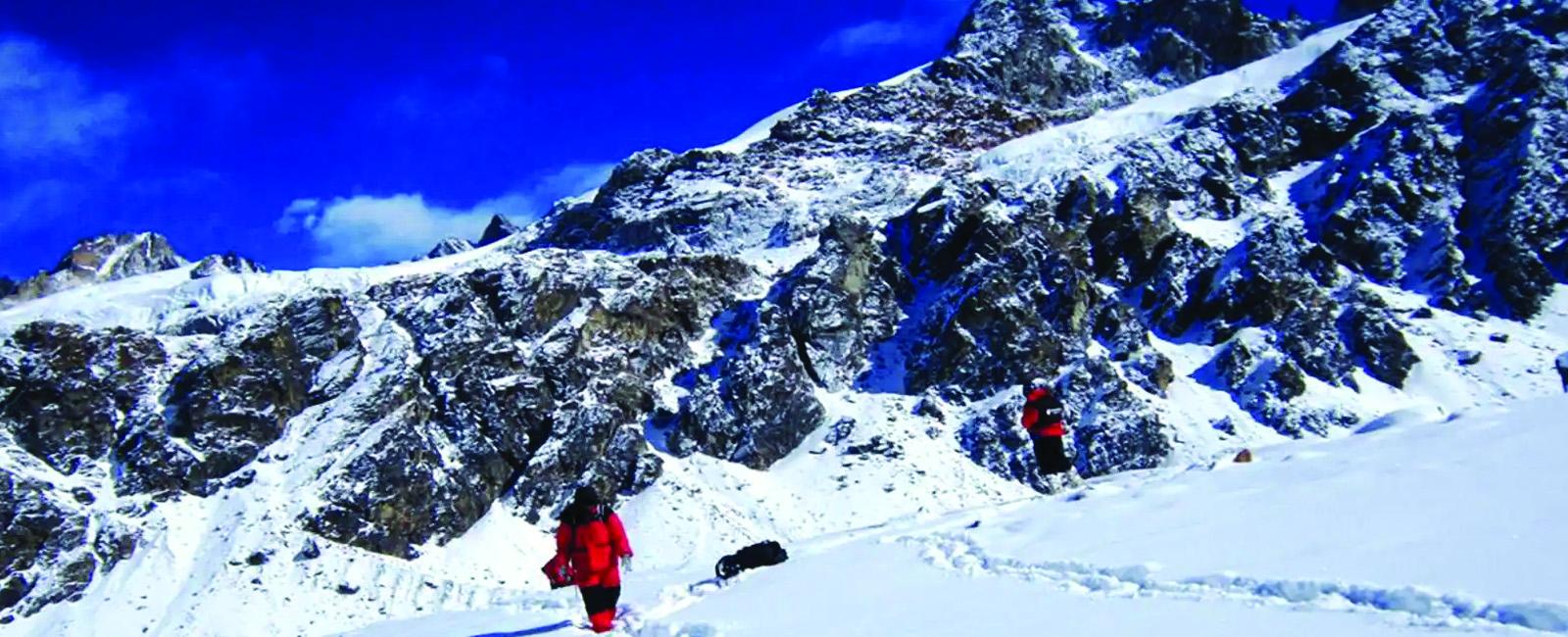
Kanchenjunga Lumba Sumba Pass Trek
The Kanchenjunga Lumba Sumba Pass Trek is a challenging 27-day remote wilderness adventure in eastern Nepal that connects Kanchenjunga (the world's 3rd highest peak) with Makalu (the 5th highest), reaching a maximum altitude of 5,177 m at the pass. For 2026, new road access allows jeeps to drive straight to Ranipul or Lelep to skip the initial dusty walking, but the remote pass crossing still strictly requires a licensed guide, a minimum of two trekkers, and a self-sustaining camping setup.
Essential Update
- Road Access Updates: Jeeps now commonly reach Ranipul or Lelep, reducing 1–2 days of road walking from Taplejung and giving faster access to remote valleys.
- Teahouse Growth: Basic teahouses and homestays are now available in villages like Lelep, Ila Danda, Chyamtang, and Hatiya, improving comfort in lower sections.
- Lumba Sumba Pass Section: The 5,177m Lumba Sumba Pass remains fully remote with no settlements, so camping support and proper acclimatization are essential.
- Permit & Guide Rule: Solo trekking is not allowed; you must trek with a licensed guide, through a registered Nepal agency, and in a minimum group of two.
Trip at a Glance
-

Country: Nepal
-

Trip grade: Strenuous
-

Destination: Eastern Nepal
-

Activities: Camp/Lodge Trek
-

Accommodation: Tented camps/Hotels
-

Meals: Full-board on trek
-
.png)
Transportation: Private vehicle/Plane
-

Maximum altitude: Lumba Sumba Pass (5177m)
-

Group size: 2 travelers minumum
-
.png)
Best Season: Oct & Nov & Mar to May
The Kanchenjunga Lumba Sumba Pass Trek is one of the adventurous trekking journeys in Nepal’s remote areas of the Eastern Himalayas. It connects the Kanchenjunga Conservation Area in the east with the Makalu region. This highlight of the trekking journey is crossing over the high and rarely climbed Lumba Sumba Pass (5,160m).
Kanchenjunga Lumba Sumba pass trek itinerary offers a unique mix of alpine scenery, untouched forests, a wide range of plant and animal life, and real Himalayan culture and tradition that haven't been affected by modern tourism.
This trail is a real expedition-style trek through remote valleys where trekkers can go for days without seeing other groups. It's not as busy as the Everest or Annapurna routes. It's perfect for experienced adventurers who want to be alone, view breathtaking landscapes, and learn about other cultures.
Kanchenjunga Lumba Sumba Pass Trek Highlights
- Hike to Kanchenjunga North Base Camp (5143m)
- Remote Himalayan villages of Ghunsa, Olangchungola, Samjung influenced by Tibetan culture
- Diverse flora & fauna of Kanchenjunga conservation Area & Makalu Barun National Park
- Lumba Sumba Pass crossing (5,177m) with spectacular panorama of Kanchenjunga (8586m), Jannu 'Kumbhakarna' (7710m) & other Himalayan peaks
- Discover Cultural Tibetan-influenced of Sherpa, Limbu & Bhotia communities
Itinerary
Experience the ultimate remote Himalayan journey on the Kanchenjunga Lumba Sumba Pass Trek, a 27-day adventure through wild valleys, high mountain passes, ancient villages, and the stunning north side of Kanchenjunga Base Camp.
Arrive at Tribhuvan International Airport, Kathmandu and Marron representatives shall transfer to your hotel. Take the day to rest or you can explore around your surroundings.
Today is trek preparation for last minute shopping, trek permit preparation. In the evening your guide shall meet you at your hotel for trek briefing and your equipment check.
Early morning flight to Bhadrapur and drive to Taplejung passing along scenic hills, rivers, and terraced farmland. Arrive Taplejung bordering Tibet and home to Mt. Kanchenjunga (8568m-the world's third-highest peak)
Drive Ranipul and start trek to Amjilosa with the trail passing through lush forests and terraced fields. You will cross small rivers and suspension bridges with the rich flora along the trail. Reach Amjilosa and take a leisure stroll around the village.
You will take a moderate ascent through rhododendron and oak forests then follow streams and farmland trails passing local villages. Reach Gyabla in evening with distant peaks welcoming you.
The trail ascends gradually through mixed forests and alpine pastures to reach Ghunsa village. Gunsa is known for its Sherpa-style houses and monasteries with Tibetan-influenced culture. Explore the village and interact with locals.
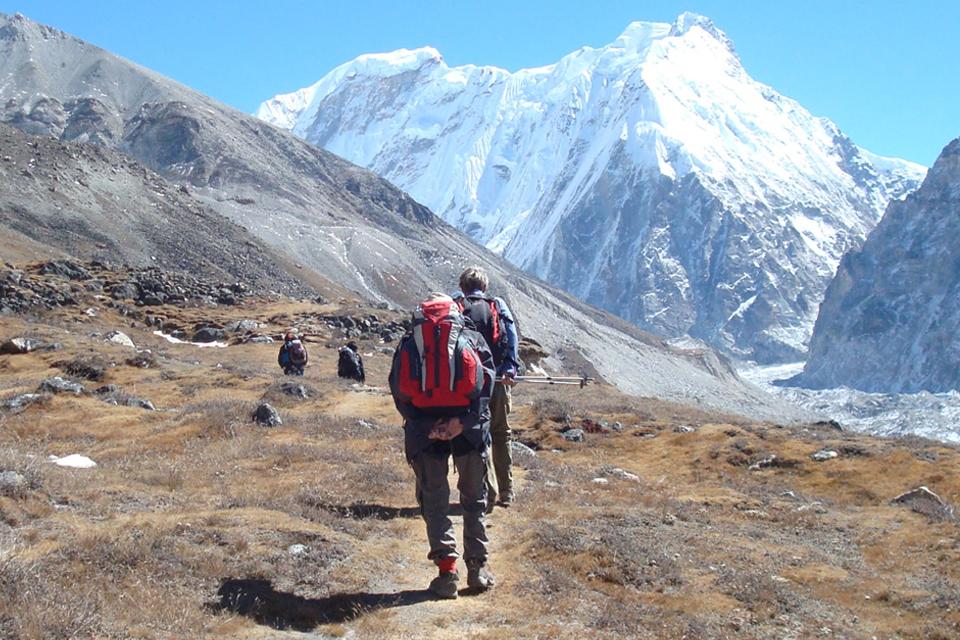
Today is a steep trail observing panoramic views of Kanchenjunga East and surrounding glaciers. The trail crosses alpine meadows and high-altitude streams then camp at Kambachen and prepare for an acclimatization hike tomorrow.
Today is rest/acclimatization day and take a short hike to Janu Himal viewpoint to observe spectacular views of Kanchenjunga, Kangchenjunga South, and nearby peaks. Back to camp and focus on rest and hydration.
The trail goes through glacial moraines, scree paths, and high alpine terrain. You cross small streams and observe the sparse alpine vegetation then arrive at Lhonak, a high camp surrounded by glaciers and rocky ridges.
Today you ascend to the North Base Camp of Kanchenjunga with the trail going through glacial streams and rocky ridges. En-route witness majestic views of icy peaks up close then return back to Lhonak for overnight stay.
Early morning take a hike to Drohmo Ri viewpoint to observe panoramic 360° views of Kanchenjunga North and surrounding Himalayan peaks. Then descend back to Lhonak.
Today is a long day with a long descent through moraine trails and glacial valleys. The trail crosses streams and alpine meadows along the way. In the evening you arrive Ghunsa.
The trail passes through high pastures, isolated villages, and streams and reaches Nango La Phedi, a remote stopover amidst high-altitude terrain.
Today is another long trekking day passing across ridges and valleys. The trail passes through yak grazing pastures and small alpine streams and reached Langjong Kharka.
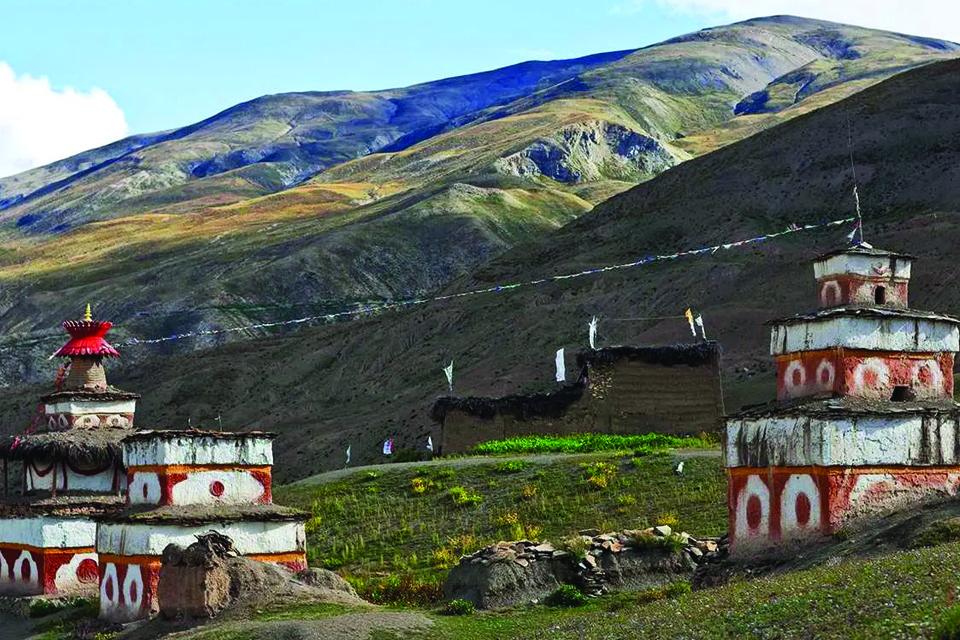
The trail descends to Olangchungola, a settlement influenced by a Tibetan-style villages located on the Nepal-Tibet border. You explore around local monasteries, mani walls, and observe the village’s unique culture.
Today is rest day for acclimatization. Optionally you can take a short walks around the village or nearby hills or mix with locals and learn about Tibetan-influenced lifestyle.
The trail ascends gradually through alpine terrain and pastures with scenic views of Kanchenjunga and surrounding peaks.
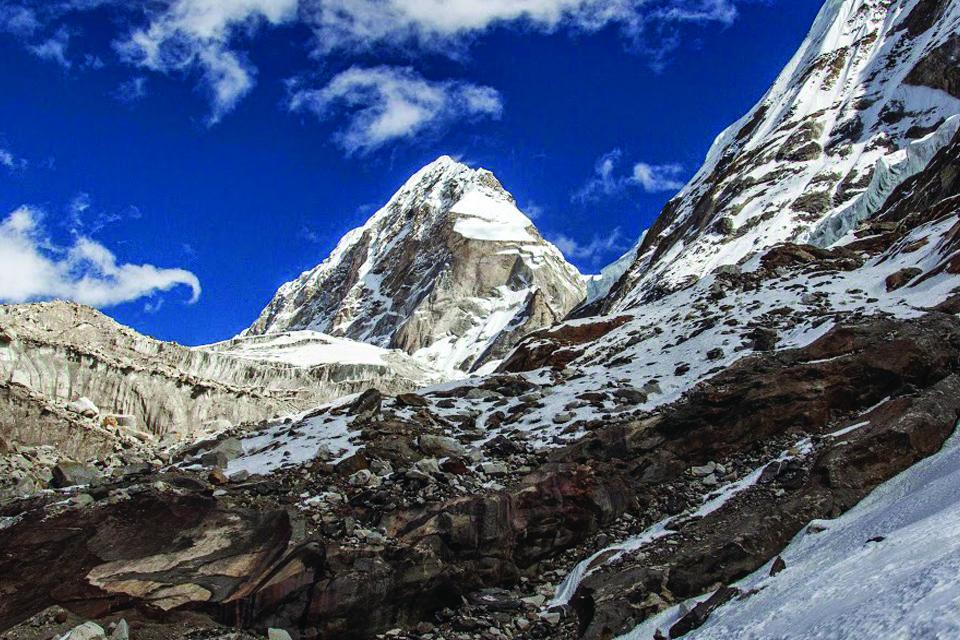
Today is trek to Pass Camp, the base for crossing Lumba Sumba Pass. The trail passes along rocky terrain and glacial moraines.
Early morning start the trek with crossing Lumba Sumba Pass, the highest point of the trek. From it’s summit witness at 360° Himalayan panorama, including Kanchenjunga, Makalu, and Everest peaks. Then the trail descends to Yak Kharka.
The trail further descends through alpine valleys, yak pastures, and streams and reaches Thudam for overnight stay.
Today is a long descent through forests and small villages to arrive Yak Kharka in the evening.
The trail passes along forested valleys and terraced farmland crossing the local Limbu and Sherpa village along the trail.
The trail descends along subtropical forests and river valleys. Today is another long trekking day with scenic views of lower Arun Valley.
Taka a short morning trek to Barun Dovan, a confluence of rivers and take a long drive through hills and valleys to Khadbari.
Drive to Tumlingtar Airport and flight back to Kathmandu. Check into hotel, rest, and recover from the long Himalayan journey.
Today is a free day in Kathmandu for rest and at leisure. You can explore around the city or rest at hotel. In the evening is farewell dinner with cultural show.
Marron representatives will transfer you to Tribhuvan International Airport for your onward flight three hour prior your flight time.
What is included?
- Airport pick-up and drop-off services.
- Hotel accommodations in Kathmandu on Twin-Share Basis with breakfast.
- Kathmandu/Bhadrapur & Tumlingtar/Kathmandu airfares.
- All trekking accommodation (in tented camps/lodges) with breakfast, lunch & dinner. on Twin-Share Basis.
- Personal insurance for crew trek members.
- Guide, porters, kitchen staff and helpers' wages for the trekking period.
- All surface transfers by private vehicle.
- Four seasonal sleeping bags (to be returned after trip completion) & Marron Trek duffel bags.
- A comprehensive medical kit will be carried by the trekking guide.
- Kanchenjunga special permits (RAP)
- Kanchenjunga conservation Area & Makalu Barun National Park entry permits.
- Farewell dinner with a live Nepalese cultural program.
- All government and local taxes.
What is not included?
- International airfare.
- Lunch & dinner in Kathmandu.
- Nepal entry visa fee – Visa can be obtained upon your arrival at the Tribhuvan International Airport in Kathmandu. (USD50 for 30 days)
- Personal travel insurance.
- Emergency rescue evacuation (to be covered by the client's travel insurance).
- Excess baggage charges (luggage allowance for domestic airlines in Nepal is 15 kgs.)
- Other expenses of a personal nature (phone calls, laundry, battery recharge, bottle or boiled water, shower etc.)
- Bar bills, alcoholic drinks & beverages.
- Tips for guides, porters & crew (Tipping is expected).
FAQ's
What is the location of the Kanchenjunga Lumba Sumba Pass Trek?
The trek is in the far east of Nepal, next to Tibet and Sikkim (India). It goes around the Kanchenjunga massif, which is the third-highest peak in the world.
Where does the trek begin and end?
You may get to Taplejung by flying to Bhadrapur and then driving through beautiful scenery. The journey ends at Tumlingtar, where you may get a flight back to Kathmandu.
When is the ideal time to go trekking?
Spring (March to May) is great for blossoming rhododendrons and stable weather. Autumn (October and November) has beautiful skies and sharp vistas of the Himalayas.
What kind of weather should I expect?
The weather changes with height. The lower parts are nice and green, but the higher parts near the pass can be cold, windy, and snowy. Conditions are usually the most steady in the spring and fall.
How long is the hike?
The whole tour, which includes getting to and from the area, takes about 27 days.
How far up does the hike go?
The highest point of the walk is the Lumba Sumba Pass, which is 5,177 meters high.
Should I be worried about altitude sickness?
Yes, it can happen. There is a day off in Kambachen on the program to assist you get used to the area. Follow your guide's recommendations, drink a lot of water, and take it easy.
What day is acclimatization day?
On day 8 at Kambachen, you do a side trip to Janu Himal to get used to being at higher altitudes before climbing to Lonak.
How hard is this hike?
This is a hard trip that lasts for long days (8–9 hours) and goes through inaccessible areas. You need to be in decent shape and have done some trekking before.
Is the trek crowded?
No. This walk doesn't get many visitors because it's far away and long, making it a serene adventure in the Himalayas.
Do I need permits for this trek?
Yes. You will require the Lumba Sumba Pass Special Permit and the Kanchenjunga Restricted Area Permit. Don't worry about the permits, we'll take care of it all so you can enjoy the trip.
What is the Lumba Sumba Pass?
It is a high-altitude pass (5,177m) that links the Kanchenjunga and Makalu-Barun areas. One of the best parts of the second half of the hike is crossing it.
Is the pass hard?
There is snow and ice on the pass, and depending on the time of year, you may need crampons and micro-spikes. It's a long and hard day.
Where are we going to camp?
Pass Camp (4,653m) and Yak Kharka (4,600m) are the most common places to put up camp. There are tents, but no permanent lodges.
What goes on in Tumlingtar?
There is a tiny airport at Tumlingtar. Flying from here to Kathmandu cuts down on road travel by at least two days.
How fit do I need to be?
You should be able to walk with a loaded daypack for 6 to 9 hours a day for a few weeks.
What if I become sick?
It is feasible to evacuate via helicopter, but it costs a lot. Make sure your trip insurance covers rescues at high altitudes up to 6,000 meters.
Do you need travel insurance?
Yes, it is required for walking at high altitudes.
What kinds of places to stay are there?
There are tea shops and lodges in the lower parts, and tents in the higher elevations and at mountain crossings. It's normal to share a room with someone else.
Do I need a porter and a guide?
Yes. A qualified guide is required for restricted areas, and porters are strongly recommended. Marron Treks offers both in their package.
What kind of food is available?
Meals include traditional Nepali dishes such dal bhat, noodles, soups, spaghetti, breads, etc. along with some international cuisines. The package includes breakfast, lunch, and dinner.
Are there ATMs along the way?
No. Before starting the trek, make sure you have enough Nepalese rupees with you from Kathmandu.
Is it safe to drink water?
Lodges and streams have water, but it should be boiled, filtered, or treated with purification tablets first.
Is there power for charging?
Micro-hydro installations may bring electricity to lower settlements. Bring power banks or solar chargers because higher campgrounds don't have any electricity.
What kind of bathrooms should I expect?
Tea houses have simple squat or Western-style restrooms. Camps use simple tent toilets.
Is there Wi-Fi or phone service?
Not much. You might find networks and Wi-Fi in lower regions. In high altitudes, you should expect to be offline as there will be no network and Wi-Fi.
What kinds of animals might I see?
There are red pandas, musk deer, Himalayan thar, and a lot of other types of birds and animals at the Kanchenjunga Conservation Area.
Is this trek good for beginners who are new to the activity?
No this not suitable for beginners. This is suitable for experienced trekkers because it lasts a long time, is at a high altitude, has hard-to-reach terrain, and has hard pass crossings.
What should I bring?
You need to bring warm, layered clothes, a down jacket, strong trekking boots and poles, gloves, sunglasses, a headlamp, your own medicines, and water purification tablets. When you book, you will get a thorough list of what to bring.
Equipment
Below are the recommended items for the packing list, which depend on the seasons and the altitudes you are attending. We provide a 75-liter duffel bag and a sleeping bag. Minor items can be bought in Kathmandu before the trek starts.
Clothing
- Moisture-wicking t-shirts (2-3)
- Moisture-wicking long-sleeve shirt (1)
- Lightweight down jacket
- Thermal undershirt (1-2)
- Fleece Pullover (for more colder temperature)
- Inner warm trouser (1-2)
- Lightweight trekking pants (1-2)
- Moisture-wicking underwear (2-3)
- Waterproof and windproof jacket (optional)
- Hiking Shorts (while walking during the day/weather dependable)
- Warm gloves
Headwear
- Sunglasses
- Sun hat or cap
- Beanie or woolen hat (for cooler conditions)
Footwear
- Sturdy trekking boots or shoes
- Comfortable sandals or flip-flops
- Moisture-wicking socks (3-4)
- Hiking gaiters (Optional)
Others
- Lightweight daypack (20-30 liters)
- Water bottle
- Water purification tablets
- Personal medications
- Toothbrush and toothpaste
- Quick-dry towel
- Headlamp or flashlight
- Trekking poles
- Camera or smartphone (with charger or power bank)
- Toilet paper
- Sunscreen Lotion
- Lip balm
- High protein snacks (such as protein bars or nuts)
Trip Info
Accommodation
While you are in Kathmandu, we opt to accommodate you in 4- or 5-star hotels like Hotel Royal Singhi (4-star), Hotel Manaslu (4-star), Radisson (5-star), Yak & Yeti (5-star), or similar. During the trek, your primary accommodation will be tents. These are typically high-altitude, double-walled tents for better insulation and weather protection. You'll camp at designated campsites along the route. These are chosen for scenic beauty, flat ground, and access to water sources. Your trekking crew will set up tents that include your own personal tent, dining tent, toilet tent, and staff tent.
Meals
We never compromise the quality of food or the health of the trekkers as well as the crew members. Expect meals packed with carbohydrates and protein prepared by our trained cook to provide sustained energy for long trekking days. Think along the lines of porridge, pasta, noodles, spaghetti, French fries, soups, and dehydrated meals.
Acclimatization
Altitude sickness is a serious risk while trekking in the Himalayas. It's important to acclimatize properly by spending a few days at lower altitudes before heading higher. By spending time at lower altitudes before pushing higher, your body has time to adjust. Our trekking packages have enough acclimatization days planned where you'll be spending a day or two at lower altitudes, allowing your body to adjust to the increasing altitude.
Drinking water
You can fill your bottle with boiling water. To make water drinkable, you can use water purification tablets too. But, due to hygienic issues, you should avoid drinking water from taps, rivers, or wells in trekking areas.
Communication
Our office in Kathmandu is in constant communication with your trek guide. In Kathmandu, you can purchase a local SIM card for communication purposes. At high elevations, the mobile signal might not be as strong, though.
Luggage
Our porters are paired with one trekker for every two hikers, and one porter can safely carry 30 kg maximum weight. Therefore, we advise you to fill your duffle bag not more than 15 kg with your belongings. You may carry a small backpack with your valuables and informational documents. The things you are not taking along on the trek can be stored in a hotel in Kathmandu free of charge.
Typical Trek Day
Mostly your trek day starts with breakfast at 7-8 am, followed by a 3-4 hour morning trek. Lunch break is around an hour, then you continue trekking to your destination for the day. After reaching the teahouse lodge, you can relax, explore nearby areas, and enjoy dinner at 6-7 pm. Evenings involve socializing, a trek briefing, and leisure activities before bed.
Travel Insurance
It is advised that you arrange your travel insurance before leaving your homeland. The main thing is to make sure that your insurance covers you for both medical and evacuation costs. Having travel insurance with you makes your trip secure and hassle-free.
Our Guides
Guides play a significant role during the trek. They are the ones who literally decipher the trekking codes for you so that you can actually connect with nature, culture, and people along the way. We have helpful and dedicated trekking guides who are very well-versed in the culture, life patterns, and every single detail pertaining to the trek region you are traveling in. Thus, in the company of our professional Sherpa guides, your trek becomes not only entertaining but also equally informative.
Porter and Staff Care
When it comes to high-altitude trekking, porters and staff members make up a pivot. Marron Treks ensures that all the porters and staff members going to high altitudes are provided with adequate clothing and equipment. All our field staff are covered by insurance.