Makalu Base Camp and Sherpani Col Pass Trek
The Makalu Base Camp and Sherpani Col Pass Trek is a tough high-altitude expedition linking the remote Arun Valley to the Khumbu region through Sherpani Col (6,155 m), West Col (6,143 m), and Amphu Lapcha Pass (5,845 m) across Makalu-Barun National Park, moving from low green hills to glaciers and requiring strong fitness, high-altitude experience, and basic climbing skills like crampons and ice axe use.
Essential Update
- Teahouse accommodation is available from Num to Makalu Base Camp (4,870 m), but full camping support is required beyond this for glacier sections.
- The route beyond Hillary Camp toward Barun Glacier has loose rocks and unstable terrain that requires careful walking.
- Fixed ropes and anchor systems have been improved on Sherpani Col (6,155 m) and West Col (6,143 m) for safer climbing.
- The Hongu Valley section near Panch Pokhari needs GPS navigation because snow often hides the trail.
- The Amphu Lapcha descent (5,845 m) into Imja Valley requires abseiling and only safe weather conditions.
- This route requires permits and is only allowed with a registered guide, Makalu Barun National Park permit, and TIMS card.
Trip at a Glance
-

Country: Nepal
-

Trip grade: Strenuous
-

Destination: Eastern & Central Nepal
-

Activities: Camp/Lodge Trek
-

Accommodation: Tent/Lodge
-

Meals: Full-board on trek
-
.png)
Transportation: Private vehicle/Plane
-

Maximum altitude: Sherpani Col pass (6,135 m)
-

Group size: 2 travelers
-
.png)
Best Season: Sep-Nov & Apr-May
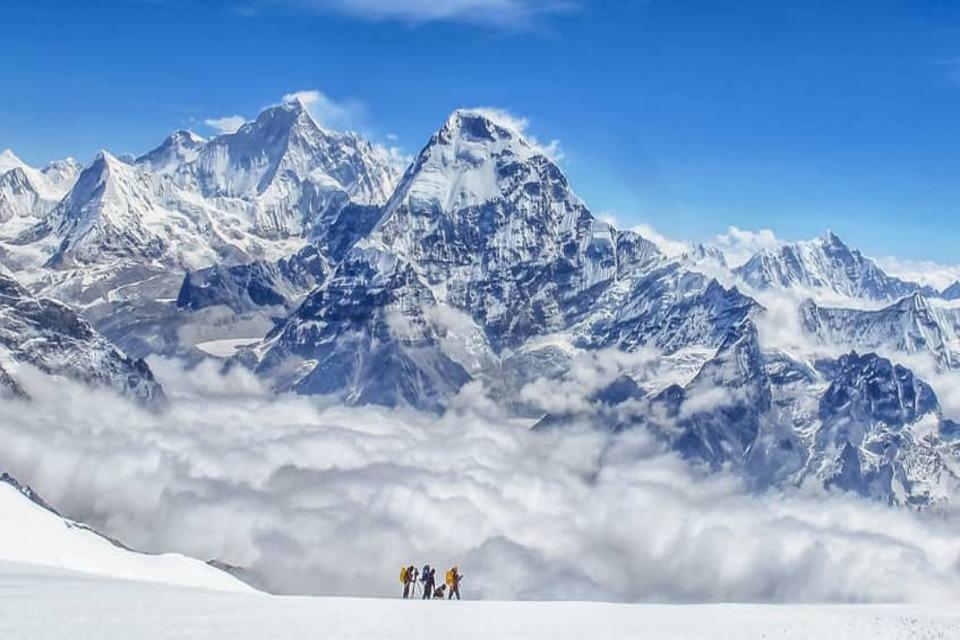
Makalu Base Camp and Sherpani Col Pass Trek is a very challenging, high-altitude trek that links the remote Makalu region to the Everest side by crossing a chain of technical passes over 6,000 m. Trekkers hike to the foot of Mt. Makalu (8,485m), the world’s fifth-highest peak deep into the pristine Makalu Barun National Park. The trail then crosses the technical Sherpani Col Pass (6,135m) into the Khumbu region.
Sherpani col pass trek itinerary starts with the standard Makalu Base Camp trek via Tumlingtar and reaches Makalu Base Camp 4,870 m. From Makalu BC it crosses Sherpani Col and finally Amphu Laptsa (5,845 m) to exit into the upper Everest region, and finishing with a flight out from Lukla to Kathmandu.
Makalu Base Camp and Sherpani Col Pass Trek is classified as strenuous and one of the most difficult trekking routes in the Himalaya, involving long days at very high altitude and rough, glaciated terrain. The trek is best suited for trekkers who already have prior experience above 5,000m.
Makalu Base Camp and Sherpani Col Pass Trek Highlights
- Makalu Base Camp (4,870m), the most remote Himalayan base camps
- Adventures crossing of Sherpani Col Pass (6,135m) & Amphu Laptsa Pass (5,845m)
- Swiss Base Camp (5,213m) & Baruntse Base Camp (5,400m).
- Witness spectacular Himalayan panoramas & rare wildlife.
- Experience authentic Sherpa and Rai villages
What is Sherpani Col?
Sherpani Col is a high mountain pass in the eastern Himalayas of Nepal. With an altitude of about 6,135 meters and the pass is a key in connecting the Makalu and Everest regions.
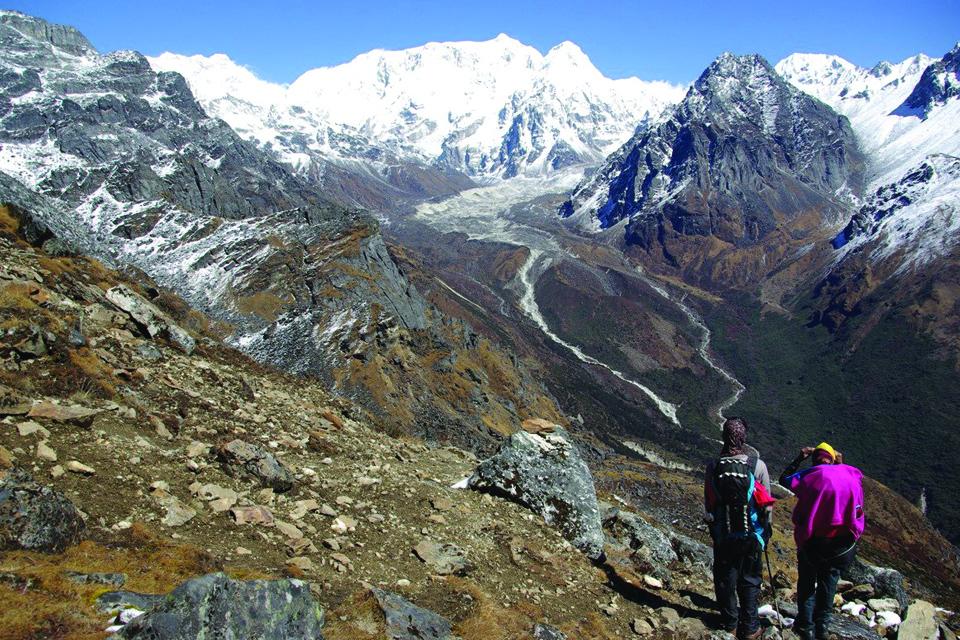
Sherpani Col is located between Makalu Barun National Park and Sagarmatha National Park. The pass crosses the beautiful Barun Valley teeming with glaciers, pristine alpine meadows, forests and panoramic views of Mt. Makalu (8,485m), Baruntse, and Ama Dablam can be observed, as well as.
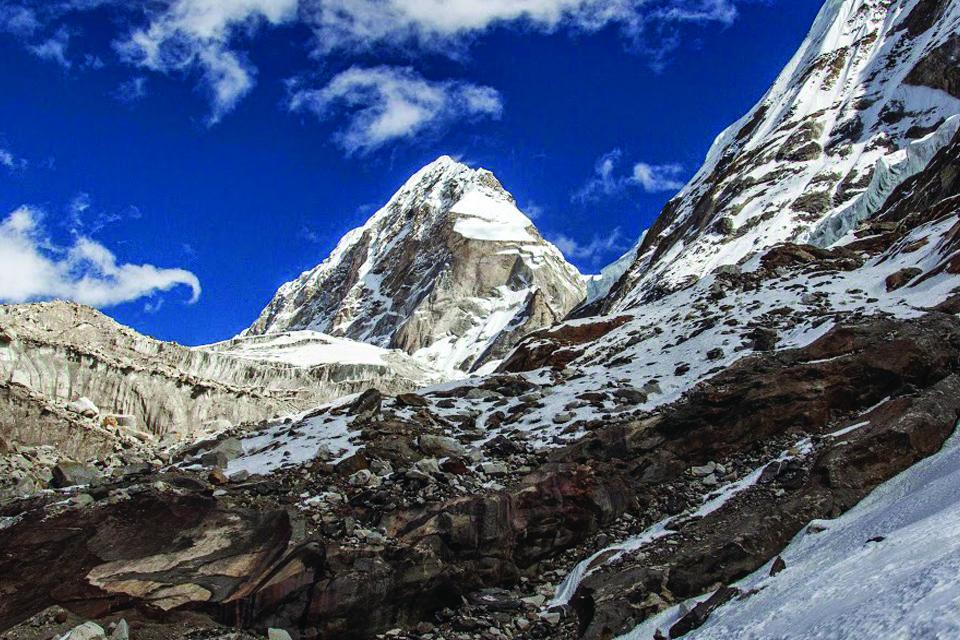
Sherpani Col consists of crossing Sherpani Col pass (6,155m), West Col (about 6,135m), and Amphu Laptsa pass (5,845m). The trek involves crossing glaciers, snow slopes, with the use of fixed ropes and suited for experienced trekkers with high-altitude endurance and some technical abilities.
Sherpani Col Pass difficulty
The Sherpani Col Pass is one of the toughest high-altitude passes in Nepal and is categorized as challenging. The Sherpani Col Pass trek involves crossing the three technical passes, Sherpani Col (6,155m), West Col (6,143m), and Amphu Laptsa (5,845m), which demands trekkers to be in excellent physical fitness, have experience at high altitudes, and with mountaineering skills will be added bonus.
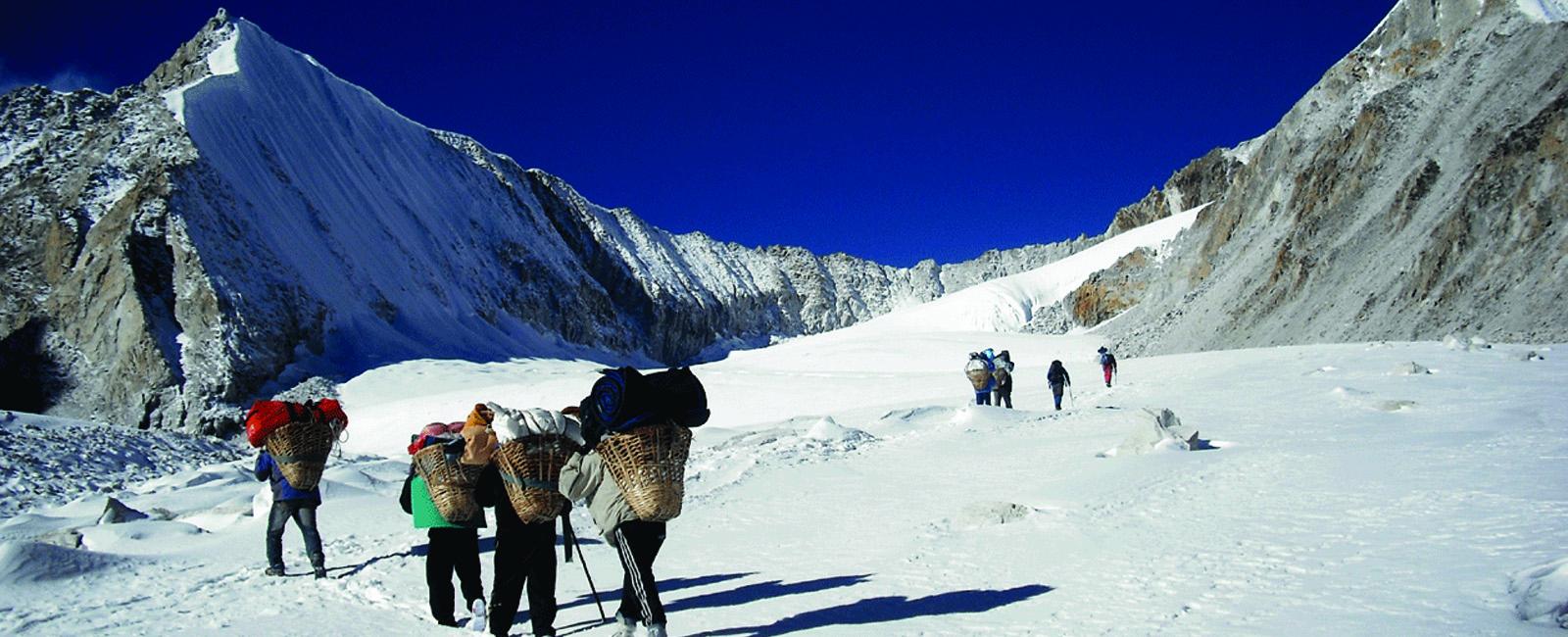
Crossing the pass involves technical gear like crampons, ice axes, and ropes following fixed lines set up by your climbing guide. Be prepared for bad weather and stay in a tent at a high altitude. Enough acclimatization days are planned to overcome the risk of altitude sickness. But with a positive mindset and a good backing trek team, crossing the pass isn’t impossible.
Itinerary
This 24-day Makalu Base Camp & Sherpani Col Pass Trek itinerary takes you through remote valleys, high mountain passes, and the Everest region with proper acclimatization for a safe Himalayan expedition.
Arrive at Tribhuvan International Airport in Kathmandu, a Marron Treks representative will meet you and take you to your hotel. Afterward you can either relax or check out the busy streets and markets.
Today is all about getting ready for the trek: checking gear, buying last-minute necessities, and making sure you have the right permissions. Your guide will give you a full briefing on the hike, including the schedule, safety, high-altitude precautions, and Nepali culture.
Fly to Tumlingtar early in the morning and drive to Num via beautiful river valleys, terraced farmland, and traditional Rai villages.
The first part of the walk is on easy routes along the river and into wooded hills. You walk through small villages and see how people live there, with wooden cottages, prayer flags, and pleasant folks. Seduwa is a large village on the side of a cliff.
The trail goes up slowly through subtropical trees, streams, and terraced fields. You go through more traditional towns and over modest suspension bridges. amid the spring, bright rhododendrons bloom amid the lush green grass.
On this challenging day of hiking, you'll walk through thick forests of pine, oak, and rhododendron that slowly give way to alpine meadows. As you climb higher, the terrain gets steeper and you can see Makalu, Baruntse, and Chamlang for the first time.
Today is a rest day. You can go on short treks if you want to see ridges and neighboring peaks and get a view of the Himalayas at sunrise and sunset. To help your body get used to the new environment, you should drink plenty of water and do light exercise.
The path goes by little streams, moraine ridges, and rocks that are spread out. The environment changes to alpine terrain, which has less trees and more grasslands. Dobato has amazing views of Makalu and its glaciers.
The trail goes down a little bit across alpine meadows with houses for yak herders. Rare wildlife like Himalayan animals including musk deer, Himalayan monal, and colorful birds can be spotted on this day.
The landscape with rocky trails becomes wilder and more open with distant views of small glaciers. You cross alpine meadows, streams, and moraine slopes. The trek goes in the high-altitude Himalayan environment.
You climb over moraines and rolling hills witness spectacular views of Makalu, Baruntse, and Chamlang and reach the remote Makalu Base Camp, surrounded by dramatic glaciers and pristine wilderness. Camping at the foot of the world’s fifth-highest mountain is truly one of the most unforgettable highlights of the trek.
Rest and acclimatization day base camp with exploring the surrounding glaciers and steep ridges. Today is important to prepare your body and mind to cross Sherpani Col and reach the higher camps ahead.
The route goes across glacial streams and moraine ridges before arriving at Swiss Base Camp surrounded by striking ice formations and towering snow-covered peaks all around.
The trek gets challenging, with rough trails and patches of snow. Sherpani Col Base Camp is where you start your journey up the high pass. It has the best views of the eastern Himalayas.
The path goes over rocky ground and glacial moraines. Baruntse Base Camp is a great place to get used to the cold before trying to cross Amphu Laptsa Pass. The icefalls there are very impressive.
A day to relax, check out the glaciers nearby, and get ready for tricky glacier trekking. You can improve your acclimatization by going on short hikes that are not required.
The path goes over moraine ridges with streams from glaciers. The last stop before crossing Amphu Laptsa Pass is Amphu Laptsa Base Camp.
This is the most difficult part of the trek. To get across Amphu Laptsa Pass, you have to walk on glaciers, snow ridges, fixed ropes, and crampons. The trail goes down steeply to Chukung after an exciting climb and stunning vistas.
You can hike to Chukung Ri (5,550m) today if you want to see Island Peak, Lhotse, and Nuptse from all sides. Take a break and get better after the high passes. Tent or lodge stays overnight.
The path goes down through forests of rhododendrons and Mani walls. You go to the Tengboche Monastery, which is an important cultural and spiritual place in the Khumbu region.
Take picturesque routes down to the lively Sherpa village of Namche Bazaar, which is a great place with shops, cafes, and marketplaces.
The final day of trekking winds through forests and small villages before reaching Lukla, the gateway to the Everest region.
Flight to Kathmandu and check-in hotel. In the evening is a farewell dinner with cultural show.
Transfer at the airport for your onward flight three hours prior to your departure flight.
What is included?
- Airport pick-up and drop-off services.
- Hotel accommodations in Kathmandu on Twin-Share Basis with breakfast.
- Kathmandu/Tumlingtar & Lukla/Kathmandu airfares.
- All trekking accommodation (in tented camps/lodges) with breakfast, lunch & dinner. on Twin-Share Basis.
- Personal insurance for crew trek members.
- Guide, porters, kitchen staff and helpers' wages for the trekking period.
- All surface transfers by private vehicle.
- Four seasonal sleeping bags (to be returned after trip completion) & Marron Trek duffel bags.
- A comprehensive medical kit will be carried by the trekking guide.
- Makalu Barun National Park & Everest National Park Permit & Trekkers Information Management System (TIMS).
- Farewell dinner with a live Nepalese cultural program.
- All government and local taxes.
What is not included?
- International airfare.
- Lunch & dinner in Kathmandu.
- Nepal entry visa fee – Visa can be obtained upon your arrival at the Tribhuvan International Airport in Kathmandu. (USD50 for 30 days)
- Personal travel insurance.
- Emergency rescue evacuation (to be covered by the client's travel insurance).
- Excess baggage charges (luggage allowance for domestic airlines in Nepal is 15 kgs.)
- Other expenses of a personal nature (phone calls, laundry, battery recharge, bottle or boiled water, shower etc.)
- Bar bills, alcoholic drinks & beverages.
- Tips for guides, porters & crew (Tipping is expected).
FAQ's
What is the location of the Makalu Base Camp and Sherpani Col Pass Trek?
This journey goes through the Makalu Barun National Park in eastern and central Nepal. It starts in Tumlingtar. It goes deep into the isolated Makalu region, passes the Sherpani Col Pass (6,135 m) and the Amphu Laptsa Pass (5,845 m), and then enters the Khumbu (Everest) region before finishing at Lukla. The walk takes you through beautiful Himalayan scenery, high passes, glaciers, and secluded Sherpa and Rai communities.
How hard is the Makalu Base Camp and Sherpani Col trek?
This is one of Nepal's challenging high-altitude treks. This trek is best suited for experienced trekkers who are in great shape and have been trekking in the Himalayas before.
What is the Sherpani Col?
Sherpani Col is a high pass (6,110 m) that connects the Makalu and Barun basins. The terrain is beautiful but hard to walk on.
Is this a camping trek?
Yes. There are no teahouses along this isolated path, so you'll be camping in tents with full support from your crew, which includes cooks, porters, and guides.
What is the duration of the Makalu Base Camp and Sherpani Col Pass Trek?
The total duration is 24 days in total according to our itinerary.
Do I need special permission to go on this trek?
Yes. For the Sherpani Col and Amphu Laptsa portions, you need the Makalu Barun National Park Permit and Everest National Park Permit. Marron Treks will help in arranging all these permits.
What is the highest point of the trek?
The trek goes across two technical high passes: Sherpani Col, which is around 6,135 meters high, and Amphu Laptsa Pass, which is about 5,845 meters high.
Is the risk of altitude sickness high during the Makalu Base Camp and Sherpani Col Trek?
Yes, the risk of altitude sickness is high during this trek.
Why are there so many days for acclimatization?
The major danger on this hike is the altitude. For safety and successful high-altitude trekking, it is important to plan rest days, which is at Khongma, Makalu Base Camp, and Baruntse.
Are sleeping bags provided?
Yes, four seasonal sleeping bags and Marron Trek duffel bags are included (which must be returned after the trip).
How is transportation handled?
The package covers airport pick-up and drop-off, domestic flights (Kathmandu/Tumlingtar and Lukla/Kathmandu), and all ground transportation by private vehicle.
What time of year is optimal for this trek?
The best times to go trekking are before the monsoon (April to May) and after the monsoon (late September to October). Stay away from the monsoon and winter because of heavy snow and bad weather.
How chilly does it get at the highest camps?
Nights over 5,000 m can get as cold as -10°C to -15°C (14°F to 5°F).
Are flights to Tumlingtar and Lukla always on time?
Flights depend on the weather, so plan extra days in Kathmandu in case of delays.
Do I need to have climbed mountains before?
Yes. To get across Sherpani Col and Amphu Laptsa, you need to be able to climb and use fixed ropes on steep snow and ice slopes. This is not an easy hike.
How long do the days of trekking last?
Most days are 4 to 7 hours long, but days when you cross a high pass can last 8 to 10 hours or more of hard work.
Are guides and porters included in the package?
Yes, guides and porters are included in the package.
Are all of the meals included?
During trek, you'll get full-board meals (breakfast, lunch, and supper) at camps. Breakfast is included at your accommodation in Kathmandu, but you'll have to pay for other meals.
Who will make the food for the Makalu Base Camp and Sherpani Col Trek?
As part of your trekking group, you'll have a skilled cook. They make filling, healthy meals for everyone who is trekking, including breakfast, lunch, and dinner. Meals are made with both local and fresh ingredients to provide you energy and help you recover at high elevations.
Is there Wi-Fi or phone service?
You can get Wi-Fi at lower altitudes in tea houses with additional costs. There isn't much connectivity in higher altitudes. A local SIM might function at lower altitudes, but you shouldn't expect to be able to connect for the majority of the trek.
How do I take care of drinking water?
Your crew gives you boiled water, but you should also have purification tablets or drops on hand just in case. You can refill your water at streams throughout the walk.
What should I expect in case of an emergency?
A trained guide takes care of first aid. Helicopter evacuation is the sole option for extreme crises, thus travel insurance that covers high-altitude rescue is a must.
Do you need to have travel insurance?
Yes, trekkers need their own travel insurance that covers high-altitude trekking, medical emergencies, and emergency evacuation.
What do I need to bring on the Makalu Base Camp Trek?
Bring clothes that can be layered (moisture-wicking, insulating, and waterproof), broken-in boots, a headlamp, sunscreen, and your personal medications. We will give you a full list of the things you need to pack.
Can I trek alone on this route?
No. You need a licensed guide and permits from a recognized agency to go on this expedition. You can't go trekking alone.
How should I get ready physically?
Do a lot of cardiovascular and leg-strengthening exercises, and practice climbing up steep slopes with a heavy daypack on. Fitness has a big impact on enjoyment and safety.
Is there a lot of traffic on this hiking trail?
Not very often. This remote trail in the Himalayas is much less busy than Everest Base Camp, so you truly experience like you're in the wild.
What are the best parts of this trek?
You can see Makalu, Lhotse, and Everest from the pure wilderness, cross challenging high-passes, and feel a huge feeling of accomplishment on a remote Himalayan expedition.
How does the trek end?
The route joins the classic Everest trail to Lukla, from where you fly back to Kathmandu.
Is the trek worth it?
The Makalu Base Camp & Sherpani Col Trek is one of the best high-altitude treks in Nepal for experienced explorers looking for a remote and difficult challenge in the Himalayas.
Are ATMs available during the Makalu Base Camp & Sherpani Col Trek?
There are no ATMs on the way to the trek. Before starting the trek, you should have enough cash from Kathmandu. Most isolated lodges and camps only take cash, and credit and debit cards are not usually accepted.
How do I charge my electronic devices?
There isn't a lot of electricity at high-altitude camps, and some lodges in lower altitudes may charge you a small fee to charge your phone. It is best to bring a power bank, solar charger, or extra batteries for your cameras, headlamps, and phones.
Are there facilities of showers and baths in the trekking trial?
Lower altitudes may provide hot showers or hot bucket shower for a small fee. As you go higher, you have to stay in camps so it’s impossible to take proper bath. You have to clean up with wet wipes, sponge baths, or bucket showers.
Are there toilets?
Most spots at high-altitude camps on the Makalu Base Camp & Sherpani Col Trek feature primitive pit or bucket toilets. These are shared by trekkers. For hygiene, bring your own toilet paper, soap, and hand sanitizer. Be careful with water because it's limited. Facilities are significantly simpler than they are in Kathmandu or communities at lower altitudes.
Can I customize this trek?
Yes. Marron Treks can change the schedule for experienced trekkers by adding extra rest days, changing acclimatization breaks, or combining it with other treks in the Everest or Makalu areas that are close by. You should ask for customization before you book.
Equipment
Below are the recommended items for the packing list, which depend on the seasons and the altitudes you are attending. We provide a 75-liter duffel bag and a sleeping bag. Minor items can be bought in Kathmandu before the trek starts.
Clothing
- Moisture-wicking t-shirts (2-3)
- Moisture-wicking long-sleeve shirt (1)
- Lightweight down jacket
- Thermal undershirt (1-2)
- Fleece Pullover (for more colder temperature)
- Inner warm trouser (1-2)
- Lightweight trekking pants (1-2)
- Moisture-wicking underwear (2-3)
- Waterproof and windproof jacket (optional)
- Hiking Shorts (while walking during the day/weather dependable)
- Warm gloves
Headwear
- Sunglasses
- Sun hat or cap
- Beanie or woolen hat (for cooler conditions)
Footwear
- Sturdy trekking boots or shoes
- Comfortable sandals or flip-flops
- Moisture-wicking socks (3-4)
- Hiking gaiters (Optional)
Others
- Lightweight daypack (20-30 liters)
- Water bottle
- Water purification tablets
- Personal medications
- Toothbrush and toothpaste
- Quick-dry towel
- Headlamp or flashlight
- Trekking poles
- Camera or smartphone (with charger or power bank)
- Toilet paper
- Sunscreen Lotion
- Lip balm
- High protein snacks (such as protein bars or nuts)
Trip Info
Accommodation
While you are in Kathmandu, we opt to accommodate you in 4- or 5-star hotels like Hotel Royal Singhi (4-star), Hotel Manaslu (4-star), Radisson (5-star), Yak & Yeti (5-star), or similar. During the trek, your primary accommodation will be tents. These are typically high-altitude, double-walled tents for better insulation and weather protection. You'll camp at designated campsites along the route. These are chosen for scenic beauty, flat ground, and access to water sources. Your trekking crew will set up tents that include your own personal tent, dining tent, toilet tent, and staff tent.
Meals
We never compromise the quality of food or the health of the trekkers as well as the crew members. Expect meals packed with carbohydrates and protein prepared by our trained cook to provide sustained energy for long trekking days. Think along the lines of porridge, pasta, noodles, spaghetti, French fries, soups, and dehydrated meals.
Acclimatization
Altitude sickness is a serious risk while trekking in the Himalayas. It's important to acclimatize properly by spending a few days at lower altitudes before heading higher. By spending time at lower altitudes before pushing higher, your body has time to adjust. Our trekking packages have enough acclimatization days planned where you'll be spending a day or two at lower altitudes, allowing your body to adjust to the increasing altitude.
Drinking water
You can fill your bottle with boiling water. To make water drinkable, you can use water purification tablets too. But, due to hygienic issues, you should avoid drinking water from taps, rivers, or wells in trekking areas.
Communication
Our office in Kathmandu is in constant communication with your trek guide. In Kathmandu, you can purchase a local SIM card for communication purposes. At high elevations, the mobile signal might not be as strong, though.
Luggage
Our porters are paired with one trekker for every two hikers, and one porter can safely carry 30 kg maximum weight. Therefore, we advise you to fill your duffle bag not more than 15 kg with your belongings. You may carry a small backpack with your valuables and informational documents. The things you are not taking along on the trek can be stored in a hotel in Kathmandu free of charge.
Typical Trek Day
Mostly your trek day starts with breakfast at 7-8 am, followed by a 3-4 hour morning trek. Lunch break is around an hour, then you continue trekking to your destination for the day. After reaching the teahouse lodge, you can relax, explore nearby areas, and enjoy dinner at 6-7 pm. Evenings involve socializing, a trek briefing, and leisure activities before bed.
Travel Insurance
It is advised that you arrange your travel insurance before leaving your homeland. The main thing is to make sure that your insurance covers you for both medical and evacuation costs. Having travel insurance with you makes your trip secure and hassle-free.
Our Guides
Guides play a significant role during the trek. They are the ones who literally decipher the trekking codes for you so that you can actually connect with nature, culture, and people along the way. We have helpful and dedicated trekking guides who are very well-versed in the culture, life patterns, and every single detail pertaining to the trek region you are traveling in. Thus, in the company of our professional Sherpa guides, your trek becomes not only entertaining but also equally informative.
Porter and Staff Care
When it comes to high-altitude trekking, porters and staff members make up a pivot. Marron Treks ensures that all the porters and staff members going to high altitudes are provided with adequate clothing and equipment. All our field staff are covered by insurance.