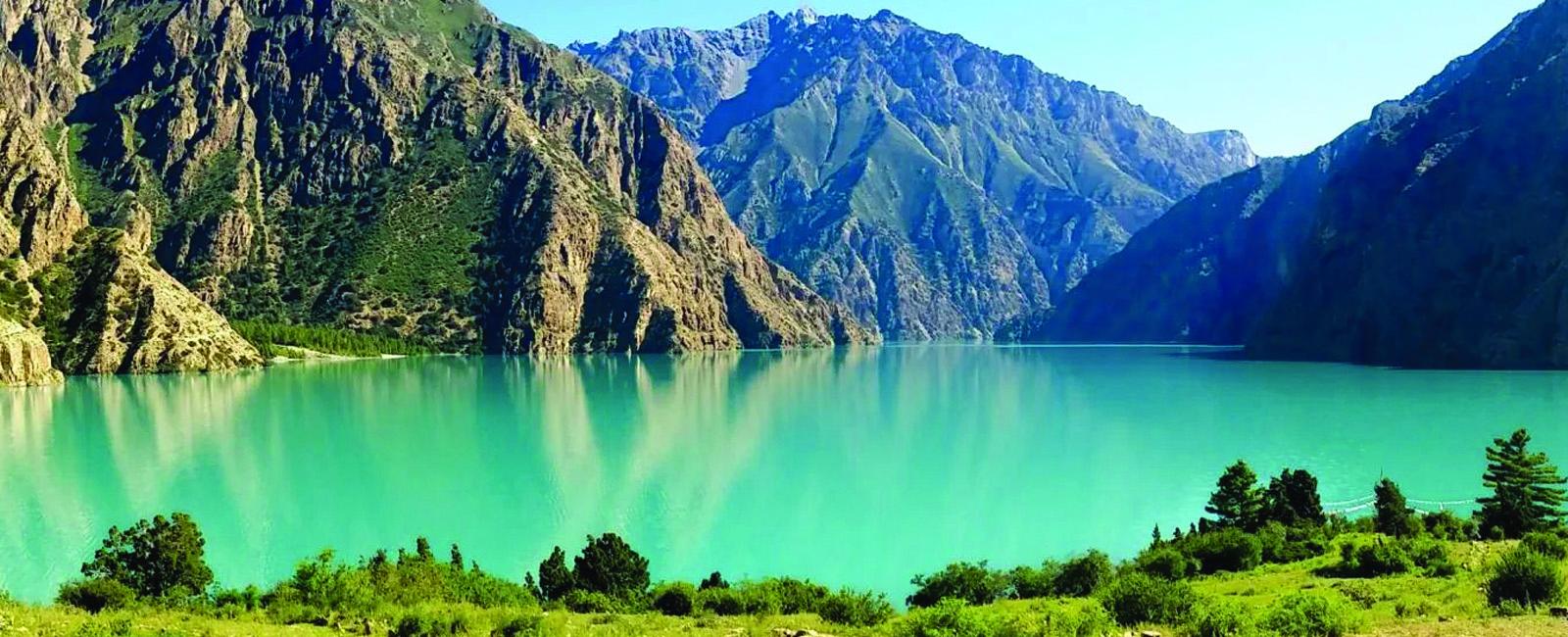
Jomsom to Upper Dolpo Trek
The Jomsom to Upper Dolpo Trek is a strenuous 29-day restricted camping expedition in northwestern Nepal that links Lower Mustang with the remote Shey Phoksundo Lake region. It crosses extreme high-altitude terrain over 5,000 m passes, including Kang La (5,360 m) and Sangda La (5,120 m), through deep Himalayan wilderness. The journey reveals ancient Bon and Tibetan Buddhist culture, historic Shey Gompa, and the protected landscapes and wildlife of Shey Phoksundo National Park.
Essential Update
- Pass Accessibility: Kang La (5,360m) and Sangda La (5,120m) are open in spring/summer but blocked by snow in winter and early spring.
- Mandatory Guide Mandate: Solo trekking is not allowed, and all trekkers must hire a licensed guide through a registered agency.
- Minimum Group Size: A minimum of two trekkers is required to enter restricted checkpoints and obtain permits.
- Restricted Area Permit (RAP) Fees: Upper Dolpo RAP costs USD 500 for 10 days plus USD 50 per extra day.
- National Park & TIMS Entry Fees: Trekkers need Shey Phoksundo permit (NPR 3,390 approx.) and TIMS card (NPR 1,000) via agency.
- Logistics & Infrastructure: The trek is fully camping-based with no teahouses, requiring satellite
Trip at a Glance
-

Country: Nepal
-

Trip grade: Strenuous
-

Destination: Western Nepal
-

Activities: Camp trek
-

Accommodation: Tented camps
-

Meals: Full-board on trek
-
.png)
Transportation: Private vehicle/Plane
-

Maximum altitude: Shey Gompa (4,500m)
-

Group size: 2 travelers minumum
-
.png)
Best Season: Mar-May, Sep-Nov
The Jomsom to Upper Dolpo Trek is a challenging high-altitude trek that links the Kali Gandaki Valley in Mustang with the remote Dolpo region. The Jomsom to upper dolpo trekking route starts from Jomsom, passing through the Himalayan landscape, and then reaches the pristine turquoise Shey Phoksundo Lake.
During the course of the trek, trekkers get a rich Himalayan trekking experience with hiking along ancient monasteries and arid trans-Himalayan landscapes. To top it off are unique wildlife that can be spotted making the trek a culturally and naturally a beautiful experience compared to more popular trails.
Trekking from Jomsom to Upper Dolpo is for experienced trekkers looking for a complete solitude adventure in the Himalayas with witnessing ancient Bon Buddhist culture and natural beauty of the Trans-Himalayan region which hasn’t changed for ages.
Jomsom to Upper Dolpo Trek Highlights
- Hike through the beautiful Kali Gandaki Valley & the rocky Himalayan landscapes
- Explore age-old monasteries & typical Tibetan villages
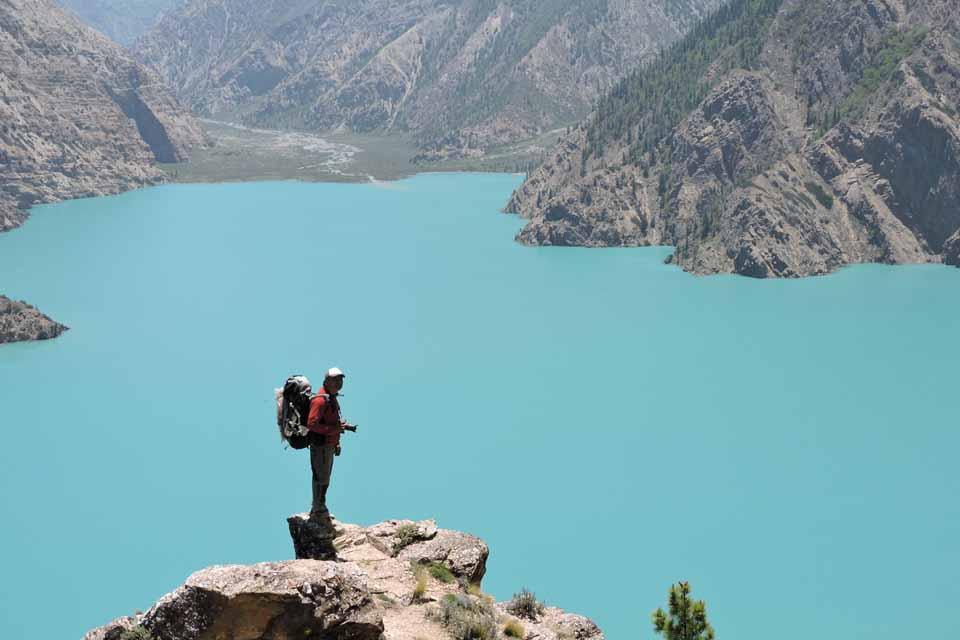
- Witness the turquoise Shey Phoksundo Lake, one of the deepest lakes in Nepal
- Discover the dry and isolated land between the Himalayas
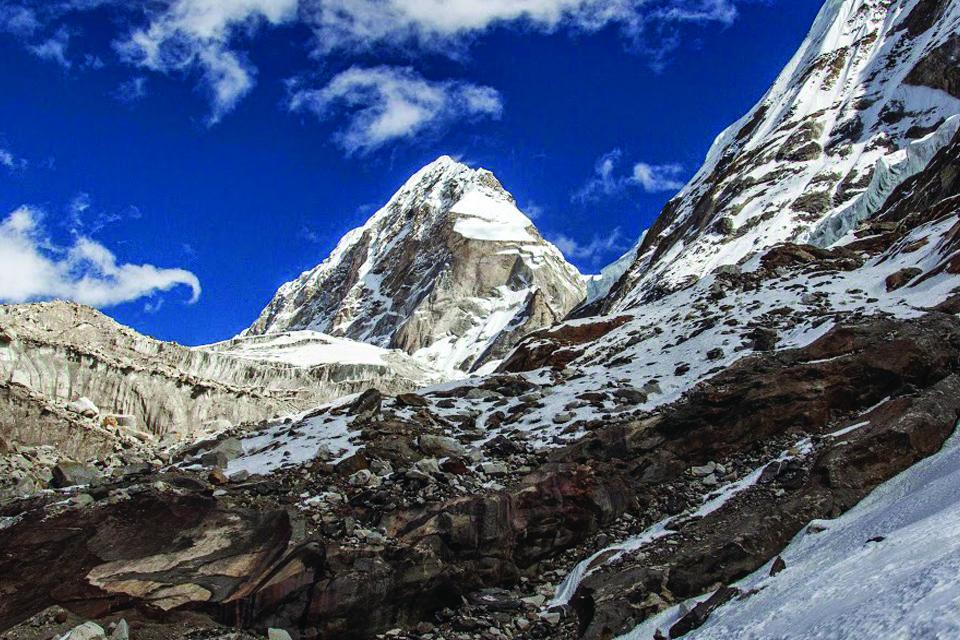
- Cross high passes with stunning views of the mountains all around
Itinerary
The Upper Dolpo Trek is a remote 29-day Himalayan journey that begins in Kathmandu and passes through Jomsom, Dho Tarap, Shey Gompa, and Phoksundo Lake before ending with a scenic flight back, offering deep wilderness, high passes, and rich Tibetan-influenced culture.
Arrive at Tribhuvan International Airport, Kathmandu and Marron representatives shall transfer to your hotel. Take the day to rest or you can explore around your surroundings.
Today is trek preparation for last minute shopping, trek permit preparation. In the evening your guide shall meet you at your hotel for trek briefing and your equipment check.
Fly from Kathmandu to Pokhara and check-in hotel. Explore around Phewa Lake and the lakeside area where many pubs, restaurants, shops are located.
Early morning flight to Jomsom and start trek towards Dhangarjung. The trial gradually ascends into the arid trans-Himalayan landscape reaching Dhangarjung.
The trek continues through high-altitude valleys and small villages. Cross small streams and experience the rugged beauty of Upper Dolpo as you reach Sangda. Overnight stay in Sangda.
Today’s the trail is a steeper ascents en-route to Sangda Phedi, also known as Tuchela or Niwar La Phedi. En-route witness panoramic views of surrounding peaks along with prayer flags marking the path.
The trail ascends further towards Yak Kharka. Yak Kharka is a grazing area for yaks. The trek proceeds to high-altitude with spectacular mountain vistas and the chance to spot local wildlife.
You descend slightly into Chharka Village. Chharka Village is one of the isolated settlements in Upper Dolpo. Upon reaching explore the village and interacting with locals to learn about traditional Dolpo culture and tradition.
The trail ascends once more to Chanla Phedi with crossing rugged terrain and high passes. The landscape becomes barren but mesmerizing at the same time with distant snow-capped peaks.
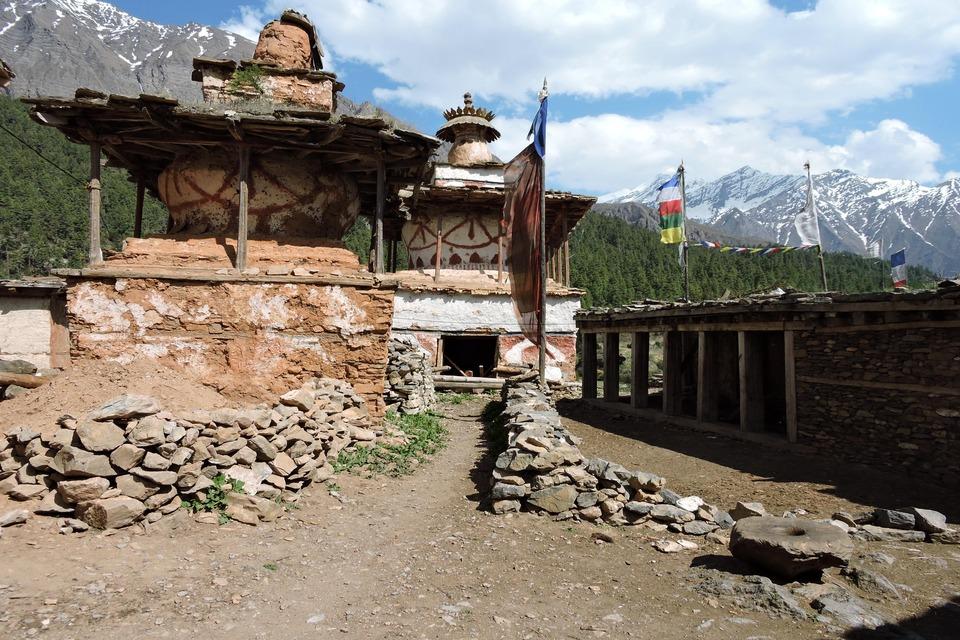
The trail descends into Dho Tarap. Dho Tarap is one of the most iconic villages in Upper Dolpo known for its traditional Tibetan-style houses and monasteries. Dho Tarap represents the cultural highlight of the trek.
Rest day at Dho Tarap and visit monasteries, interact with locals, and get to know about their unique cultural and architectural heritage.
The trek continues through high passes and valleys to Pangjang Khola Dovan. En-route witness spectacular views and feel the remoteness of the Himalayas you are trekking along.
The trail descends gradually to Tinjegaon passing along expansive valleys. You will encounter the unique flora and fauna of the trans-Himalayan region on the trail.
You continue descending towards Shimengaon passing through dry riverbeds and sparse forests, giving trekkers a sense of solitude in the vast landscape.
The trail ascends again to Koma. Koma is a high-altitude village known for its spectacular views and remote setting.
You descend to Saldang Village. Saldang Village is a larger settlement with traditional stone houses and monasteries.
Today hike Yanjer Gompa. Yanjer Gompa is a remote monastery perched above the valley. Upon reaching explore the Gompa and surroundings.
Return back to Saldang Village to rest and prepare for the next day of the trek.
The trail ascends to Shey Gompa. Shey Gompa is one of the highest and most remote monasteries in Upper Dolpo. The trail passes along steep paths but rewards you with spectacular views.
Rest day at Shey Gompa and spend the day exploring its surroundings in it’s spiritual atmosphere. Experience the serene high-altitude environment.
The trail descends towards Lartsa observing local wildlife and landscapes along the way.
You continue descending towards the famous Phoksundo Lake near Ringmu. Phoksundo Lake is a turquoise in color and one of Nepal’s most beautiful natural lakes.
The trail passes through forested areas and riversides to reach Sanduwa. En-route the change in vegetation and warmer climate greets you.
You descend further to Chhepka passing along rivers and small villages.
Continue to Dunai. Dunai is a small town with basic facilities, marking the end of the high-altitude trek in the Himalayas.
The trail proceeds to Juphal for an overnight stay and take a flight back to Kathmandu the next day.
Flight from Juphal to Kathmandu via Nepalgunj. Upon arrival, check into your hotel and rest after an incredible Himalayan adventure.
Today is a free day in Kathmandu for rest and at leisure. You can explore around the city or rest at hotel. In the evening is farewell dinner with cultural show.
Marron representatives will transfer you to Tribhuvan International Airport for your onward flight three hour prior your flight time.
What is included?
- Airport pick-up and drop services.
- Hotel accommodations in Kathmandu on Twin-Share Basis with breakfast.
- Kathmandu – Pokhara & Juphal – Nepalgunj – Kathmandu round airfares.
- All trekking accommodation (in tented camps) with breakfast, lunch & dinner.
- Personal insurance for crew members.
- Guide, porters, kitchen staff and helpers' wages for the trekking period.
- Four seasonal sleeping bags (to be returned after trip completion) & Marron duffel bags.
- A comprehensive medical kit (will be carried by the trekking guide).
- Upper Dolpo Special Permit (US$ 500 per person).
- ACAP Permit (Annapurna Conservation Area Project)
- Farewell dinner with a live Nepalese cultural program.
- All government and local taxes.
What is not included?
- International airfare.
- Lunch & dinner In Kathmandu.
- Nepal entry visa fee – Visa can be obtained upon your arrival at the Tribhuwan International Airport in Kathmandu. (USD50 for 30 days)
- Personal travel insurance.
- Emergency rescue evacuation (to be covered by the client's travel insurance).
- Excess baggage charges (luggage allowance for domestic airlines in Nepal is 15 kgs.).
- Other expenses of a personal nature (phone calls, laundry, battery recharge, bottle or boiled water, shower etc.)
- Bar bills, alcoholic drinks & beverages.
- Tips for guides, porters & crew (Tipping is expected).
FAQ's
What is the Jomsom to Upper Dolpo Trek?
The Jomsom to Upper Dolpo Trek begins in Jomsom and travels deep into the isolated Upper Dolpo region of the Himalayas. You will cross steep mountain passes, see traditional Tibetan towns, and see historic monasteries. Finally, you will arrive at the beautiful blue waters of Shey Phoksundo Lake. It is thought to be one of Nepal's most remote treks, with stunning views of the Himalayas, a rich culture, and a real wilderness experience.
How long does it take to hike to Phoksundo Lake and Upper Dolpo?
The hike itself lasts 24 days, but the whole trip, including getting to and from Kathmandu, lasts 29 days.
How's the weather in Upper Dolpo?
During the day, it is normally moderate (15–20°C), but at night, it can get below freezing, even in the summer.
How hard is the Upper Dolpo Trek?
This is a tough and hard trek that includes many high passes, isolated areas, and many days of walking at high altitudes.
Is this trek suitable for beginners?
This trek can be extremely challenging for beginners. It is suitable for experienced trekkers who have already done high-altitude treks.
Do I need a porter or a guide in Upper Dolpo?
Yes, because of rules about restricted areas, you must have a licensed hiking guide. For your own safety and comfort, a porter is necessary. We provide 1 porter for 2 trekkers and a professional guide in our package.
What kinds of licenses do I need to go to Upper Dolpo?
You need a Restricted Area Permit to go to Upper Dolpo. We will help in arranging all the required permits.
When is the greatest time to go on the Upper Dolpo Trek?
The best time to go is from late May to September, when the area is under the rain shadow. Also, in June and July, alpine flowers blossom and the high passes are clean.
What are the greatest spots along this route to take beautiful pictures?
The greatest spots to snap shots include Shey Phoksundo Lake, steep mountain passes, and the old villages of the Dolpo region that have Tibetan-style architecture.
How do I begin the trek?
You fly from Kathmandu to Pokhara, and then you take a scenic flight to Jomsom, where the walk starts.
How does the trek end?
The trek ends in Juphal (Jufal), and then you fly to Kathmandu via Nepalgunj.
Is it possible to charge electronics while hiking?
There are charging points at lower elevations, but in Upper Dolpo, electricity is only available from solar panels. Expect to pay a small amount for charging. We recommend that you bring extra batteries and a power bank.
Is there access to the internet or a mobile network?
In Jomsom and Dunai, mobile service works, but it gets harder to find or doesn't work at all farther in Upper Dolpo. There aren't many Wi-Fi spots.
What should I do to get ready physically?
You need to be in great shape. Train for the expedition for a few months by going on lengthy hikes, climbing stairs, and doing other endurance activities.
What is AMS, or Acute Mountain Sickness?
When oxygen levels are low, AMS can occur at high altitudes. Some of the symptoms include weakness, dizziness, vertigo, nausea, and headaches.
What can I do to stop AMS?
Take your time on the trek and get used to it. 3 to 4 liters of water every day is necessary. Don't drink alcohol. Follow the rule of "climb high, sleep low”.
Do I need travel insurance?
Yes, you need full travel insurance that covers trekking up to 6,000 meters and being flown to safety by helicopter in an emergency.
Can people be evacuated quickly from Upper Dolpo?
Yes, it is possible to evacuate by helicopter in an emergency, but only if the weather is good and there are safe places to land. This is why you need to have full travel insurance that covers helicopter rescue at high altitudes.
Is drinking water safe along the trail?
Most of the time, the source of water is from streams. So, we recommend that you use purification tablets or filters before drinking them.
What makes the terrain of Upper Dolpo different?
It is a distant desert in the Himalayas that looks like the Tibetan Plateau. It has steep cliffs, old monasteries, and untouched culture.
Should I leave a tip?
Yes, it is normal and a good gesture to tip guides and porters.
What makes Dho Tarap unique?
Dho Tarap is the biggest town in Upper Dolpo. It has a lot of Tibetan culture and is surrounded by a broad, beautiful, and scenic valley.
What is the lake Phoksundo known for?
Phoksundo Lake is Nepal's deepest lake. It is known for its beautiful turquoise hue and the traditional village of Ringmo.
What kind of shoes should I wear?
Put on durable, waterproof trekking boots that have already been broken in and have good ankle support.
What if flights to or from Jomsom or Juphal are canceled?
It's not uncommon for the weather to cause delays. Always expect to add one or two extra days. You can charter a helicopter, but it costs a lot.
Is there a limit on how much luggage you can bring on domestic flights?
Yes, normally 10 to 15 kilos of checked baggage and 5 kg of carry-on baggage.
Equipment
Below are the recommended items for the packing list, which depend on the seasons and the altitudes you are attending. We provide a 75-liter duffel bag and a sleeping bag. Minor items can be bought in Kathmandu before the trek starts.
Clothing
- Moisture-wicking t-shirts (2-3)
- Moisture-wicking long-sleeve shirt (1)
- Lightweight down jacket
- Thermal undershirt (1-2)
- Fleece Pullover (for more colder temperature)
- Inner warm trouser (1-2)
- Lightweight trekking pants (1-2)
- Moisture-wicking underwear (2-3)
- Waterproof and windproof jacket (optional)
- Hiking Shorts (while walking during the day/weather dependable)
- Warm gloves
Headwear
- Sunglasses
- Sun hat or cap
- Beanie or woolen hat (for cooler conditions)
Footwear
- Sturdy trekking boots or shoes
- Comfortable sandals or flip-flops
- Moisture-wicking socks (3-4)
- Hiking gaiters (Optional)
Others
- Lightweight daypack (20-30 liters)
- Water bottle
- Water purification tablets
- Personal medications
- Toothbrush and toothpaste
- Quick-dry towel
- Headlamp or flashlight
- Trekking poles
- Camera or smartphone (with charger or power bank)
- Toilet paper
- Sunscreen Lotion
- Lip balm
- High protein snacks (such as protein bars or nuts)
Trip Info
Accommodation
While you are in Kathmandu, we opt to accommodate you in 4- or 5-star hotels like Hotel Royal Singhi (4-star), Hotel Manaslu (4-star), Radisson (5-star), Yak & Yeti (5-star), or similar. During the trek, your primary accommodation will be tents. These are typically high-altitude, double-walled tents for better insulation and weather protection. You'll camp at designated campsites along the route. These are chosen for scenic beauty, flat ground, and access to water sources. Your trekking crew will set up tents that include your own personal tent, dining tent, toilet tent, and staff tent.
Meals
We never compromise the quality of food or the health of the trekkers as well as the crew members. Expect meals packed with carbohydrates and protein prepared by our trained cook to provide sustained energy for long trekking days. Think along the lines of porridge, pasta, noodles, spaghetti, French fries, soups, and dehydrated meals.
Acclimatization
Altitude sickness is a serious risk while trekking in the Himalayas. It's important to acclimatize properly by spending a few days at lower altitudes before heading higher. By spending time at lower altitudes before pushing higher, your body has time to adjust. Our trekking packages have enough acclimatization days planned where you'll be spending a day or two at lower altitudes, allowing your body to adjust to the increasing altitude.
Drinking water
You can fill your bottle with boiling water. To make water drinkable, you can use water purification tablets too. But, due to hygienic issues, you should avoid drinking water from taps, rivers, or wells in trekking areas.
Communication
Our office in Kathmandu is in constant communication with your trek guide. In Kathmandu, you can purchase a local SIM card for communication purposes. At high elevations, the mobile signal might not be as strong, though.
Luggage
Our porters are paired with one trekker for every two hikers, and one porter can safely carry 30 kg maximum weight. Therefore, we advise you to fill your duffle bag not more than 15 kg with your belongings. You may carry a small backpack with your valuables and informational documents. The things you are not taking along on the trek can be stored in a hotel in Kathmandu free of charge.
Typical Trek Day
Mostly your trek day starts with breakfast at 7-8 am, followed by a 3-4 hour morning trek. Lunch break is around an hour, then you continue trekking to your destination for the day. After reaching the teahouse lodge, you can relax, explore nearby areas, and enjoy dinner at 6-7 pm. Evenings involve socializing, a trek briefing, and leisure activities before bed.
Travel Insurance
It is advised that you arrange your travel insurance before leaving your homeland. The main thing is to make sure that your insurance covers you for both medical and evacuation costs. Having travel insurance with you makes your trip secure and hassle-free.
Our Guides
Guides play a significant role during the trek. They are the ones who literally decipher the trekking codes for you so that you can actually connect with nature, culture, and people along the way. We have helpful and dedicated trekking guides who are very well-versed in the culture, life patterns, and every single detail pertaining to the trek region you are traveling in. Thus, in the company of our professional Sherpa guides, your trek becomes not only entertaining but also equally informative.
Porter and Staff Care
When it comes to high-altitude trekking, porters and staff members make up a pivot. Marron Treks ensures that all the porters and staff members going to high altitudes are provided with adequate clothing and equipment. All our field staff are covered by insurance.