Schedule for the Tiji Festival in 2026
The dates of the Tiji Festival change every year because it is based on the Tibetan Lunar calendar.
Anticipated dates for the 2026 Tiji Festival
Dates: May 14th, 15th and 16th, 2026
Time Frame: Three days in a row
Location: Lo Manthang’s King’s Palace Square
Note: In order to have enough time to travel comfortably and acclimate to the high altitude both before and during the trip, travelers should budget between 10 and 13 days in total.
Discover a world where traditional practices come to existence at the Tiji Festival in Upper Mustang, Nepal. The Tiji Festival is one of the most vibrant and colorful celebrations held in Nepal, a nation rich in cultural diversity. The old walled city of Lo Manthang situated in the ancient walled city of the Upper Mustang region of the Himalayas, hosts the three-day annual Tiji Festival.
The descendants of Tibetan immigrants celebrate the Tiji Festival in the Upper Mustang. This festival is deeply rooted in their culture, which represents the victory of good over evil. The Tiji festival is held to pray for world peace, harmony, and protection from natural calamities.
Tiji Festival 2026 provides first-time visitors with an exceptional opportunity to observe spiritual rites, dramatic masked dances, and living Himalayan customs against the unique background of Upper Mustang.
History of the Tiji Festival
The Tiji Festival has its roots in the mythology of old Tibetan Buddhism. The celebration is based on the story of the brave monk, Dorje Jono(Vajrakila), who battled his demon father, Ma Tam Ru Ta, a force believed to have brought suffering, illness, and droughts to Mustang.
The land was once again peaceful and prosperous as a result of this huge victory. Until now, oral traditions and ritual dances have kept the story alive for ages. Although the festival has evolved, its fundamental goals, spiritual purification, communal protection, and faith renewal have not changed over time. For the inhabitants of Upper Mustang, the Tiji Festival is a significant representation of cultural identity and a respected religious celebration.
This celebration has been observed for more than 600 years. Every year in May, the locals of Lo Manthang bring history to life, providing a unique glimpse into traditional practices.
How Is the Tiji Festival Celebrated?
The Tiji Festival is celebrated for three days, following the Tibetan Lunar calendar. Each and every day of this festival has its own importance and cultural values.
First Day
The first day of the Tiji Festival starts at noon with the powerful sounds of classical and traditional instruments such as the Dhungchen, Drums, and Cymbals.
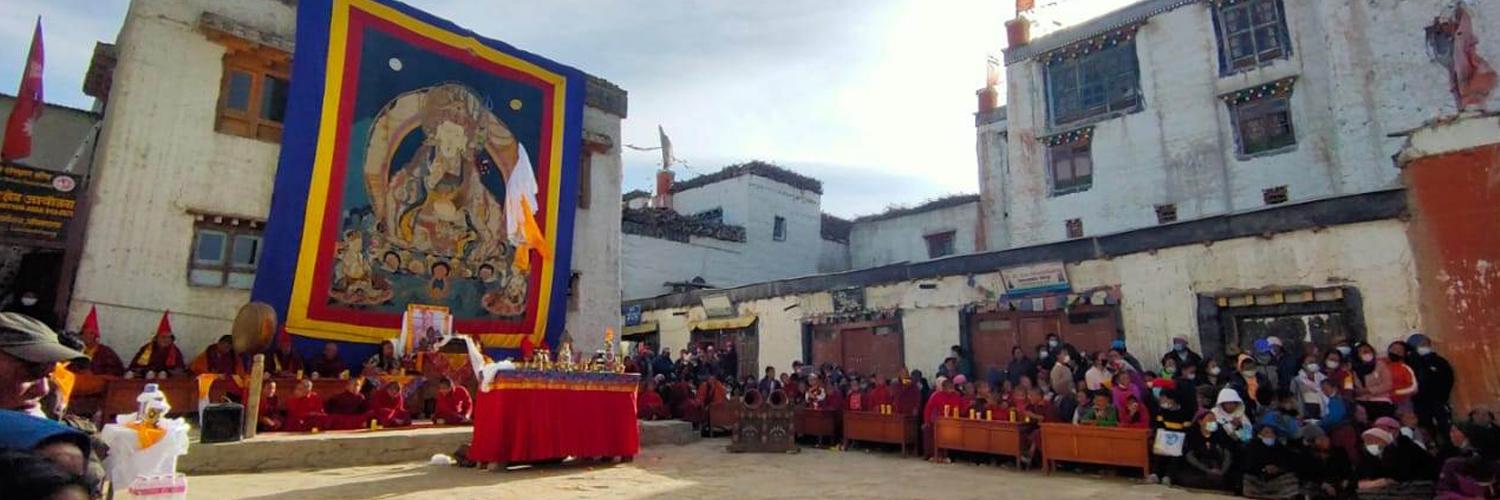
Local monks and performers begin the procession at the monastery. The monks proceed to the main square and sit under a large Thangka (a traditional painting) hanging on the southern wall. Then the “Tsa Chaam” masked dance begins. This dance tells the story of Dorje Jono explaining how evil was defeated.
Second Day
The second day starts with a traditional dance called “The Nga Chaam dance”. It is performed by monks portraying the attempt of Dorje Jono to return the demon to the Buddha realm. Female performers appear in traditional attire, where the ritual focuses on creating celestial palaces and summoning protective deities.
Third and Final Day
On the last day, an energetic “Rha Chaam dance” is performed, representing the ultimate degeat of evil. The ceremony is concluded with a celebration, music, and traditional gunfire along with the symbolic tossing of barley effigy. Such tossing symbolizes the demon named “ Ma Tam Ru Ta”.
Highlights of the Tiji Festival
- Buddhist monks performing sacred masked dances(Cham).
- A three-day ceremonial performance that portrays the victory of good over evil.
- The background highlighting ancient monasteries and king’s palace.
- Tibetan traditional music with Cymbals, Drums, and Horns.
- High level of community involvement and a spiritual surroundings.
10 Tiji Festival Attractions You Must See:
1. Masked Dances – Elaborate Cham dances that portray the legend of Dorje Jono
2. Ritual Ceremonies –Choedhe Monastery sacred prayers and offerings
3. Thangka Exhibition – Traditional Tibetan Buddhist scroll paintings
4. Local Markets – Traditional foods, wool products, and handicrafts
5. Butter Sculptures – Beautiful ritual offerings crafted from colored butter
6. Cultural Workshops – Calligraphy, Wood Carving, and Thangka paintings
7. Monastery Visits – Lo Manthang’s historic monasteries
8. Regional Cuisine – Butter Tea, Yak Meat, Thukpa, Momo, etc.
9. Cultural Events –Traditional Dances along with Folk Music
10. Scenic Treks – Himalayan villages, deep caves, and unforgettable scenery
How Can You Attend the Tiji Festival?
There are two main ways to attend the Tiji Festival in Lo Manthang:
1. By Trekking: The trekking route, which begins and ends in Pokhara, takes around 13 days, and is one way to visit the Tiji Festival in Lo Manthang. Adventure seekers who prefer to gradually adapt to the altitude while traveling through isolated landscapes, traditional villages, and stunning Himalayan scenery will find this option excellent.
2. By Jeep: The jeep drive option is a convenient and effective choice for anyone with less time. This trip, which takes around 8 days and travels from Pokhara to Upper Mustang, enabels visitors to travel by road to Lo Manthang and thoroughly enjoy the Tiji Festival without having to spend long days trekking.
Note: Both methods should be planned and booked through a certified trekking firm.
Requirements for Permits
Nepal’s Upper Mustang is a restricted area. The following permits are required in order to attend the Tiji Festival:
1. Upper Mustang Restricted Area Permit: A necessary special permit (RAP—Restricted Area Permit) must be obtained through authorized tour or trekking firms in order to enter Upper Mustang.
2. Annapurna Conservation Area Permit (ACAP): It is necessary for anyone going through the Annapurna Conservation Area, which covers a portion of the Mustang route.
Final Travel Tips for First Visitors to Upper Mustang’s Tiji Festival:
1. Independent applications are not permitted; permits must be secured through an authorized Nepali tour operator.
2. Because permits and logistics are limited, apply two to three months in advance, particularly during the Tiji Festival.
3. To prevent altitude sickness, give yourself extra days to acclimate.
4. Bring layered clothing and be hydrated to prepare for dry weather and altitude.
5. Honor regional traditions by dressing modestly and behaving politely in villages and monasteries.
6. There are no ATMs in Lo Manthang, so carry cash.
7. Bring a power bank and additional batteries. Camera batteries quickly run out to the cold mountain air. Therefore, make sure you include three or four extra batteries, and store one in your pocket to keep it warm.
8. Before you snap, ask! When taking pictures at religious rites, always ask the monks or festival organizers for permission, as some moments are too sacred to capture on camera.
In Conclusion
The Tiji Festival is a unique spiritual journey into the core of Himalayan culture. For first time tourists looking for genuine cultural travel in Nepal, the festival offers an amazing experience with its sacred dances, age old customs, and beautiful scenery. Attending the Tiji Festival allows you to observe centuries old customs that are still practiced today and take an active role in one of Nepal’s most remarkable cultural events.
Marron Treks is set up to plan your trip with ease, comfort, and safety if you are excited to experience this amazing festival's charm. There are only a few spaces available for this unique cultural encounter, so act quickly. Just make a reservation to get the opportunity to see one of Nepal’s holiest celebrations.
Upper Mustang Tiji Festival Jeep Tour
Upper Mustang Tiji Festival Jeep Tour
Author: Marron Treks
Date: 19th January, 2026